A group of living things
Willows, rubber trees and kin
Malpighiales
Willows, rubber trees, mangroves and the world's biggest flower all belong to one surprising group of plants.
This branch is shown at about 105 million years ago; its age is a rough estimate.
You and willows, rubber trees and kin meet in the Eukaryotes branch, shown at about 1.8 billion years ago (on 28 July, in a calendar from life's shared ancestor to today).
What do a riverside willow, the tree that gives us rubber, a mangrove standing on stilts at the edge of the sea and the biggest flower in the world have in common? They all belong to this one enormous group of plants. It holds more than 16,000 species, including violets, passionfruit, flax and cassava.
These plants look so different from one another that nobody ever grouped them together just by their shape. Only DNA showed that they are related. The group branched out quickly during the age of dinosaurs. That is one reason why scientists found its family tree so hard to work out.
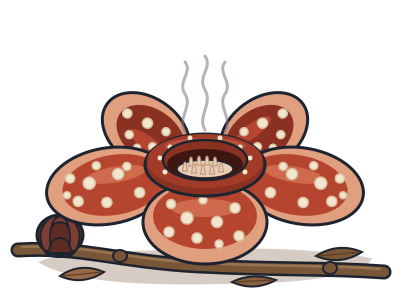
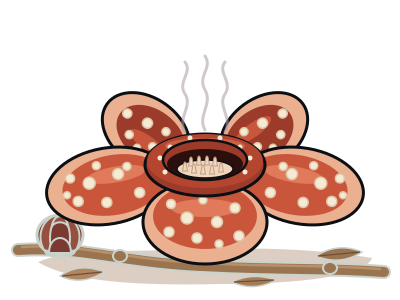
The biggest surprise is the corpse lily, which has the largest single flower of any plant. DNA showed that its closest relatives are in the spurge family, whose flowers are nearly all tiny. That makes it a relative of the rubber tree, cassava and poinsettias.
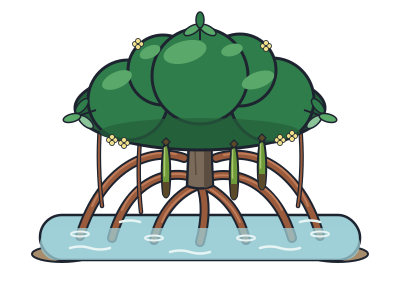
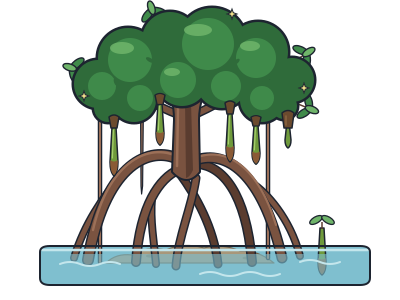
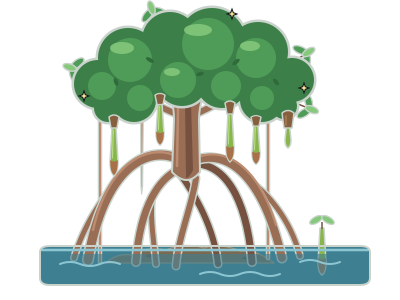
The red mangrove stands above salty tidal mud on arching stilt roots, a bit like a tree on spider legs. Its seeds sprout while they are still on the parent tree. The young seedlings can then float in salty water for more than a year before they take root.
Rainforest regulars
Up to about 40% of the kinds of smaller trees growing under the tall canopy of tropical rainforests belong to this group.
A giant leap in size
Along the corpse lily's family line, flowers grew about 79 times wider. Scientists compared it to an average man growing to about 146 metres tall, about as tall as the Great Pyramid of Giza was when it was built.
Coast to coast
Red mangroves usually grow about 6 metres tall, but some reach about 24 metres. They line warm coasts from Florida and the Caribbean to West Africa.
Inside willows, rubber trees and kin
- Corpse lilyThe world's largest single flower, from a parasite with no leaves, stems or roots.
- Red mangroveStands on stilt roots in salt water and drops seedlings that sprout while still on the tree.
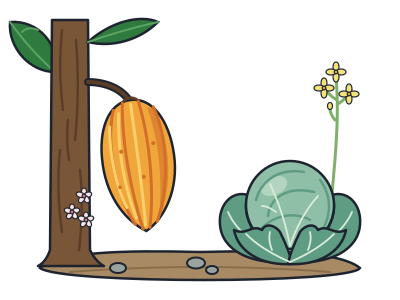
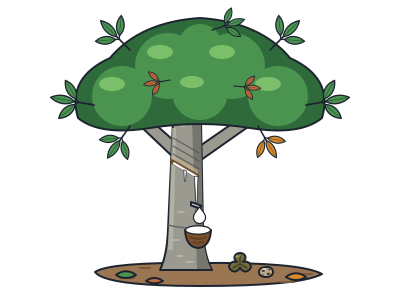
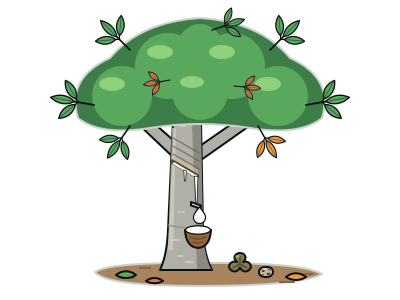
- Rubber treeIts milky sap became the rubber for tyres and balls.
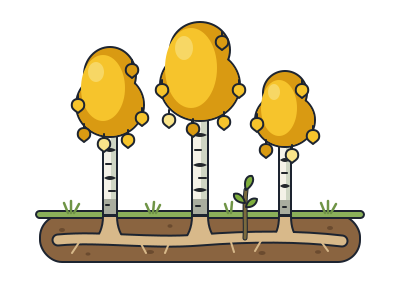
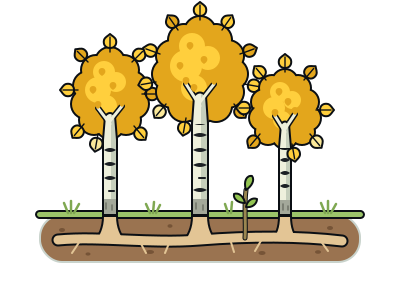
- Quaking aspenOne Utah grove, called Pando, is a single plant with about 47,000 trunks.
- Weeping willowIts drooping branches root easily, and willow bark inspired aspirin.
- CassavaA starchy root that feeds 800 million people but must be cooked to remove its poison.
- Passion fruitAn elaborate flower whose shape reminded missionaries of a religious story.