A species
Red mangrove
Rhizophora mangle
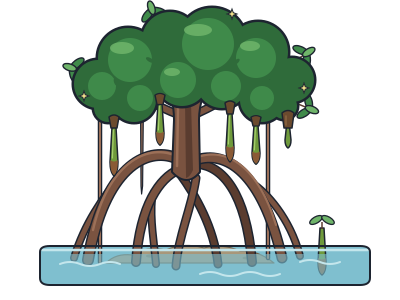
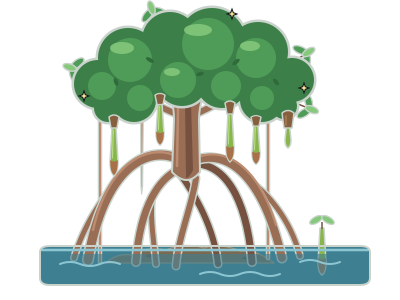
A tree that stands in the sea on stilts and grows its babies on the branch.
You and the red mangrove meet in the Eukaryotes branch, shown at about 1.8 billion years ago (on 28 July, in a calendar from life's shared ancestor to today).
The red mangrove stands in salty water on a tangle of arching stilt roots, as if the tree were up on tiptoe. Its young get a head start. Instead of dropping seeds, the tree grows seedlings that sprout while they are still hanging from its branches. Each one is shaped like a pencil and is usually about 15 to 30 cm long when it falls.
A fallen seedling floats, and tides can carry it to new shores. It can stay alive in the water for more than a year. Once it is soaked through, the root end sinks first so it can reach the mud. Now and then, a falling seedling may spear straight into the mud below and start a new tree right under its parent.
Living in the sea is tough for a tree. Prop roots hold it steady in soft, shifting mud. These roots, and others hanging down from the branches, carry air to the buried roots, because the mud has very little oxygen. The roots also let water in while blocking most of the salt.
Here is the surprise. 'Mangrove' is a way of life, not a family. More than 50 kinds of trees and shrubs, from about a dozen families that are not closely related, live like this. The red mangrove's own relatives include willows, poplars, the rubber tree and even the corpse lily. They look so different that it took DNA studies to show they belong in the same big group.
Saltier than the sea
Red mangroves can grow in mud that is nearly twice as salty as seawater.
A nursery for fish
Young fish and shellfish, such as grouper and stone crab, shelter among the tangled roots, and wading birds build nests in the branches.
Pollinated by the wind
Its small, pale yellow flowers are only about 2 cm across. They grow in little groups of two to four and are pollinated mostly by the wind.
Next to it on the tree
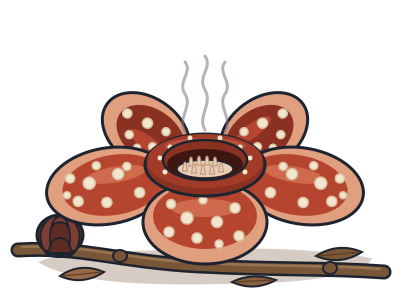
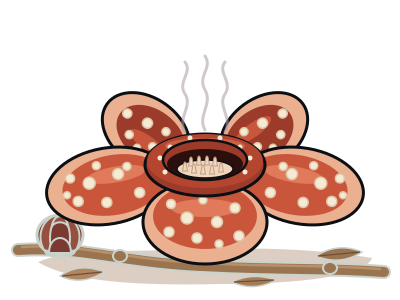
- Corpse lilyThe world's largest single flower, from a parasite with no leaves, stems or roots.
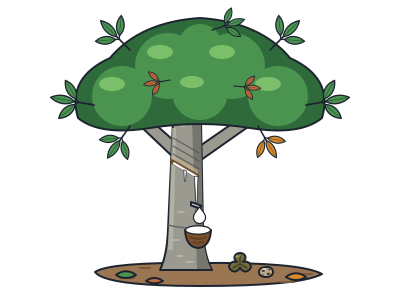
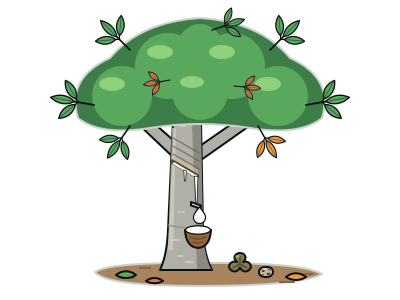
- Rubber treeIts milky sap became the rubber for tyres and balls.
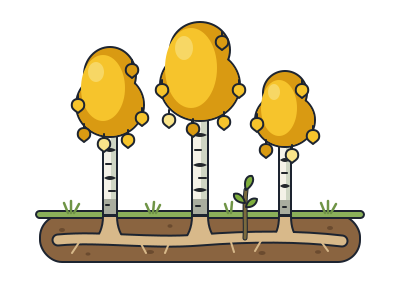
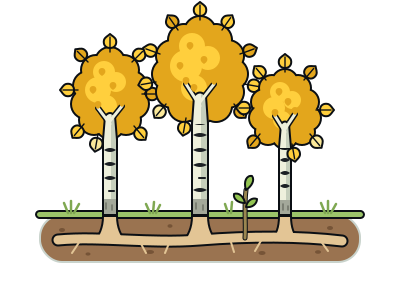
- Quaking aspenOne Utah grove, called Pando, is a single plant with about 47,000 trunks.
- Weeping willowIts drooping branches root easily, and willow bark inspired aspirin.
- CassavaA starchy root that feeds 800 million people but must be cooked to remove its poison.
- Passion fruitAn elaborate flower whose shape reminded missionaries of a religious story.