A species
Corpse lily
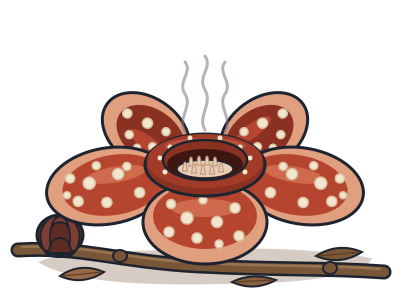
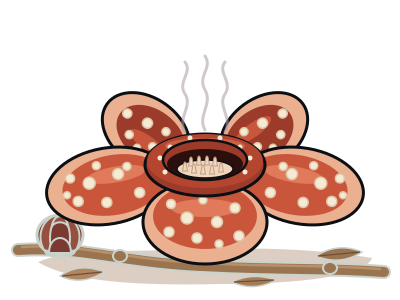
Rafflesia arnoldii
The world's biggest single flower comes from a plant you can't otherwise see.
You and the corpse lily meet in the Eukaryotes branch, shown at about 1.8 billion years ago (on 28 July, in a calendar from life's shared ancestor to today).
Imagine a flower about a metre across, weighing up to about 11 kilograms. That is the corpse lily, the largest single flower of any plant. Yet the plant that makes it has no leaves, no stems and no roots. It has no green parts at all, so it cannot make its own food.
Instead, it is a parasite. It lives completely inside a rainforest vine from the grape family and takes all its food and water from that vine. For most of its life it is just thin threads of cells hidden in the vine, a bit like a fungus. You only see it when a dark bud the size of a cabbage pushes out and opens into a huge, fleshy, reddish-brown flower with five warty lobes.
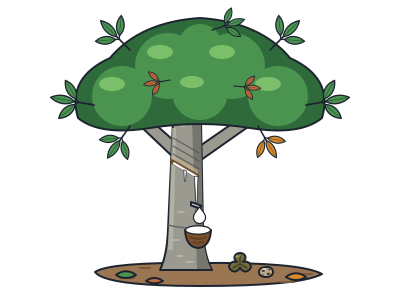
The flower smells like rotting meat. The stink tricks flies into visiting, and they carry pollen from male flowers to female ones. Despite its name, it is not a lily. DNA tests showed that its closest relatives are in the spurge family, which includes poinsettias, cassava and the rubber tree shown beside it here. Many of those relatives have flowers only a few millimetres wide.
Here for just a week
A bud takes months to grow, but once the flower opens it lasts only about a week before it rots away.
Thick as a finger
Its fleshy lobes can be up to about 1.9 centimetres thick, about the width of an adult's finger.
A family in trouble
A 2023 study judged that all 42 known species in its group are threatened, and more than two-thirds of the places they grow are unprotected.
Next to it on the tree
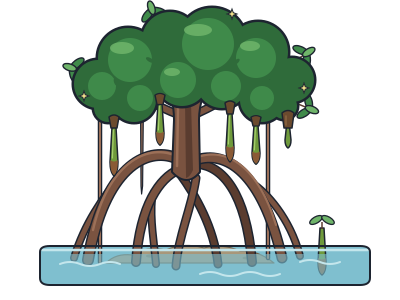
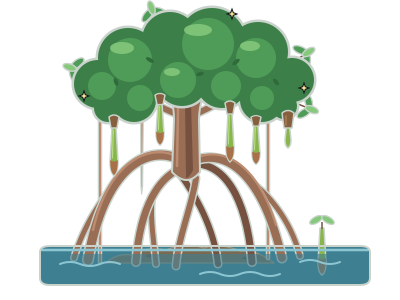
- Red mangroveStands on stilt roots in salt water and drops seedlings that sprout while still on the tree.
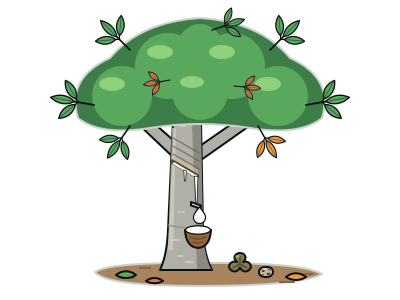
- Rubber treeIts milky sap became the rubber for tyres and balls.
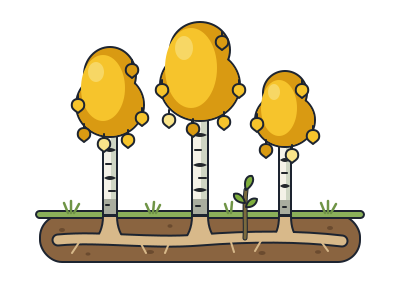
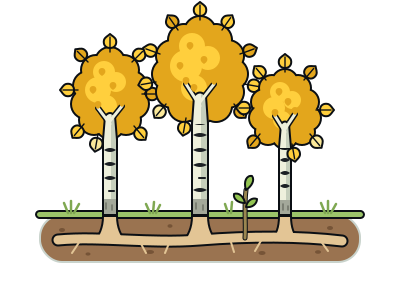
- Quaking aspenOne Utah grove, called Pando, is a single plant with about 47,000 trunks.
- Weeping willowIts drooping branches root easily, and willow bark inspired aspirin.
- CassavaA starchy root that feeds 800 million people but must be cooked to remove its poison.
- Passion fruitAn elaborate flower whose shape reminded missionaries of a religious story.