A species
Grapevine
Vitis vinifera
The wine vine on its own early branch of a huge group of flowering plants
You and the grapevine meet in the Eukaryotes branch, shown at about 1.8 billion years ago (on 28 July, in a calendar from life's shared ancestor to today).
Most of the world's wine starts with this twisting, woody vine. People have made wine from its grapes for about 8,000 years. Its family tree holds a surprise too. The grape family is the sister group of all the other rosids. That is a huge group of flowering plants that includes roses, beans, oaks, cabbages, citrus and gum trees. Grapes sit on their own early branch, and all of those plants are their distant relatives.
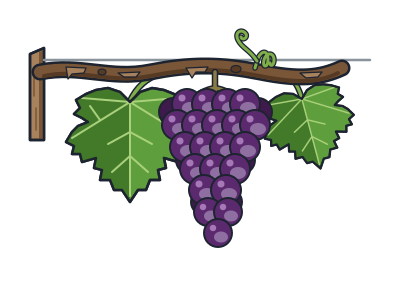
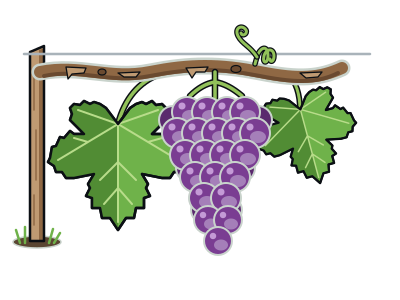
In the wild, grapevines climb up trees in damp forests and along streams, from Portugal and Morocco to northern Iran. They hold on with forked tendrils that coil around branches. Left unpruned, a vine can grow about 12 to 15 metres long, about as long as a bus or a bit more. Its leaves have three to five pointed lobes. On older vines, the brown bark splits and peels away in long strips.
Some of the oldest known chemical traces of grape wine were found inside large clay jars from two Stone Age villages in Georgia. They date to about 6000 BC. Farming has changed the fruit a lot. Wild grapes are only about 6 millimetres across, about the size of a small pea. Cultivated grapes can grow to about 3 centimetres long, in green, red or purple.
Male and female plants
Wild grapevines are almost always either male or female plants. Most cultivated vines have flowers with both parts, so they can pollinate themselves.
Thousands of kinds
There are an estimated 5,000 to 10,000 grape varieties, but only a few are important for farming and selling.
Deep drinkers
Grapevine roots usually reach 2 to 5 metres down, and sometimes go 12 metres deep or more.
Next to it on the tree
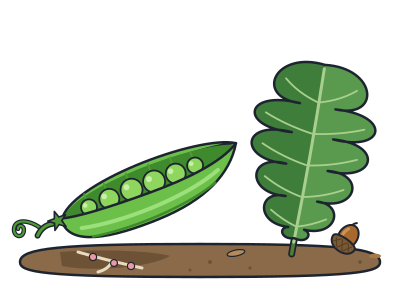
- Roses, beans and oaksRoses, peas, oaks, figs and pumpkins share one ancestor, many with root-nodule partners.
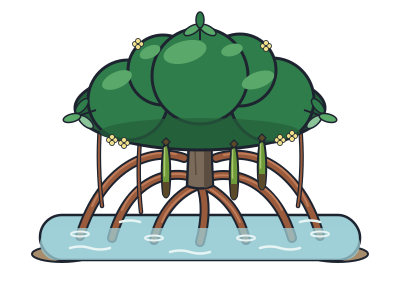
- Willows, rubber trees and kinA huge order that holds willows, poplars, rubber trees, mangroves and the largest flower.
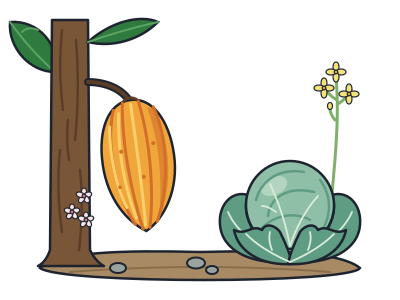
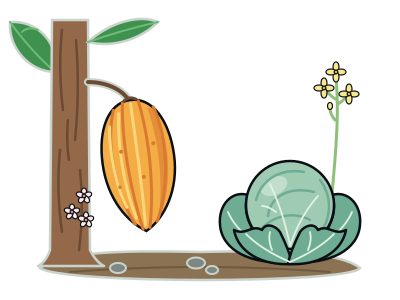
- Cabbages, cotton and citrusCabbages, cocoa, cotton, oranges and maples share one branch.