An extinct species
Montsechia †
Montsechia vidalii
A rootless, petal-free water plant from Spain, among the oldest flowering plants known
Lived about 130–125 million years ago.
You and the montsechia meet in the Eukaryotes branch, shown at about 1.8 billion years ago (on 28 July, in a calendar from life's shared ancestor to today).
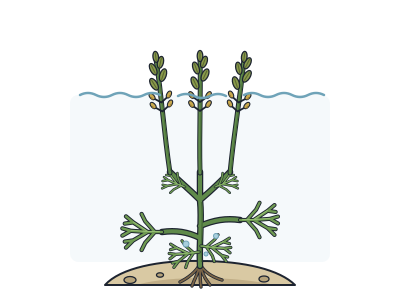
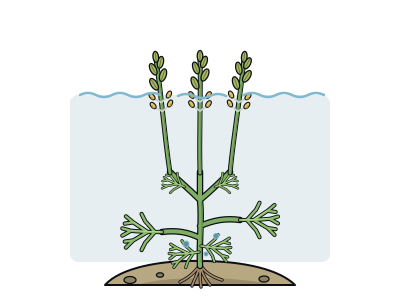
About 130 to 125 million years ago, a slender plant grew in shallow lakes in what is now Spain. It is among the oldest flowering plants known from fossils. That puts it in the same huge group as roses, oaks and grasses, but it looked nothing like them. It had no petals and no nectar, and scientists think it spent its whole life under water.
Its fossils were first found in fine limestone in the Spanish Pyrenees more than 100 years ago. For a long time, nobody could agree on what they were. Some scientists thought they were a liverwort, a horsetail or a conifer. Then in 2015, a team studied more than 1,000 specimens. They dissolved the rock with acid and looked at the plant's very thin outer skin under microscopes.
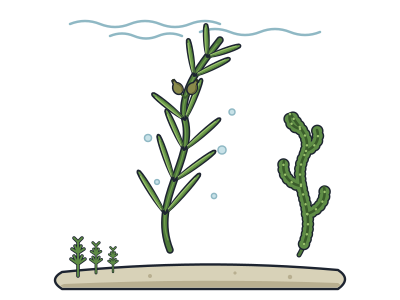
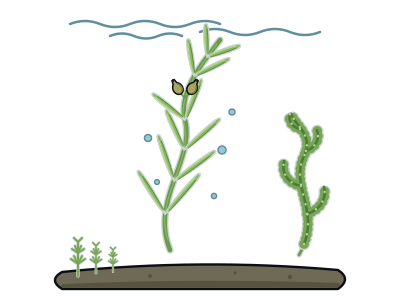
The clue was in the fruit. Each tiny fruit was closed except for a small pore, and it held one seed hanging upside down inside. A seed wrapped inside a fruit like this is a mark of flowering plants. The fruits came in pairs.
The fossils show thin, bendy stems, and not a single root among all those shoots. From this, scientists think it drifted or grew without roots under water. Its flowers were plain, and each was either male or female. Its fruits had only a tiny pore, with no proper part for catching pollen. These clues suggest the water probably carried its pollen.
Two looks, one plant
It grew in two forms. One had long, narrow, needle-like leaves in opposite pairs. The other had spiralling branches covered in short, scale-like leaves.
A busy ancient lake
One of its fossil sites, Las Hoyas, was a shallow lake in a large inland wetland with a warm, subtropical climate. About 250 species are known from there, including early birds and a mammal whose fossil even kept traces of hair.
A race for 'oldest'
One of the scientists who studied it said it was about as old as, or older than, Archaefructus from China. That is another early water plant that also competes for the title of oldest flowering plant.
Next to it on the tree
- AmborellaA shrub found only in New Caledonia: the sister of every other flowering plant.
- Giant water lilyLily pads strong enough to hold a small child, from one of the oldest flower lineages.
- ArchaefructusA 125-million-year-old water plant from China with some of the earliest known flowers.
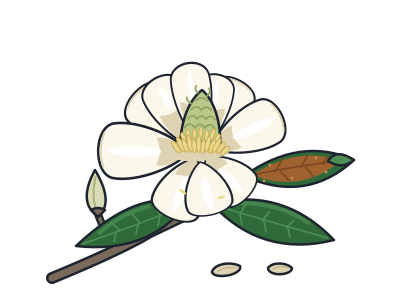
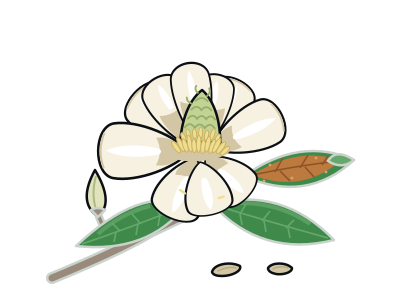
- Magnolias and kinBig, simple flowers and aromatic trees, including spices and avocados.
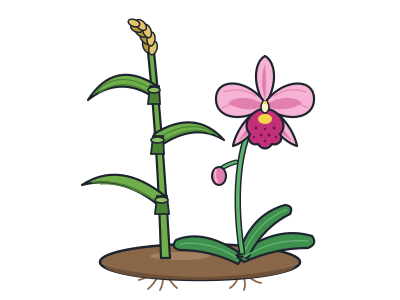
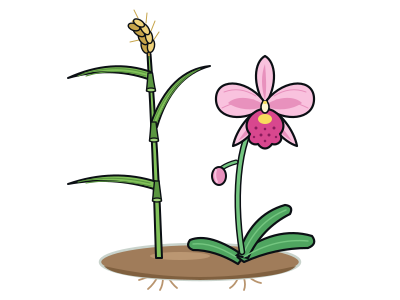
- MonocotsPlants that sprout one seed-leaf, from grasses and orchids to palms and bananas.
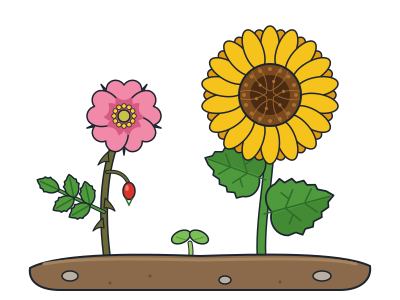
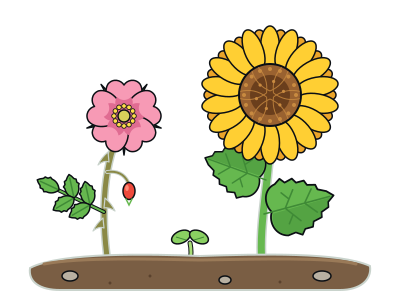
- EudicotsMost flowering plants, with two seed-leaves, from roses and beans to sunflowers.
- Star aniseA spice shaped like an eight-pointed star, from one of the oldest flowering-plant branches.