A species
Amborella
Amborella trichopoda
A quiet island shrub that is the sister of every other flowering plant on Earth.
You and the amborella meet in the Eukaryotes branch, shown at about 1.8 billion years ago (on 28 July, in a calendar from life's shared ancestor to today).
On one island in the South Pacific grows a quiet, bushy shrub with a big family secret. Amborella grows wild only in the shady mountain rainforests of New Caledonia, about 1,200 km east of Australia. Yet it is the sister of every other flowering plant on Earth. Roses, grasses, oak trees and orchids are all more closely related to each other than any of them is to Amborella.
One botanist compared it to the platypus. The platypus's branch of the family sits beside more than 5,000 other kinds of mammals. Amborella's branch sits beside more than 350,000 kinds of flowering plants. That does not make it the first flower, or anyone's ancestor. It is a living cousin whose branch split off first and has kept changing ever since.
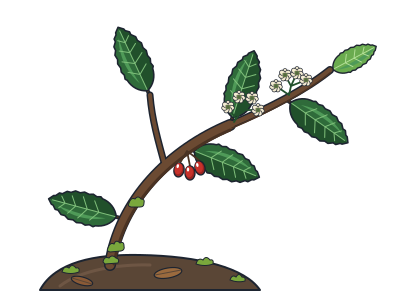
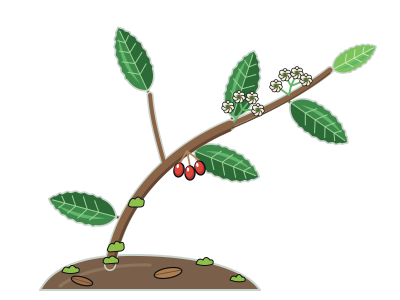
It is a sprawling evergreen shrub, usually a few metres tall, with glossy, saw-edged leaves about as long as your finger. Its creamy-white flowers are tiny, only 3 to 5 mm across, with no showy petals. Almost every plant has only male flowers or only female flowers. Female plants grow small red fruits about the size of a pea.
A borrowed library of DNA
The DNA inside its mitochondria is huge, about eight times the size of a typical plant's. It holds about six extra sets of mitochondrial DNA taken from other living things: one from a moss, three from green algae and two from other flowering plants.
Wood like a pine tree
Most flowering plants carry water through wide tubes in their wood. Amborella doesn't have these tubes. Its wood moves water only through narrow cells, more like conifers do.
A clue to the very first flowers
When its full set of genes was read in 2013, it showed that the ancestor of all flowering plants had copied its whole set of genes. That gave it spare genes that could evolve new jobs.
Next to it on the tree
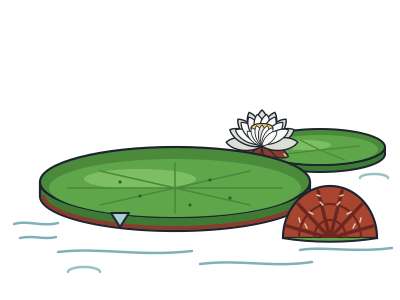
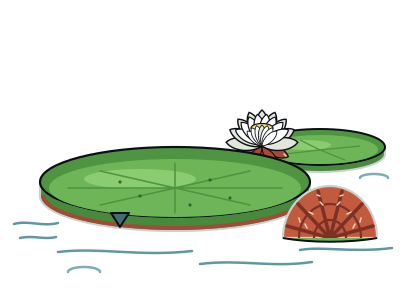
- Giant water lilyLily pads strong enough to hold a small child, from one of the oldest flower lineages.
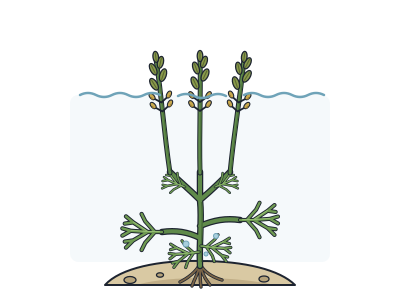
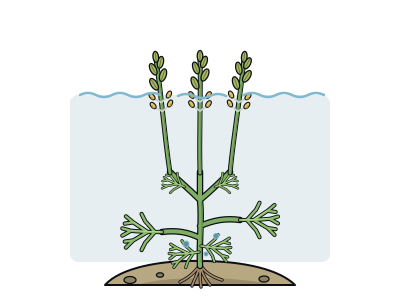
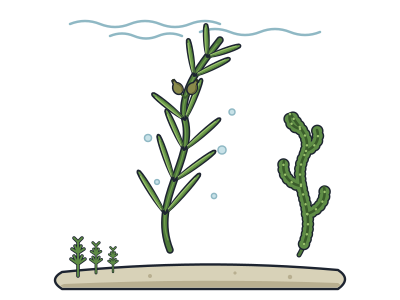
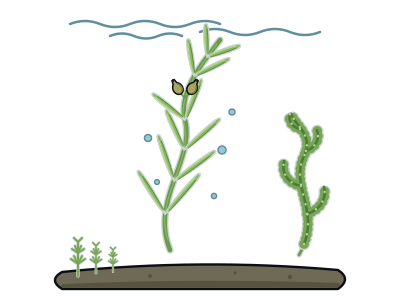
- ArchaefructusA 125-million-year-old water plant from China with some of the earliest known flowers.
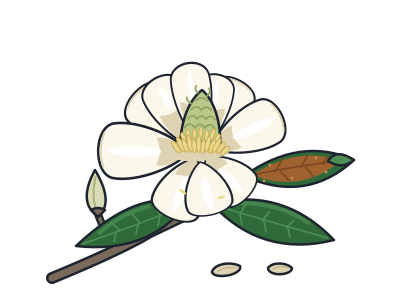
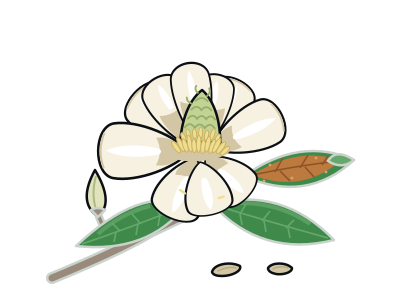
- Magnolias and kinBig, simple flowers and aromatic trees, including spices and avocados.
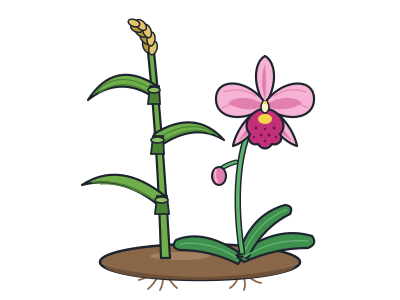
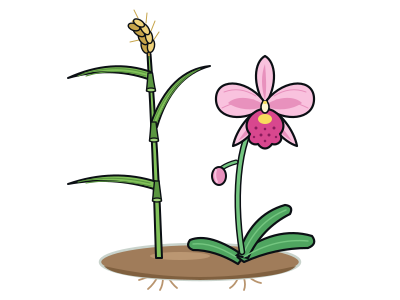
- MonocotsPlants that sprout one seed-leaf, from grasses and orchids to palms and bananas.
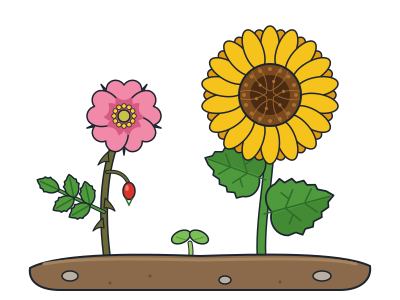
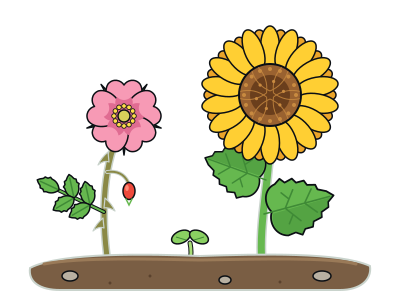
- EudicotsMost flowering plants, with two seed-leaves, from roses and beans to sunflowers.
- MontsechiaA 130-million-year-old underwater flowering plant from Spain, among the oldest known.
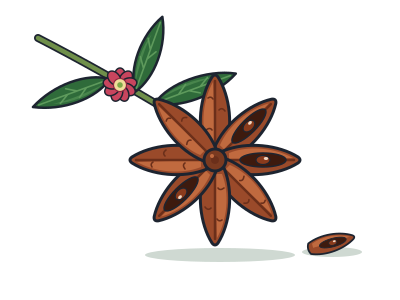
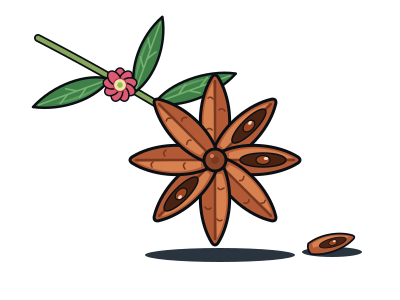
- Star aniseA spice shaped like an eight-pointed star, from one of the oldest flowering-plant branches.