An extinct species
Archaefructus †
Archaefructus
A 125-million-year-old water plant from China with some of the earliest known flowers.
Lived about 125–124 million years ago.
You and the archaefructus meet in the Eukaryotes branch, shown at about 1.8 billion years ago (on 28 July, in a calendar from life's shared ancestor to today).
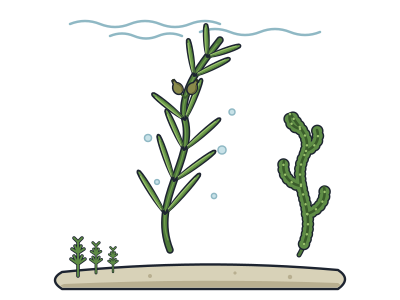
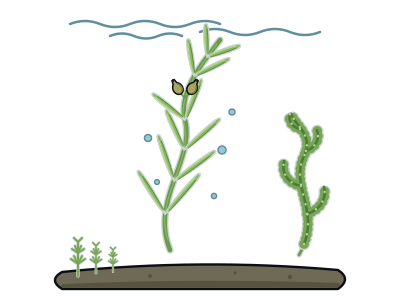
About 125 to 124 million years ago, a small water plant in a shallow lake in what is now north-east China held some of the earliest known flowers. It belonged to the flowering plants, the same big group as every flower in your garden today. But it looked nothing like a rose or a daisy.
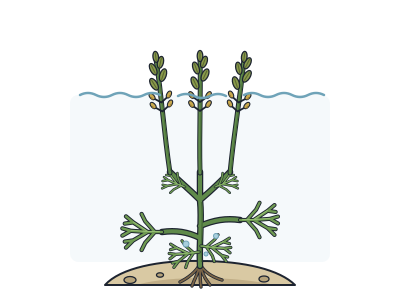
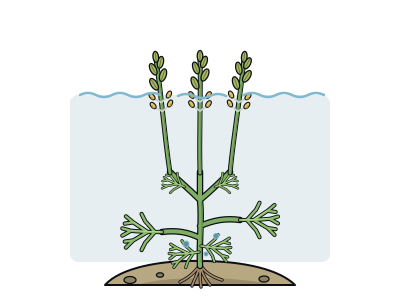
Its flowers had no petals and no sepals. Its thin shoots carried tiny pollen organs in pairs, with small seed pods above them. So why does it count as a flowering plant? Its seeds grew wrapped inside a young fruit, and no other kind of seed plant does that.
Fossils show whole plants, from the roots up to the seed-bearing shoots. They are some of the most complete early flowering-plant fossils ever found. The plant stood about 50 centimetres tall, roughly knee-high on an adult. Its leaves were split into fine, branching pieces, like those of modern underwater plants, and fish fossils lie mixed in with it.
Scientists therefore think it grew rooted in the lake bed, with weak stems reaching up through the water, and that its pod-tipped shoots probably rose to the surface or above it. Its green colour was not preserved. That part is a sensible guess based on living plants.
Mistaken for a fern
The palaeobotanist Sun Ge found the first piece near Beipiao in China. It was a slab of rock about the size of a playing card, with two stems each about 7 to 8 cm long. A colleague first thought it was a fern, but Sun spotted small fruits arranged in a spiral along the stems.
Famous neighbours
The same rocks also hold China's famous feathered dinosaurs, early birds and early mammals. Nearby volcanoes sometimes dropped ash that helped bury and preserve all this life.
Wrong age at first
When it was announced in 1998, it was said to be about 142 to 148 million years old, from the Jurassic. Later dating of the rocks showed it was younger, about 125 million years old, and some popular pages still repeat the old age.
Next to it on the tree
- AmborellaA shrub found only in New Caledonia: the sister of every other flowering plant.
- Giant water lilyLily pads strong enough to hold a small child, from one of the oldest flower lineages.
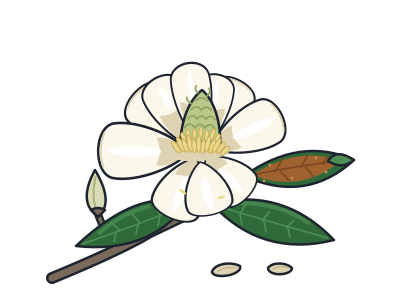
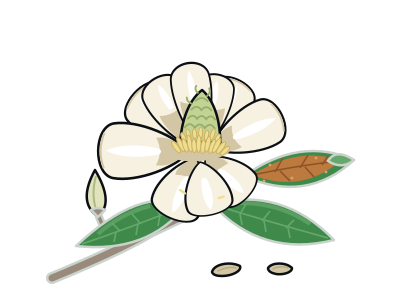
- Magnolias and kinBig, simple flowers and aromatic trees, including spices and avocados.
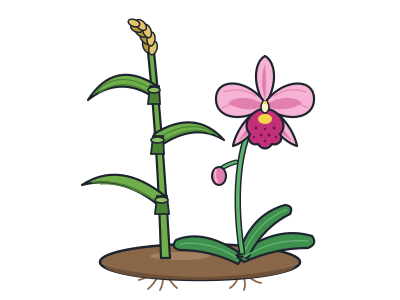
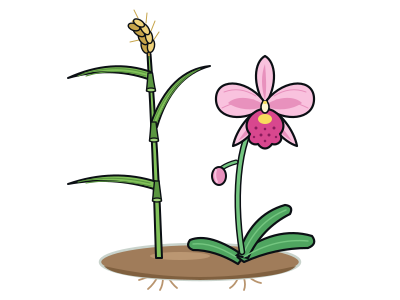
- MonocotsPlants that sprout one seed-leaf, from grasses and orchids to palms and bananas.
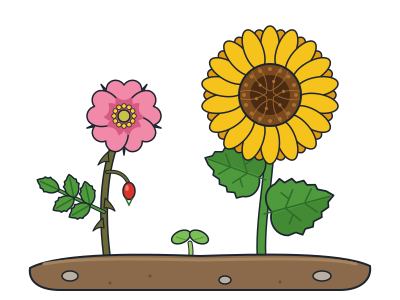
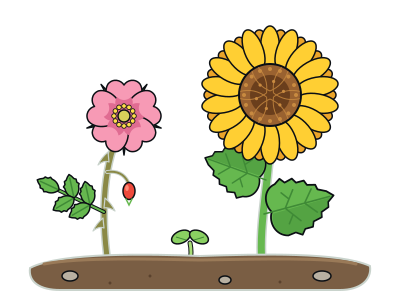
- EudicotsMost flowering plants, with two seed-leaves, from roses and beans to sunflowers.
- MontsechiaA 130-million-year-old underwater flowering plant from Spain, among the oldest known.
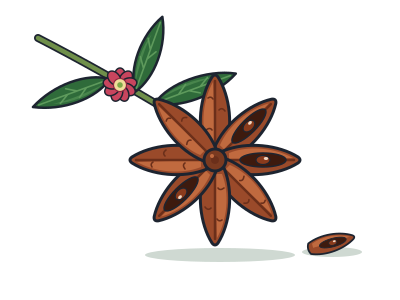
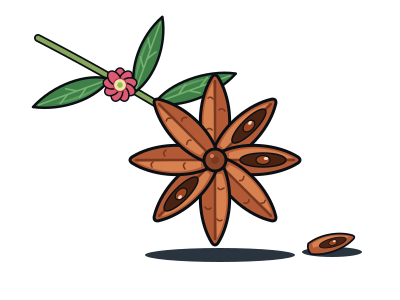
- Star aniseA spice shaped like an eight-pointed star, from one of the oldest flowering-plant branches.