A species
Meadow buttercup
Ranunculus acris
A wildflower with petals that shine like a mirror
You and the meadow buttercup meet in the Eukaryotes branch, shown at about 1.8 billion years ago (on 28 July, in a calendar from life's shared ancestor to today).
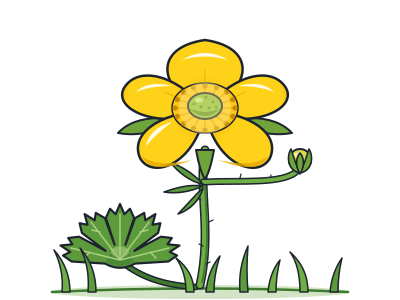
Hold a meadow buttercup under your chin on a sunny day and a yellow glow appears on your skin. Folklore says this means you like butter. The real reason is the petal itself. Its top layer of cells is extremely flat and works like a mirror. Studies of buttercups show this layer reflects yellow light about as strongly as glass does. This shiny layer is only about a thirtieth of the width of a human hair.
The shine does not come from a wet or waxy coating. Under the mirror-like layer is a thin gap of air, which adds a second shiny surface. Below that is a white, starchy layer. It bounces light back out through the yellow colour, giving the softer, flat yellow you see underneath the gloss. Scientists think the shine may send a bright flash to insects far away. It may also bounce sunlight into the bowl-shaped flower to warm its centre.
Buttercups belong to a group of plants that also includes poppies and columbines. Scientists think this group is the earliest branch of the eudicots, the huge group of flowering plants that also includes roses and daisies. So buttercups are distant cousins of almost all the other eudicot flowers you know.
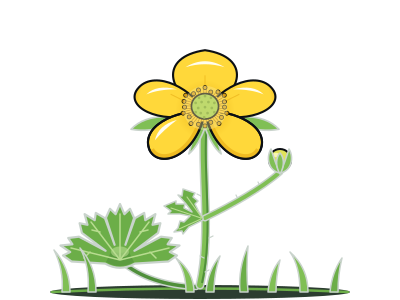
This hairy plant grows from about knee to waist height in meadows and pastures. The fresh plant is poisonous, so grazing animals usually leave it alone.
A carrot connection
The yellow in buttercup petals comes from carotenoids, the same family of pigments that makes carrots orange.
Planning ahead
Flower buds start forming in late summer, ready for the next year. The plant gets through winter as a low cluster of small leaves that can survive frost, and cold winters help the flowers develop.
A sign of old fields
Lots of meadow buttercups in a grassland can be a sign that the grassland is old and has been there a long time.