A group of living things
Fairy rings, enoki and honey fungi
Marasmiineae
Tough little mushrooms that dry out and revive, with glowing members and a giant underground honey fungus
This branch is shown at about 130 million years ago; its age is a rough estimate.
You and fairy rings, enoki and honey fungi meet in the Fungi and animals branch, shown at about 1.3 billion years ago (on 10 September, in a calendar from life's shared ancestor to today).
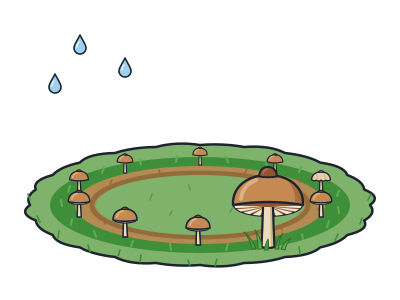
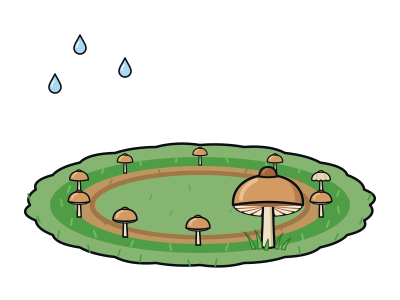
Some of the toughest little mushrooms belong to this group. The fairy ring champignon is a small tan mushroom of lawns and meadows. In dry weather it shrivels up. After rain it revives, looking as though it sprang up overnight. A sugar called trehalose lets its cells survive being completely dried. Once it is wet again, it can even start making new spores.
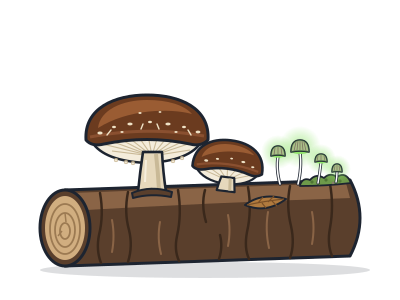
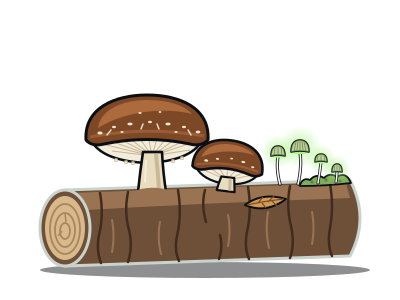
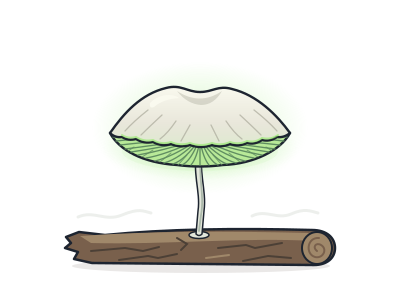
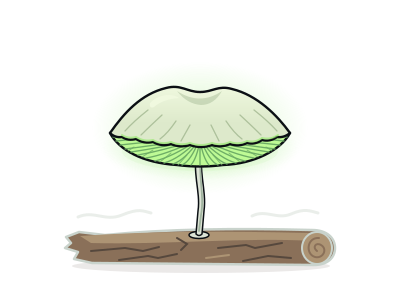
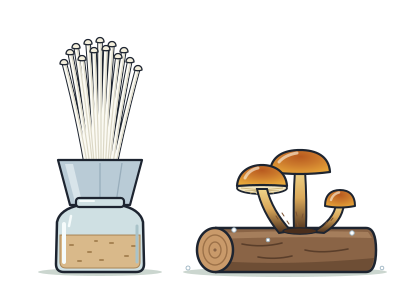
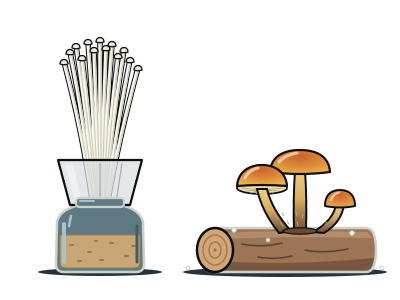
Its relatives are a surprising mix. Many are small mushrooms that recycle fallen leaves and dead wood. Shiitake and enoki, both sold in supermarkets, grow on dead wood in the wild. Honey fungi can attack the roots of living trees. Some members even glow in the dark. One tiny mushroom from warm, humid places gives off a soft green light from its cap and gills.
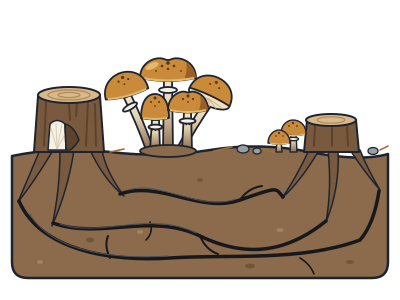
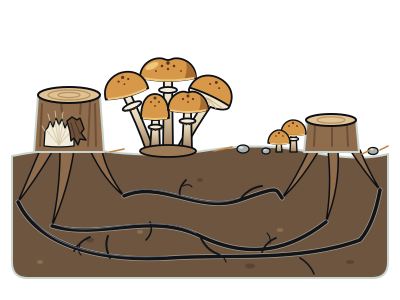
The biggest member is mostly hidden underground. A single dark honey fungus in a forest in Oregon, USA, covers about 965 hectares, roughly 1,350 football pitches. It may weigh up to about 32,000 tonnes and be thousands of years old. The mushrooms you see are only its short-lived spore-making parts. The main body is a huge network of threads in soil and wood.
Foxfire
The threads of honey fungi can glow faintly inside rotting wood. People call this glow 'foxfire'.
An old crop
Shiitake has been grown in China since at least 1209. Today it makes up about a quarter of all mushrooms grown worldwide.
Glowing but poisonous
Australia's ghost fungus can grow about 30 cm across and has gills that glow green. It is poisonous, and people have been sick after mistaking it for edible oyster mushrooms.
Inside fairy rings, enoki and honey fungi
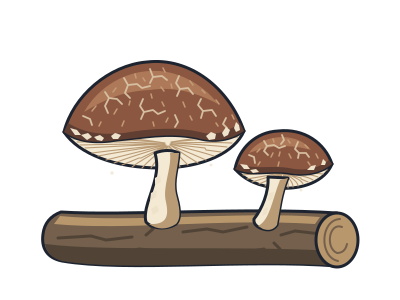
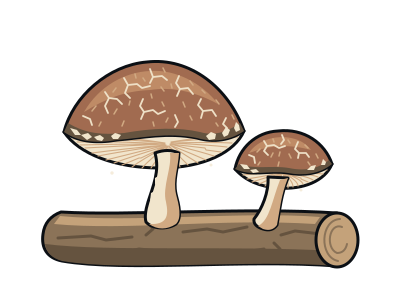
- ShiitakeGrown on logs in East Asia for about a thousand years and now a favourite in kitchens worldwide.
- Dark honey fungusOne underground fungus in Oregon spreads across nearly 10 square kilometres of forest.
- Glowing mushroomTiny mushrooms that glow green at night on forest logs.
- EnokiGrown in jars in the dark, it becomes long white noodles; in the wild it is a sticky orange winter mushroom.
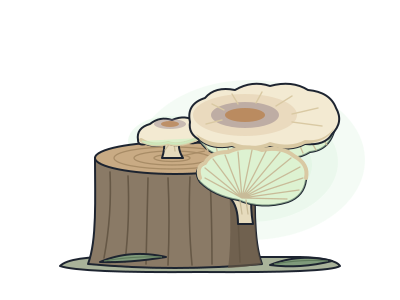
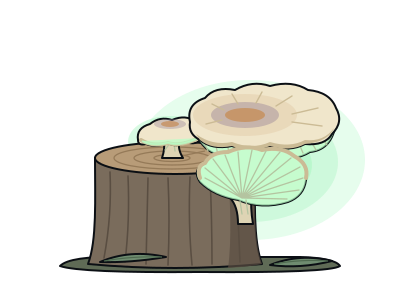
- Ghost fungusCreamy fans on Australian tree stumps that glow a soft green in the dark; poisonous to eat.
- Fairy ring champignonGrows in rings on lawns that widen each year; it shrivels in drought and springs back after rain.
Next to it on the tree
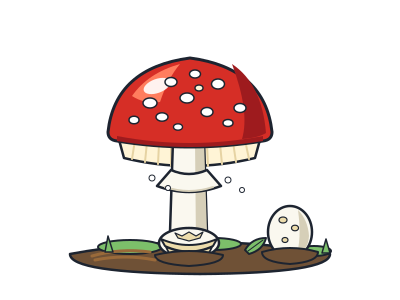
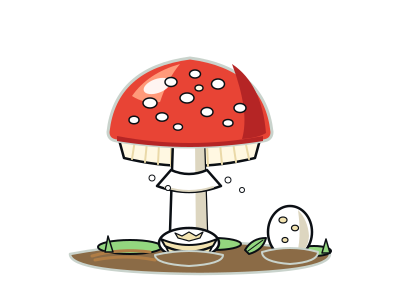
- Fly agaricThe red-and-white fairytale toadstool; poisonous, and partnered underground with birch and pine roots.
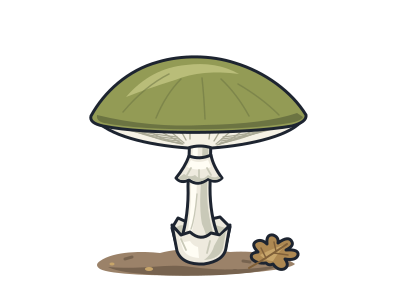
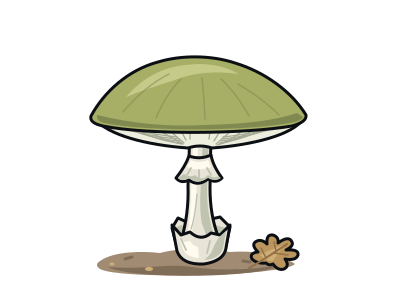
- Death capA plain greenish mushroom that is the world's most deadly; never pick it to eat.
- Oyster mushroomFan-shaped shelves on dead wood that also trap and eat tiny worms.
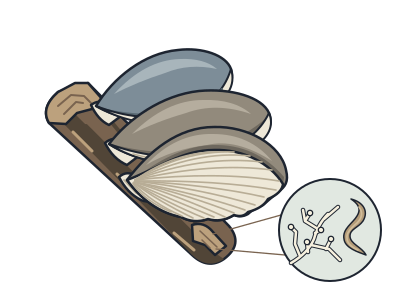
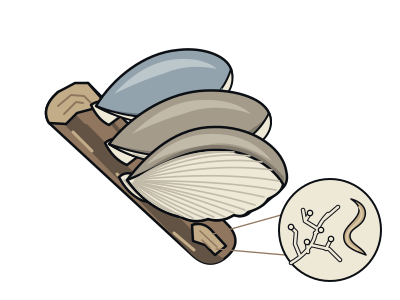
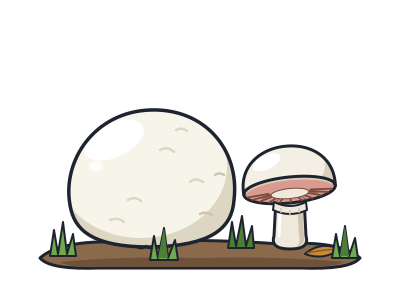
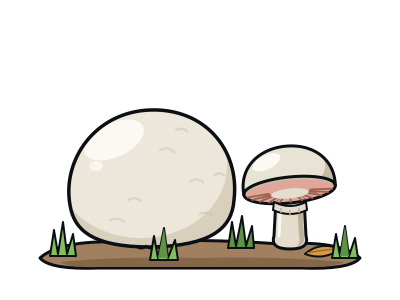
- Field mushrooms and puffballsOne family holds supermarket mushrooms, parasols, shaggy ink caps and round puffballs that never open a cap.
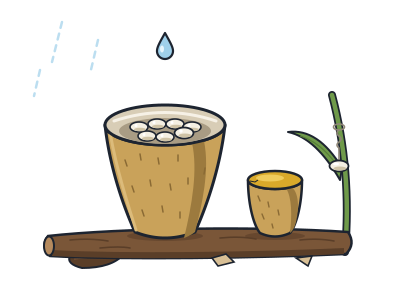
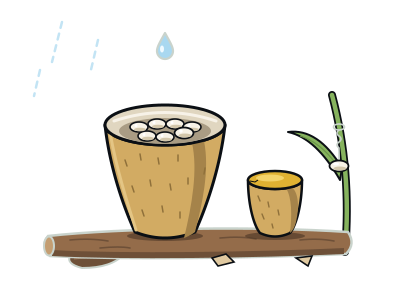
- Common bird's nest fungusA tiny cup holding spore 'eggs' that raindrops splash out, sometimes a metre away.
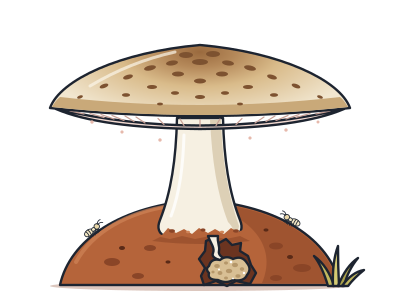
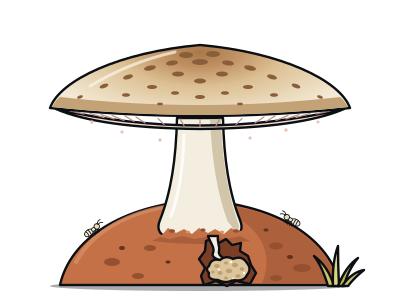
- Giant termite mushroomSprouts from termite mounds in Africa with a cap up to a metre across, the largest edible mushroom.
- MatsutakeA spicy-smelling pine-forest mushroom so prized in Japan that a single one can cost as much as a meal out.
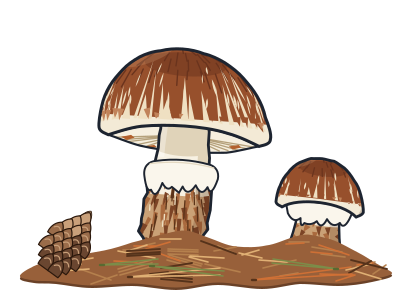
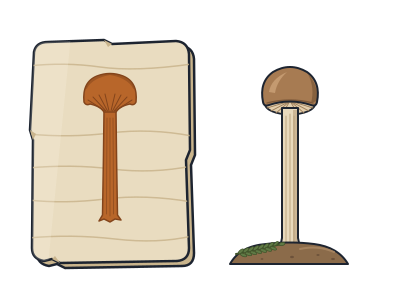
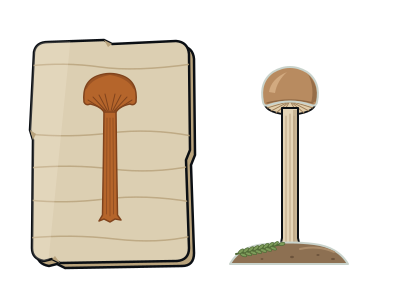
- GondwanagaricitesThe oldest gilled mushroom fossil, flattened in Brazilian limestone about 115 million years ago.