A species
Common bird's nest fungus
Crucibulum laeve
A tiny cup of spore 'eggs' that relies on raindrops to launch them.
You and the common bird's nest fungus meet in the Fungi and animals branch, shown at about 1.3 billion years ago (on 10 September, in a calendar from life's shared ancestor to today).
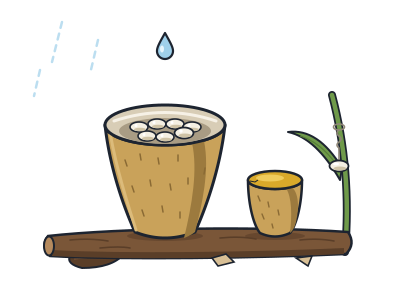
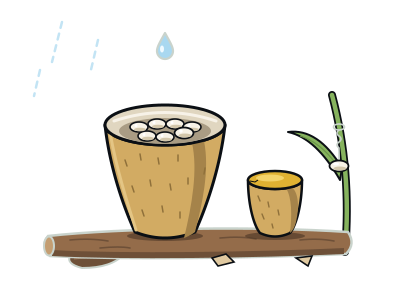
This fungus is a tiny cup, about the size of a shirt button, holding a clutch of whitish 'eggs'. It has a clever trick. When a raindrop lands in the cup, the splash throws the eggs out. In bird's nest fungi, the eggs can fly about a metre, which is more than a hundred times the height of the cup.
The eggs are not real eggs, and they are not seeds either. Each one is a flat little packet of spores, about the size of a sesame seed. It is tied to the inside of the cup by a thin, stretchy cord. As an egg flies off, the cord's sticky end can catch on a twig or grass stem and wrap around it, leaving the packet hanging there.
It looks nothing like a mushroom. It has no cap, no stem and no gills. Scientists once grouped it with puffballs. DNA studies later showed that bird's nest fungi belong among the gilled mushrooms. That makes this little cup a relative of the fly agaric and the oyster mushroom.
It grows in groups on small bits of dead plant material, such as sticks, wood chips, nutshells and fallen needles.
A yellow lid
Young cups are sealed with a thin, mustard-yellow lid. It tears open as the cup grows up. The lid's colour helps tell this species apart from other bird's nest fungi.
Found around the world
It has been found in Europe, North and South America, Australia, New Zealand, Japan and even Iceland.
A possible medicine
It makes chemicals called salfredins. They block an enzyme linked to cataracts in people with diabetes, and scientists have studied them as possible medicines.
Next to it on the tree
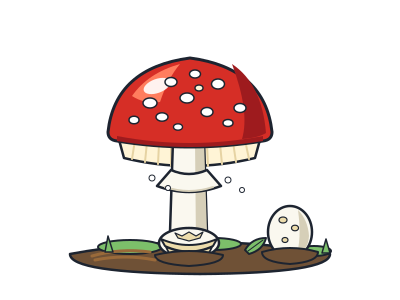
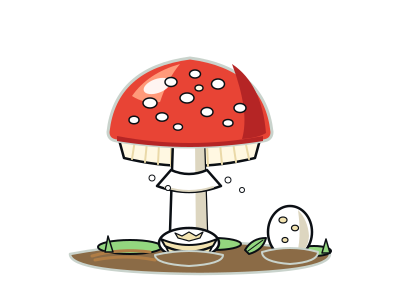
- Fly agaricThe red-and-white fairytale toadstool; poisonous, and partnered underground with birch and pine roots.
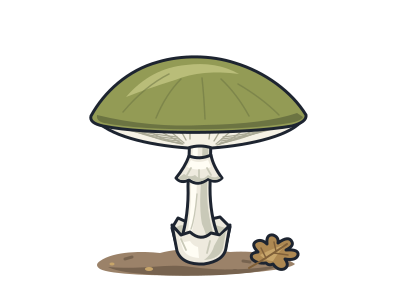
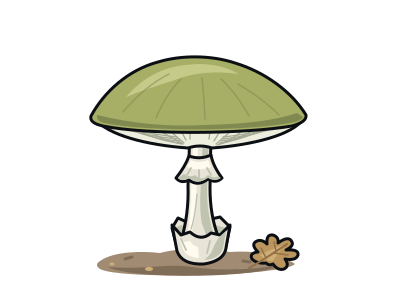
- Death capA plain greenish mushroom that is the world's most deadly; never pick it to eat.
- Oyster mushroomFan-shaped shelves on dead wood that also trap and eat tiny worms.
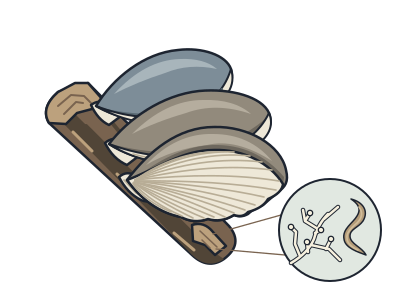
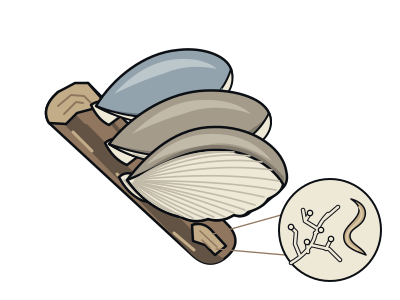
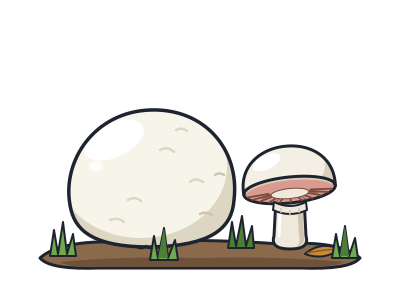
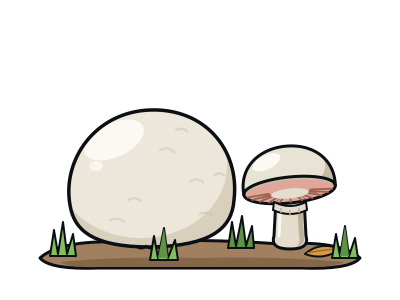
- Field mushrooms and puffballsOne family holds supermarket mushrooms, parasols, shaggy ink caps and round puffballs that never open a cap.
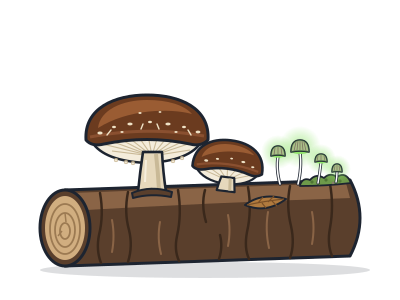
- Fairy rings, enoki and honey fungiTough little mushrooms that dry out and revive, plus log-growers, glow-in-the-dark kinds and giant honey fungi.
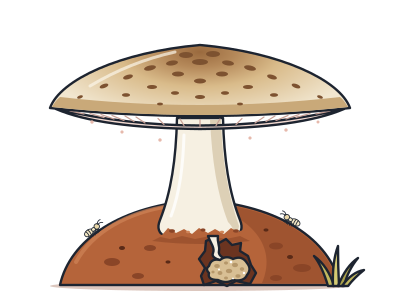
- Giant termite mushroomSprouts from termite mounds in Africa with a cap up to a metre across, the largest edible mushroom.
- MatsutakeA spicy-smelling pine-forest mushroom so prized in Japan that a single one can cost as much as a meal out.
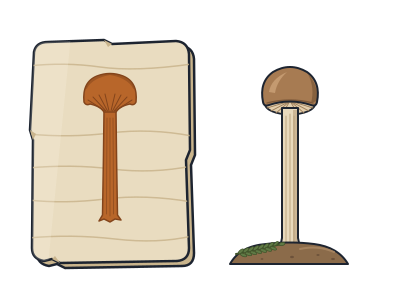
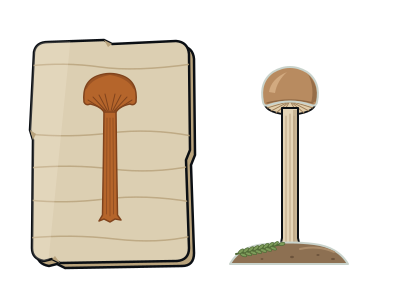
- GondwanagaricitesThe oldest gilled mushroom fossil, flattened in Brazilian limestone about 115 million years ago.