A group of living things
Mushrooms and brackets
Agaricomycotina
Caps, shelves and smelly cages: one fungal family.
This branch is shown at about 550 million years ago; its age is a rough estimate.
You and mushrooms and brackets meet in the Fungi and animals branch, shown at about 1.3 billion years ago (on 10 September, in a calendar from life's shared ancestor to today).
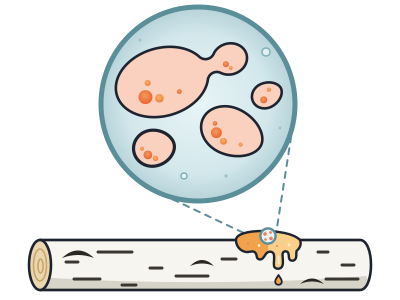
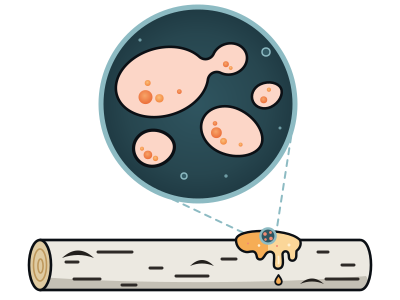
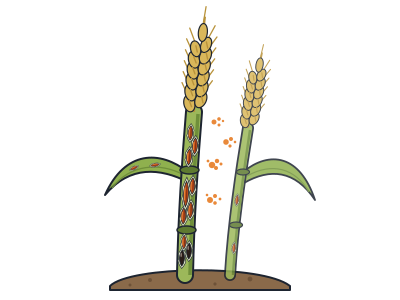
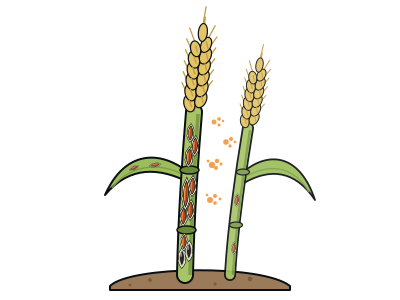
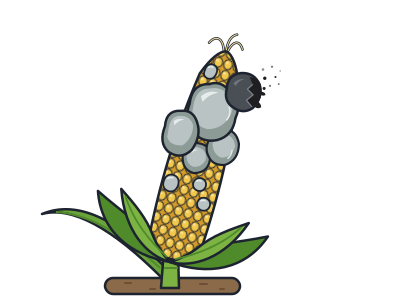
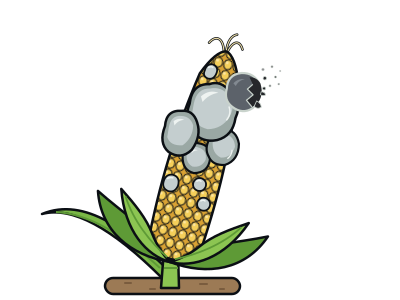
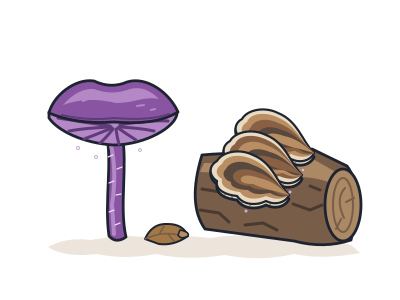
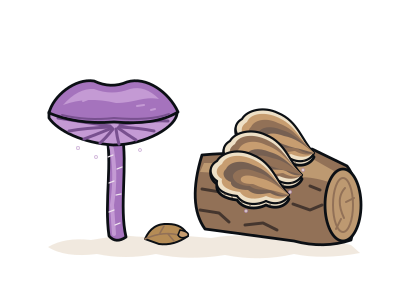
These fungi build bodies shaped like umbrellas, balls, shelves and even smelly cages. A capped mushroom and a bracket sticking out from a log belong to this same broad family. Wheat rust and corn smut are relatives on neighbouring branches of the tree, not mushrooms wearing unusual shapes. And not everyone here builds something big: some members live as tiny yeasts.
The mushroom you see is not the whole fungus. It is the part that makes spores: tiny structures that can travel by wind or animals and start new fungal growth. Beneath it lies a network of fine threads called mycelium. The visible body is only one part of a less obvious living network.
Many members help recycle dead material. As they break down fallen leaves and other remains, nutrients return to the soil. So the mushrooms among the leaves are more than woodland decorations: many belong to fungi helping to clear up.
Pores underneath
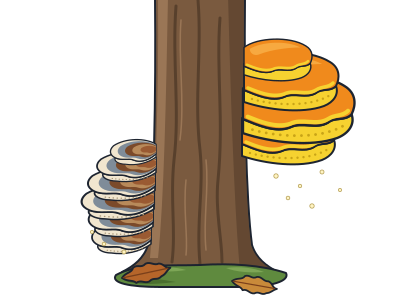
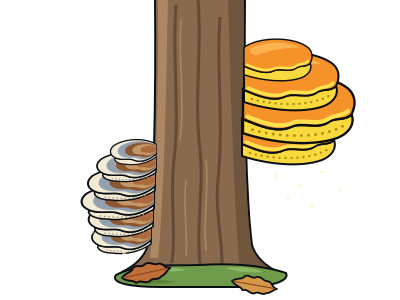
Many brackets release their spores through tiny pores on their lower surface.
Rain-powered launch
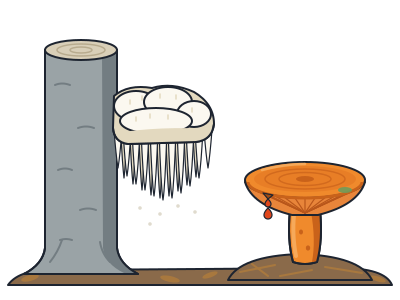
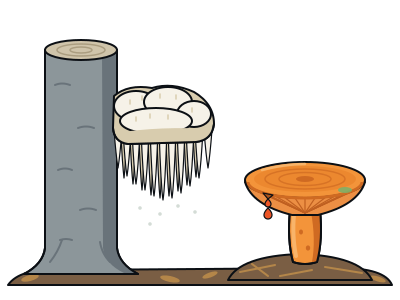
Bird’s nest fungi make tiny cups holding egg-like packets of spores. Raindrops splash the packets out.
Growing circles
Some mushrooms form fairy rings as the hidden fungus spreads outwards and produces mushrooms around its expanding edge.
Inside mushrooms and brackets
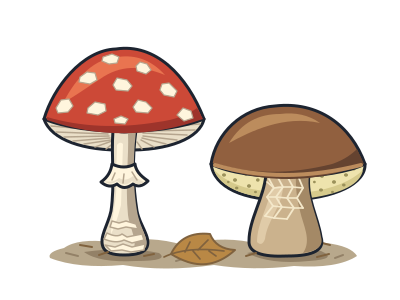
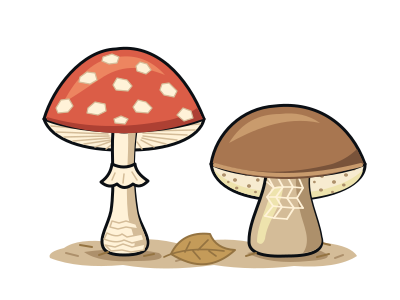
- Gilled mushrooms and boletesClassic cap-and-stalk mushrooms with gills or sponge-like pores underneath.
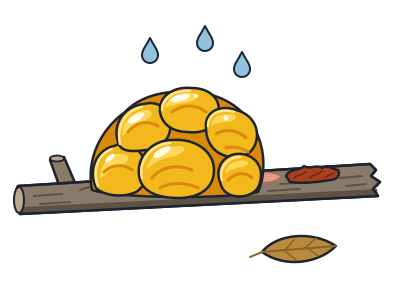
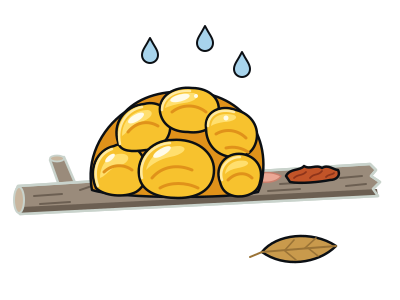
- Witch's butterA wobbly yellow jelly on dead branches that dries crisp and revives after rain.
- Bracket fungiShelves and brackets on trees that recycle wood, with pores instead of gills underneath.
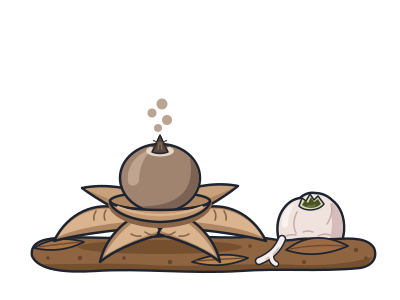
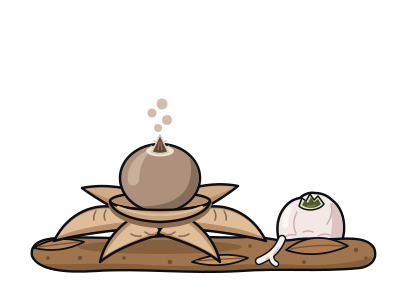
- Stinkhorns and earthstarsFungi that hatch from eggs: smelly stinkhorns that use flies, and earthstars that peel open into stars.
- Chanterelles and kinAn early branch of the mushroom fungi, with wrinkles or spines instead of gills, plus orchid helpers.
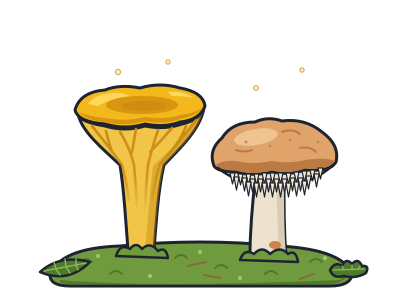
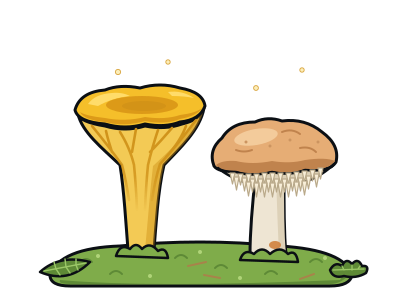
- Milkcaps, brittlegills and lion's maneA group of very different shapes: milky gilled caps, crumbly brittlegills and icicle-like tooth fungi.
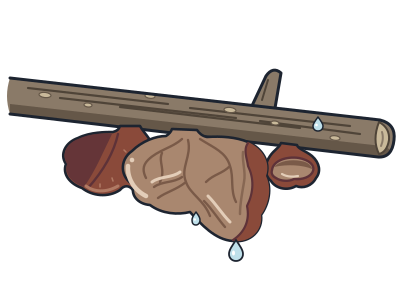
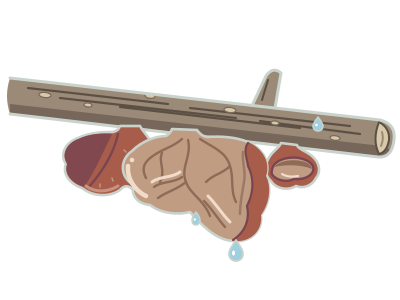
- Jelly earA rubbery brown ear on elder branches; its close relative, wood ear, is a staple of Chinese cooking.
- Astaxanthin yeastA pink yeast from birch sap; its pigment is one of the colours fed to farmed salmon to turn them pink.