A group of living things
Gilled mushrooms and boletes
Agaricomycetidae
Two familiar mushroom shapes, one surprising family connection.
This branch is shown at about 185 million years ago; its age is a rough estimate.
You and gilled mushrooms and boletes meet in the Fungi and animals branch, shown at about 1.3 billion years ago (on 10 September, in a calendar from life's shared ancestor to today).
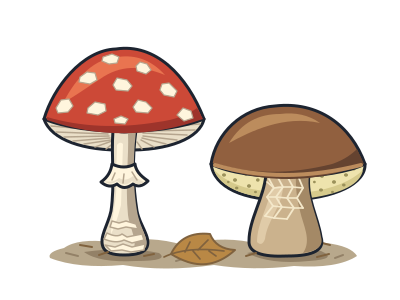
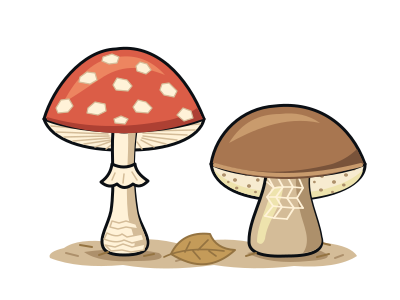
Many classic cap-and-stalk mushrooms have one of two familiar undersides: thin blades called gills, or a sponge-like surface dotted with pores. The main gilled-mushroom branch and the bolete branch belong together in this larger group. Yet not every member looks like a little umbrella. The giant puffball belongs here too, and some relatives spread out as thin crusts.
Those familiar mushrooms are not the whole fungus. They are structures that produce spores: tiny particles that can grow into new fungi. Much of the organism is a network of fine threads hidden in soil, wood or other material. It can remain there when no mushrooms are showing, rather as an apple tree remains when it has no apples.
Members make their living in different ways. Some partner with plant roots, receiving food made using sunlight while helping plants obtain water and nutrients. Others break down dead material. Their threads release substances that digest food outside their bodies, helping return nutrients to the surroundings.
Hidden tubes
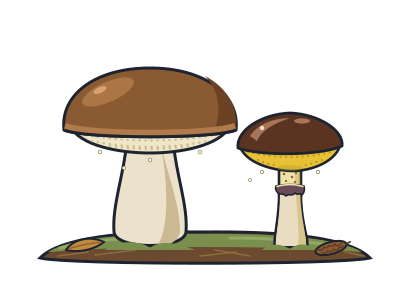
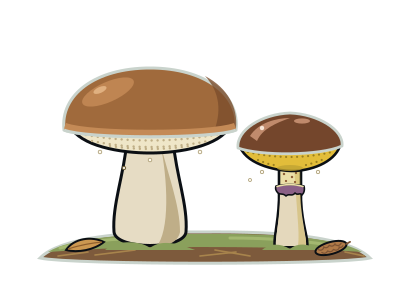
Each pore beneath a bolete's cap opens into a short tube. The tube's inner walls carry the cells that produce its tiny reproductive particles.
A useful lift
A mushroom's stalk lifts its cap above nearby grass and debris, helping its tiny reproductive particles reach moving air.
A puffball's changing coat
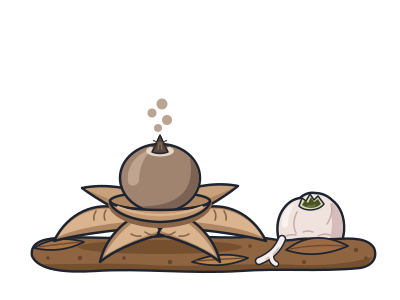
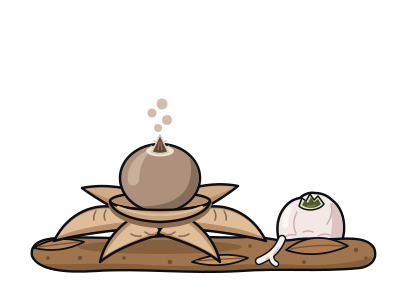
A giant puffball's white skin turns brown and breaks away as it matures. This exposes tiny reproductive particles that wind can carry away.
Inside gilled mushrooms and boletes
- Amber mushroomA tiny mushroom, cap and stalk, trapped in tree resin about 90 million years ago.
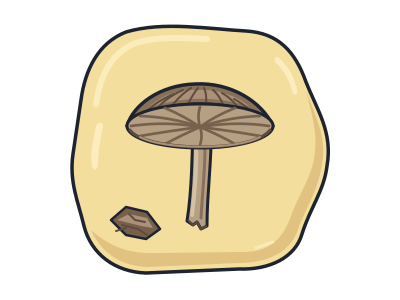
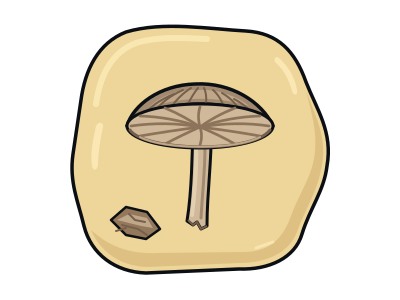
- Gilled mushroomsThe biggest mushroom order: over 13,000 species with gills under the cap, from fairy rings to deadly amanitas.
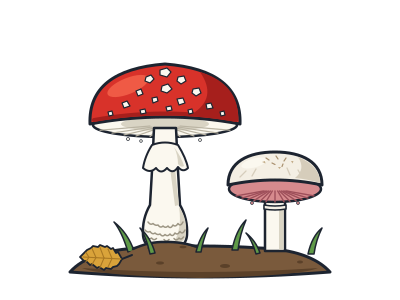
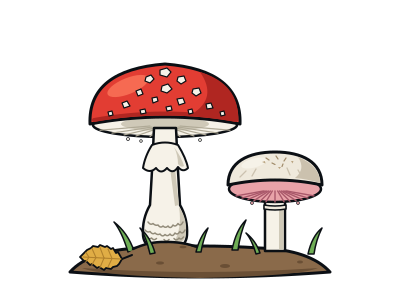
- Boletes and kinMostly spongy-capped tree partners, plus a few odd cousins that rot wood or look like puffballs.
Next to it on the tree
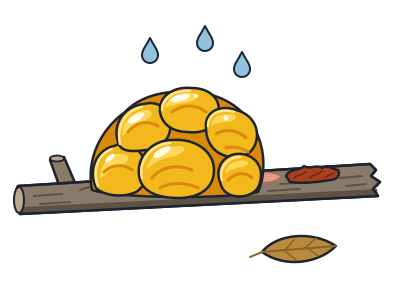
- Witch's butterA wobbly yellow jelly on dead branches that dries crisp and revives after rain.
- Bracket fungiShelves and brackets on trees that recycle wood, with pores instead of gills underneath.
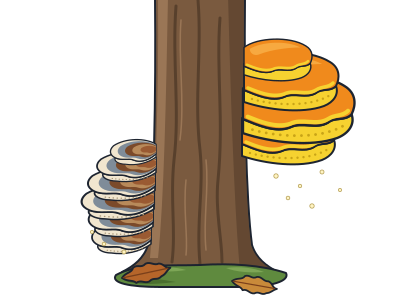
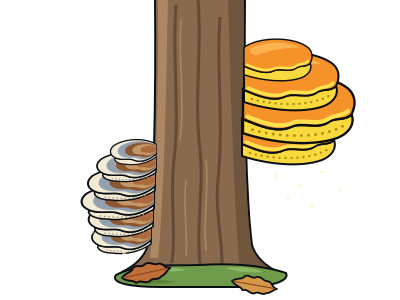
- Stinkhorns and earthstarsFungi that hatch from eggs: smelly stinkhorns that use flies, and earthstars that peel open into stars.
- Chanterelles and kinAn early branch of the mushroom fungi, with wrinkles or spines instead of gills, plus orchid helpers.
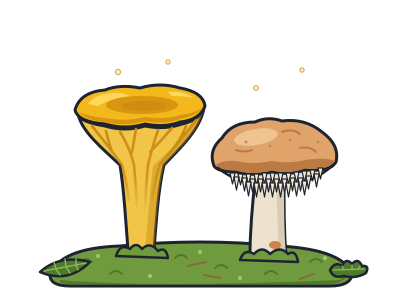
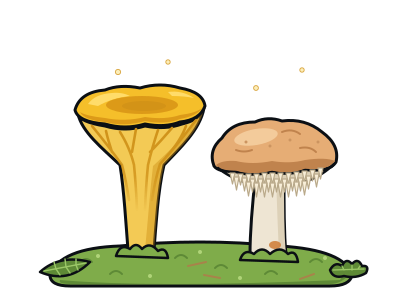
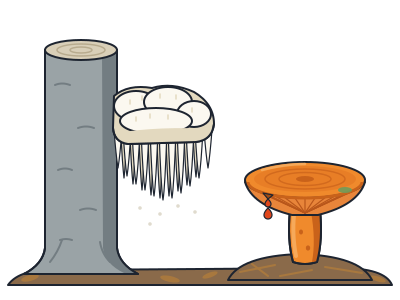
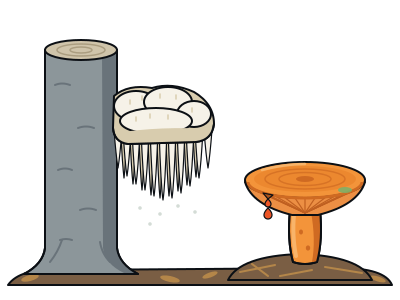
- Milkcaps, brittlegills and lion's maneA group of very different shapes: milky gilled caps, crumbly brittlegills and icicle-like tooth fungi.
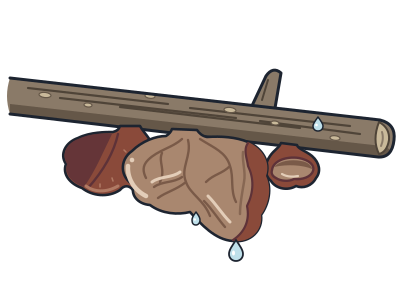
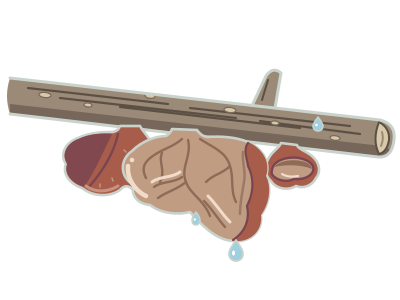
- Jelly earA rubbery brown ear on elder branches; its close relative, wood ear, is a staple of Chinese cooking.
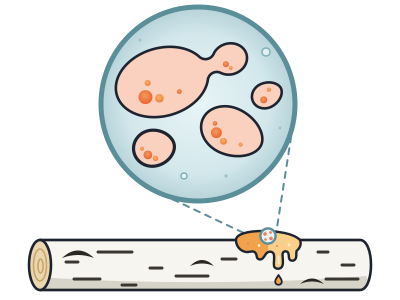
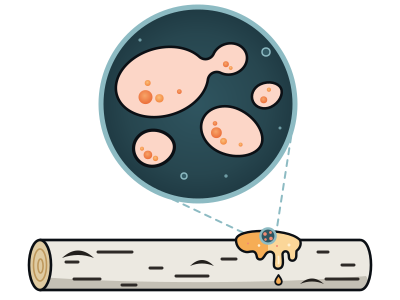
- Astaxanthin yeastA pink yeast from birch sap; its pigment is one of the colours fed to farmed salmon to turn them pink.