A species
Witch's butter
Tremella mesenterica
A wobbly golden jelly that dries to a crisp and comes back to life after rain.
You and the witch's butter meet in the Fungi and animals branch, shown at about 1.3 billion years ago (on 10 September, in a calendar from life's shared ancestor to today).
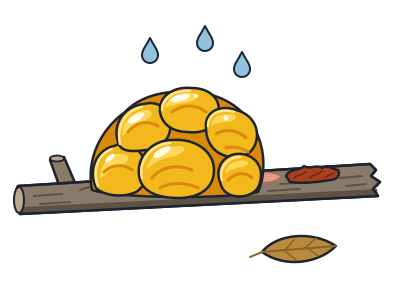
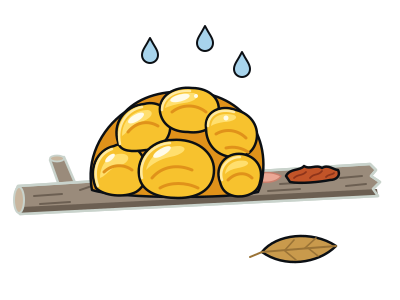
After rain, a dead twig can sprout a wobbly blob of golden jelly. Witch's butter is soft and shiny, with wavy folds like a small brain or a crumpled ribbon. When it's wet it feels greasy or slimy. A few dry days later it has shrunk into a thin, hard, dark orange crust that looks dead. When the next rain comes, it swells up again. This trick helps it get through dry spells.
It doesn't look like a mushroom, but on the tree of life it belongs to the big group of mushroom fungi, along with turkey tail and the golden chanterelle. It has no cap, stem or gills. Instead, it makes its spores over its whole outer surface.
Here is the sneaky part. It doesn't eat the wood it sits on. It is a parasite of another fungus, a crust fungus that is slowly rotting the wood. Look for it on dead sticks and branches of broadleaf trees, often about 1 to 4 centimetres thick with the bark still on. It does not grow on conifers such as pines. It grows in forests across much of the world, from Europe, Asia and Africa to Australia and the Americas.
A name from folklore
The name comes from Swedish folklore. Witches' helpers called 'carriers' were said to bring up yellow stuff in gardens, and people called it the butter of the witches.
A secret yeast life
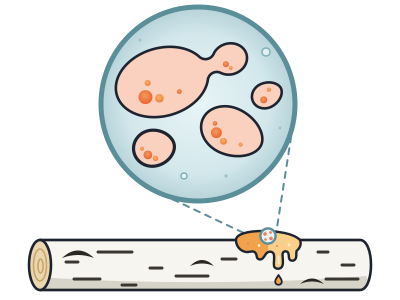
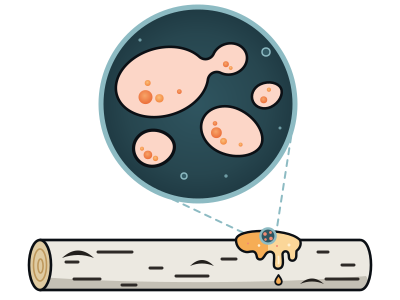
It also has a tiny yeast stage. Its spores can bud into single yeast cells, and matching cells find each other using chemical signals.
Many names
It is also called yellow brain, golden jelly fungus and yellow trembler. A Swedish naturalist first described it scientifically in 1769.
Next to it on the tree
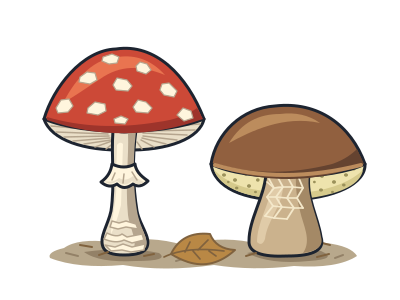
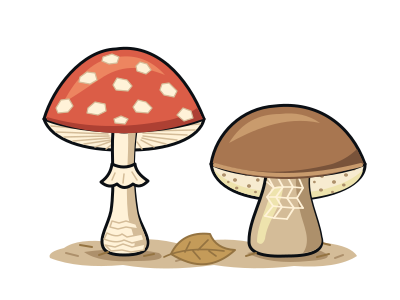
- Gilled mushrooms and boletesClassic cap-and-stalk mushrooms with gills or sponge-like pores underneath.
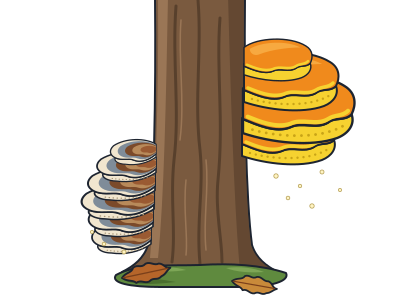
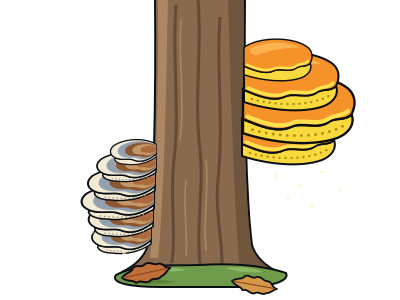
- Bracket fungiShelves and brackets on trees that recycle wood, with pores instead of gills underneath.
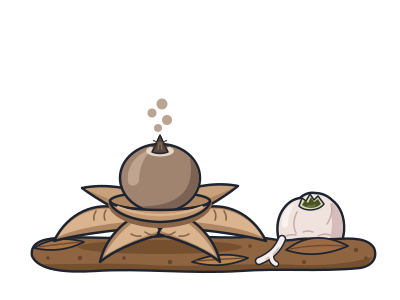
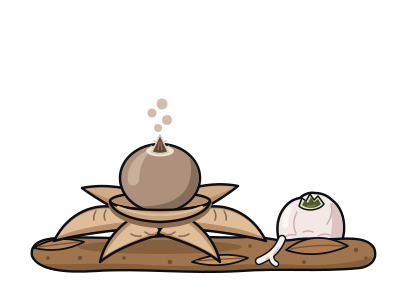
- Stinkhorns and earthstarsFungi that hatch from eggs: smelly stinkhorns that use flies, and earthstars that peel open into stars.
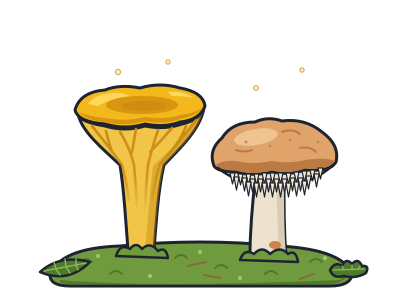
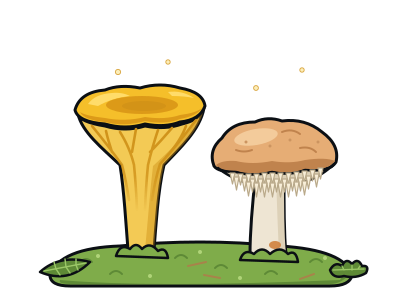
- Chanterelles and kinAn early branch of the mushroom fungi, with wrinkles or spines instead of gills, plus orchid helpers.
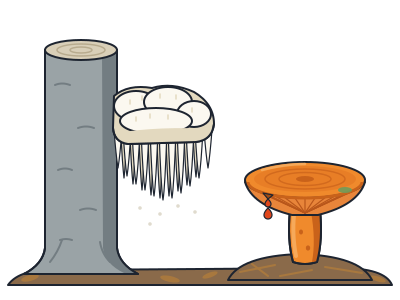
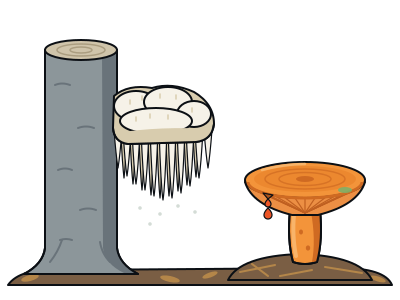
- Milkcaps, brittlegills and lion's maneA group of very different shapes: milky gilled caps, crumbly brittlegills and icicle-like tooth fungi.
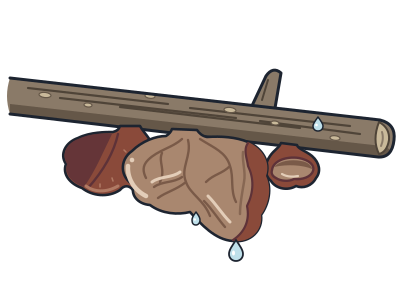
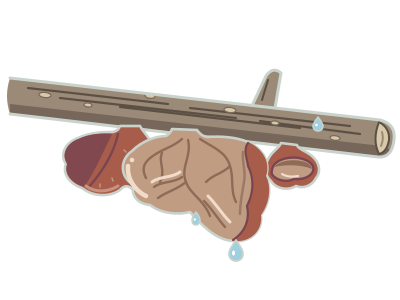
- Jelly earA rubbery brown ear on elder branches; its close relative, wood ear, is a staple of Chinese cooking.
- Astaxanthin yeastA pink yeast from birch sap; its pigment is one of the colours fed to farmed salmon to turn them pink.