A group of living things
Stinkhorns and earthstars
Phallomycetidae
Fungi that hatch from eggs, smell of rotting meat, or open up into stars
This branch is shown at about 140 million years ago; its age is a rough estimate.
You and stinkhorns and earthstars meet in the Fungi and animals branch, shown at about 1.3 billion years ago (on 10 September, in a calendar from life's shared ancestor to today).
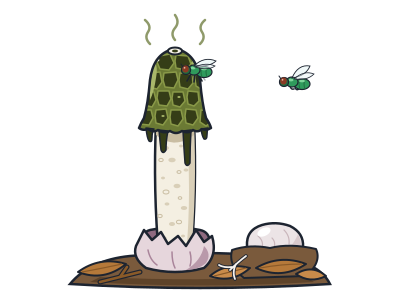
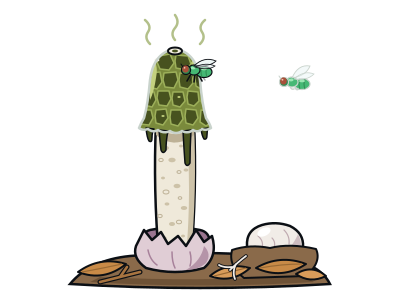
Some fungi start life looking like eggs. A young common stinkhorn is a whitish ball about the size of a hen's egg, half-buried in leaf litter. Inside, a folded-up stalk is wrapped in jelly. When it hatches, the stalk shoots up in just a few hours, and the torn egg is left behind as a cup around its base.
On top of the common stinkhorn sits a cap covered in dark olive slime that smells like rotting meat. The fungus is not rotting. The smell draws in flies, which eat the slime. They carry the spores away on their legs and later drop them in their droppings. It works a bit like a flower using scent to attract insects.
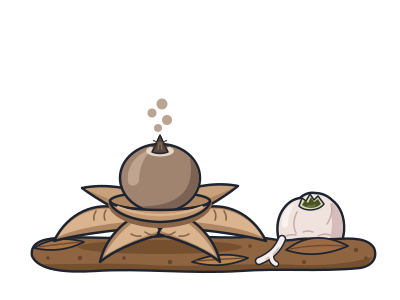
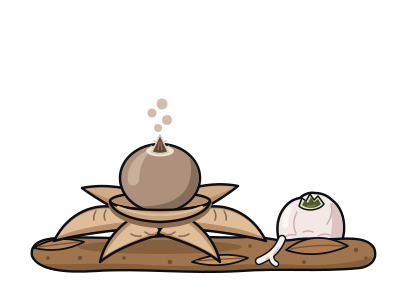
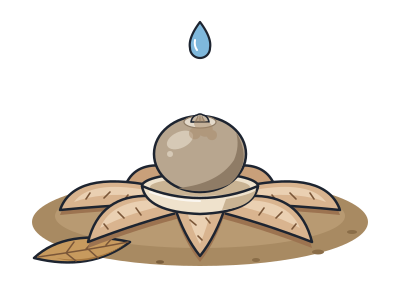
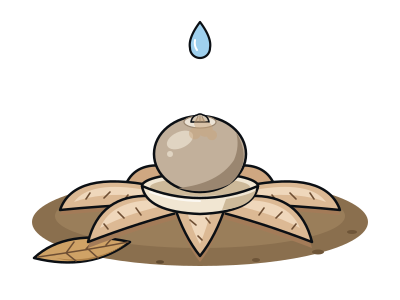
Their close relatives look completely different. A young collared earthstar is a round bud with a pointed tip, partly or fully buried in leaf litter. Its outer skin then splits into pointed rays that peel back and form a star on the ground. In the middle sits a round, papery sac with a small hole at the top. Spores are thought to puff out when raindrops hit the sac, or to be drawn out when wind blows over the hole.
DNA studies show that stinkhorns, earthstars, some coral-like fungi and some truffle-like fungi all belong to one natural family group. Stinkhorns and earthstars help break down dead leaves and rotting wood.
A surprise arrival
The octopus stinkhorn, also called devil's fingers, has pinkish-red arms that unfold like an octopus. It reached Europe around 1914, was first recorded in Britain in 1946, and is still rare there.
Eggs on the menu
Stinkhorn eggs are eaten in parts of France and Germany. Raw, they are described as crisp and crunchy, with a taste like radish.
A star look-alike
The 'barometer earthstar' looks like a true earthstar but is not closely related to it. It belongs with the boletes, and its star shape evolved separately.
Inside stinkhorns and earthstars
- Octopus stinkhornHatches from an egg into red tentacles that smell like rotting meat to attract flies.
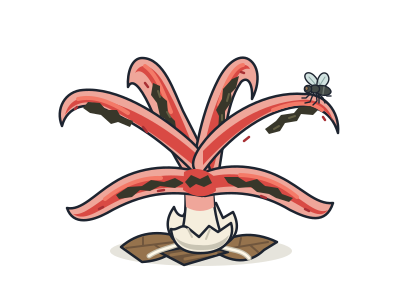
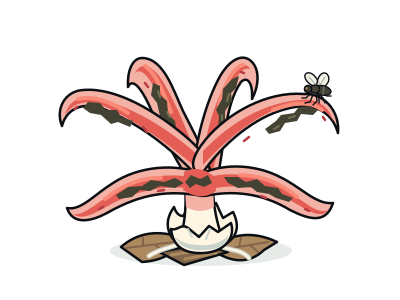
- Common stinkhornRises from a white egg in a few hours, and its smell carries through the woods to call in flies.
- Collared earthstarIts outer skin splits into a star around a ball; a raindrop on the ball puffs out spores.
Next to it on the tree
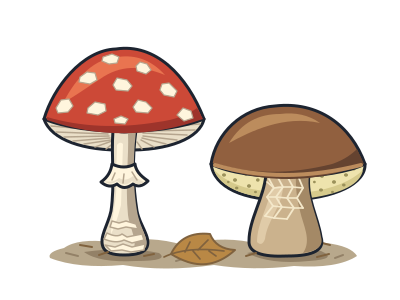
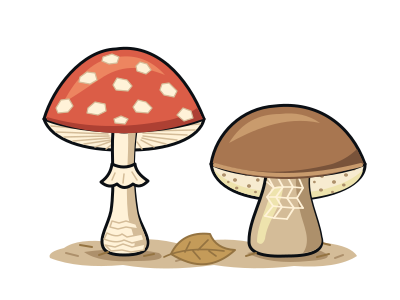
- Gilled mushrooms and boletesClassic cap-and-stalk mushrooms with gills or sponge-like pores underneath.
- Witch's butterA wobbly yellow jelly on dead branches that dries crisp and revives after rain.
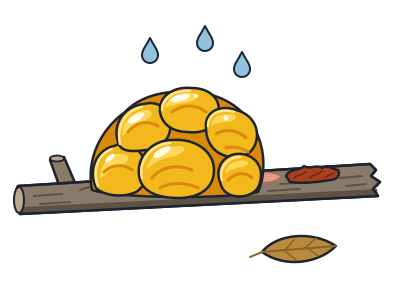
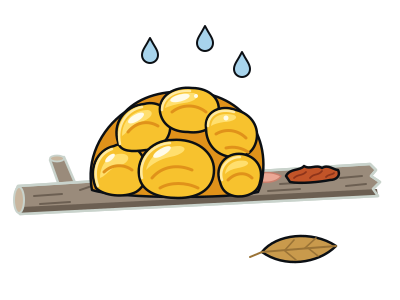
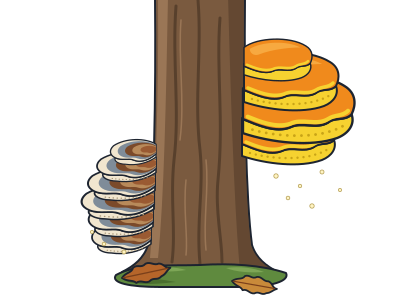
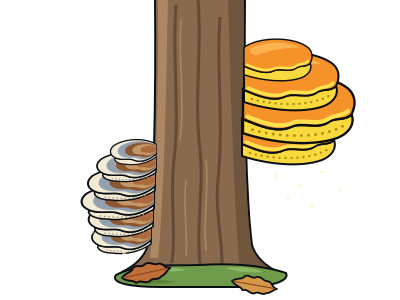
- Bracket fungiShelves and brackets on trees that recycle wood, with pores instead of gills underneath.
- Chanterelles and kinAn early branch of the mushroom fungi, with wrinkles or spines instead of gills, plus orchid helpers.
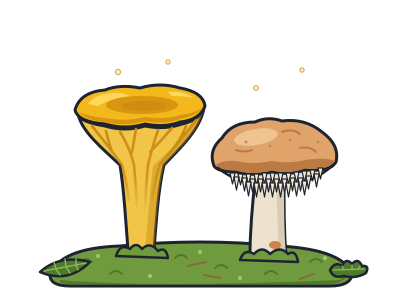
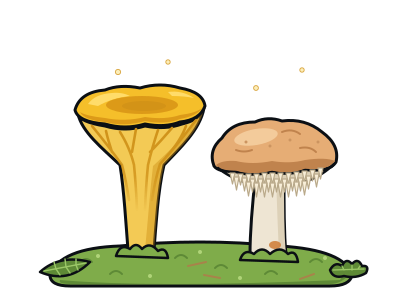
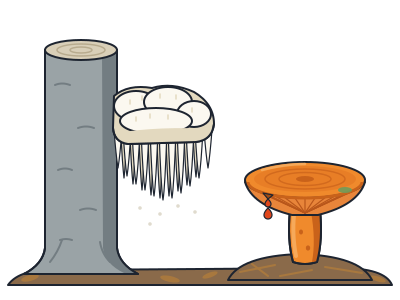
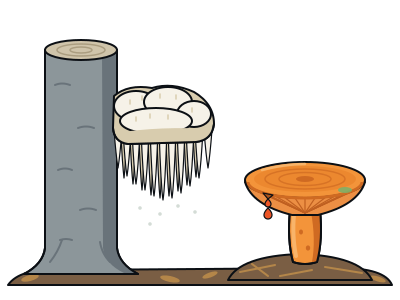
- Milkcaps, brittlegills and lion's maneA group of very different shapes: milky gilled caps, crumbly brittlegills and icicle-like tooth fungi.
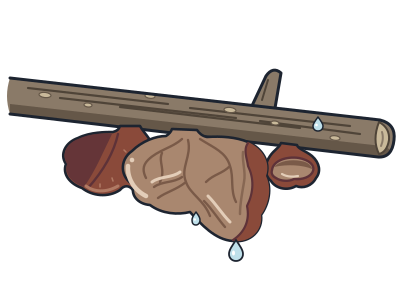
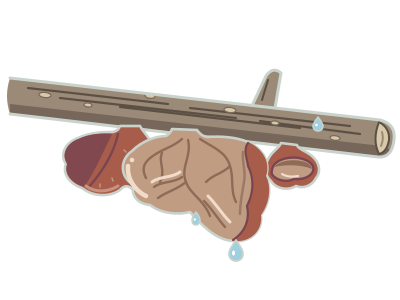
- Jelly earA rubbery brown ear on elder branches; its close relative, wood ear, is a staple of Chinese cooking.
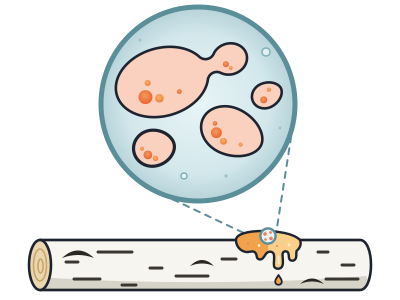
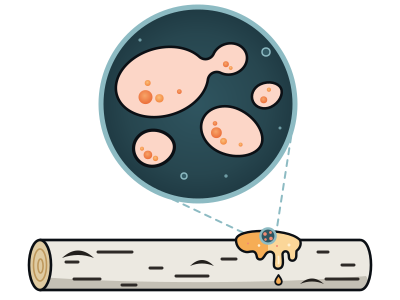
- Astaxanthin yeastA pink yeast from birch sap; its pigment is one of the colours fed to farmed salmon to turn them pink.