A species
Tinder fungus
Fomes fomentarius
The hoof-shaped fire-starter that Ötzi the Iceman carried in his pouch
You and the tinder fungus meet in the Fungi and animals branch, shown at about 1.3 billion years ago (on 10 September, in a calendar from life's shared ancestor to today).
More than 5,300 years ago, a man high in the Alps carried this fungus in his belt pouch to start fires. We call him Ötzi the Iceman. He was found in 1991 on a glacier in northern Italy, and he is older than the Egyptian pyramids. Scientists found that the black material filling most of his pouch contained the tough threads of this fungus.
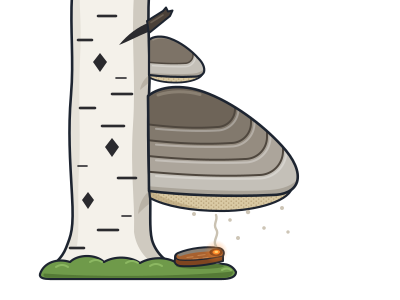
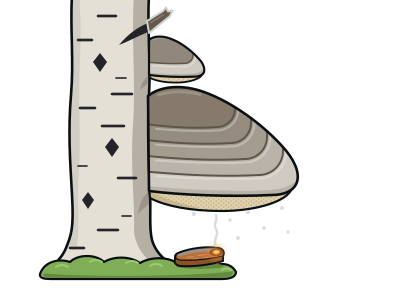
Why a fungus? Its soft inner layer can be cut out and dried. When sparks land on it, it starts to glow. The glow lasts a long time, like a hot coal, so it can be used to light small twigs and build up a proper fire.
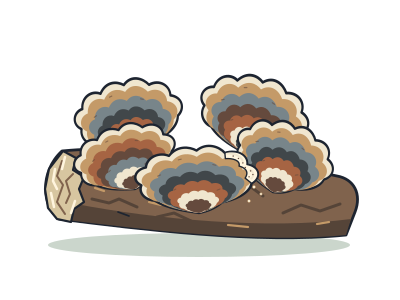
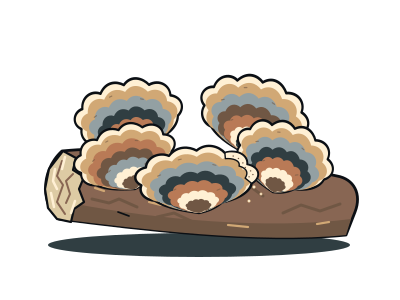
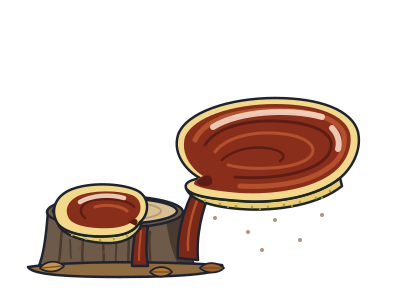
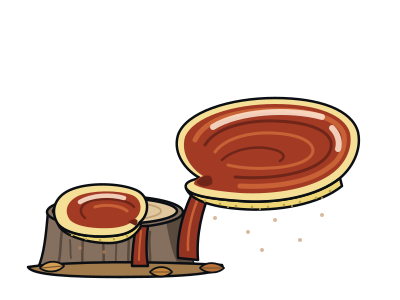
Despite its woody look, it is not a plant. Fungi are more closely related to animals than to plants. Its relatives here include other bracket fungi, such as turkey tail, chicken of the woods and reishi.
Look for a grey shelf shaped like a horse's hoof, usually about 10 to 20 centimetres across, stuck to a birch or beech trunk. It hardly spreads sideways. Instead it adds a new layer underneath each year, sometimes for 30 years or more. The bracket is only the part that releases spores. Most of the fungus is hidden inside the wood as threads, slowly rotting it.
Named for fire
Its scientific name means 'tinder' and 'used for tinder'. It is also called hoof fungus and tinder conk.
Hats from a fungus
The soft inner layer, called amadou, can be pressed into a felt-like fabric. In the Romanian village of Corund, families still make it into hats and bags by hand.
A spore cloud
Some brackets have been reported to release up to about 900 million spores an hour, mostly in spring.