A species
Turkey tail
Trametes versicolor
Striped fans that help recycle fallen wood.
You and the turkey tail meet in the Fungi and animals branch, shown at about 1.3 billion years ago (on 10 September, in a calendar from life's shared ancestor to today).
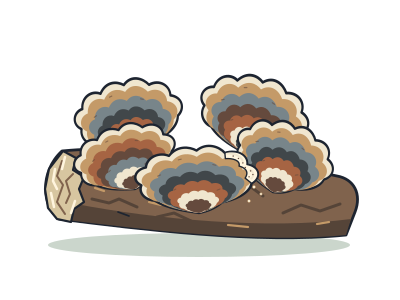
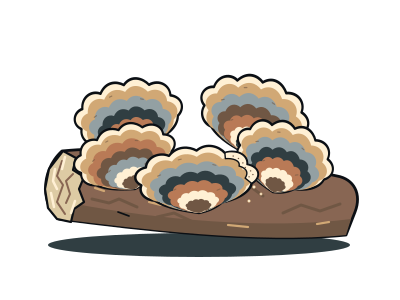
Striped shelves overlap on dead logs like a turkey’s fanned tail. Their curved bands give turkey tail its name, but this is a fungus, not anything feathered. It belongs to the same broad fungal branch as gilled mushrooms, stinkhorns and jelly fungi, despite their very different shapes.
The colourful shelves are only part of the story. Much of the fungus lives inside the wood as a whitish network of fine threads. The shelves are its spore-producing parts: tiny pores underneath release spores that allow the fungus to spread. Bands above can include brown, rust-orange and grey-blue, usually with a pale outer edge.
Inside the log, the fungus slowly breaks down tough wood. It uses some of that material and helps return nutrients to the soil, rather than simply turning the whole log into soil unchanged. It mainly feeds on dead hardwood, though it sometimes grows on conifer wood too.
Velvet above, leather within
The upper surface feels finely hairy or velvety. Fresh shelves are thin and flexible, but also tough and leathery.
A widespread recycler
Turkey tail has been recorded on every continent except Antarctica and is very common in Australia.
A lookalike with a clue
False turkey tail can look similar from above, but its underside is smooth rather than covered in tiny pores.
Next to it on the tree
- Chicken of the woodsBright orange-and-yellow shelves on oaks that cooks say taste like chicken.
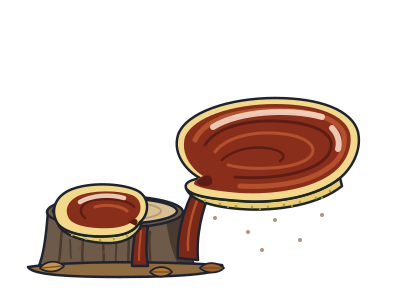
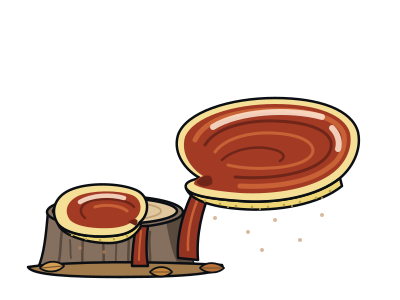
- ReishiA glossy red-brown bracket that looks varnished; prized in Chinese tradition for over 2,000 years.
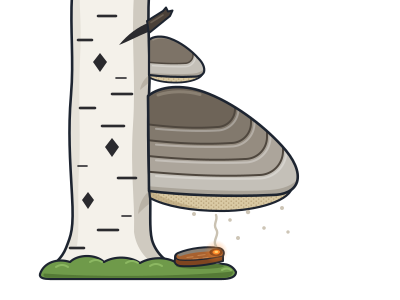
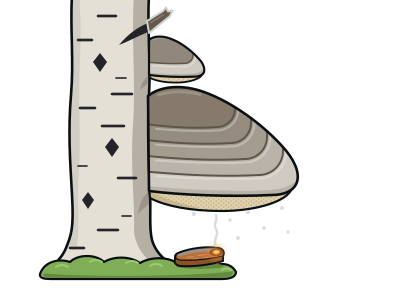
- Tinder fungusA hoof-shaped bracket used for fire-starting; the Iceman Ötzi carried some 5,300 years ago.