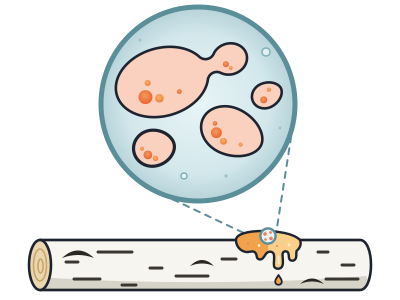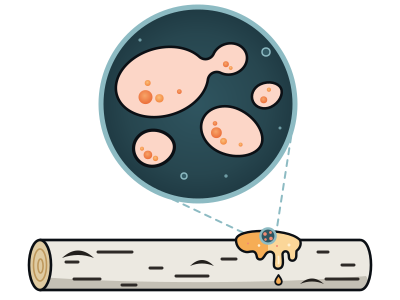
A group of living things
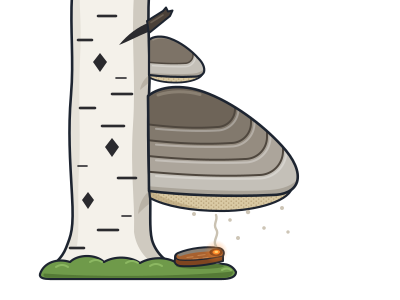
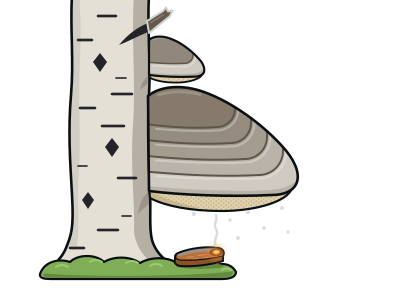
Bracket fungi
Polyporales
Tree-trunk shelves that recycle wood, with pores instead of gills underneath
This branch is shown at about 150 million years ago; its age is a rough estimate.
You and bracket fungi meet in the Fungi and animals branch, shown at about 1.3 billion years ago (on 10 September, in a calendar from life's shared ancestor to today).
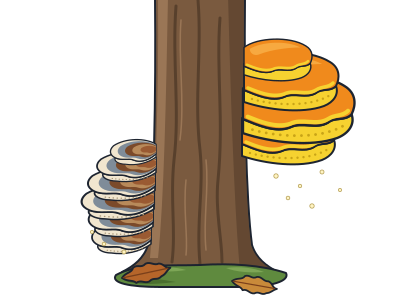
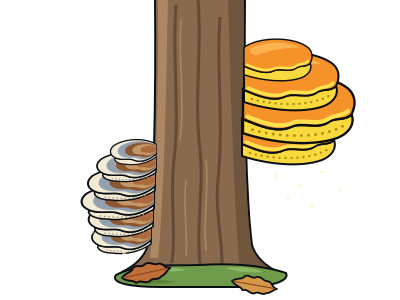
Those tough shelves sticking out of tree trunks and old stumps are bracket fungi. Turn one over and you won't find gills like a shop-bought mushroom has. Instead, the underside is covered in tiny pores, often too small to see, and the spores drift out of them. Most of the group's roughly 1,800 species live on wood, from living trees to rotting logs.
That makes them some of the forest's most important recyclers. Some can break down even lignin, the tough material that makes wood woody. Others mostly eat the cellulose and leave crumbly brown leftovers behind.
On the tree of life, they sit among the mushroom fungi, near gilled mushrooms, boletes and chanterelles. Like all fungi, they are more closely related to animals, including you, than to the trees they grow on. The group has a few surprises too. DNA shows that some crust-like fungi and even a few gilled mushrooms belong here. Meanwhile, the pored-shelf shape has evolved separately in at least 12 groups of fungi.
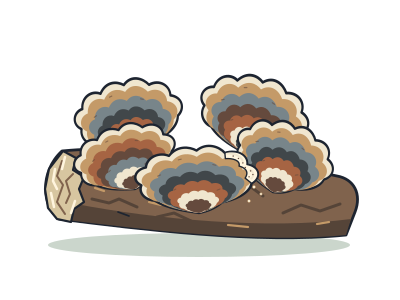
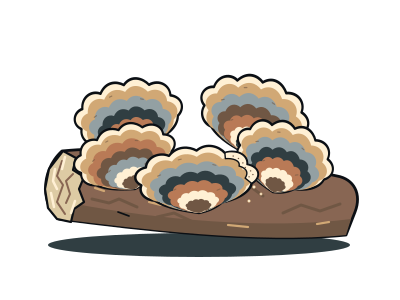
Two common members are easy to picture. Turkey tail grows as thin, wavy fans stacked like roof tiles. Each fan has bands of brown, cream and sometimes blue, a bit like a turkey's tail fan. Chicken-of-the-woods forms thick, bright golden-yellow shelves that can be wider than a dinner plate.
The Iceman's fire kit
Ötzi the Iceman lived about 5,300 years ago and carried pieces of tinder fungus for starting fires. People soaked, beat and stretched this fungus into a felt called amadou.
A record-breaking clump
A clump of chicken-of-the-woods found in Hampshire, UK, in 1990 weighed about 45 kilograms, which is about as heavy as a large dog.
Growing for decades
Some brackets add a new layer and get bigger each year. Tinder fungus can last for about 30 years, and a few bracket fungi on living trees have lived for more than 80.
Inside bracket fungi
- Turkey tailStriped shelves on dead logs, like a fanned tail; it slowly turns wood back into soil.
- Chicken of the woodsBright orange-and-yellow shelves on oaks that cooks say taste like chicken.
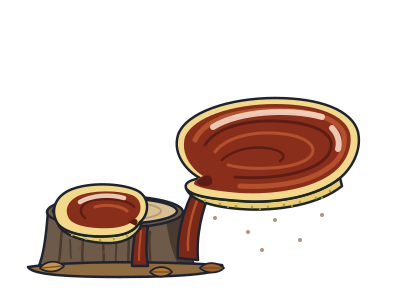
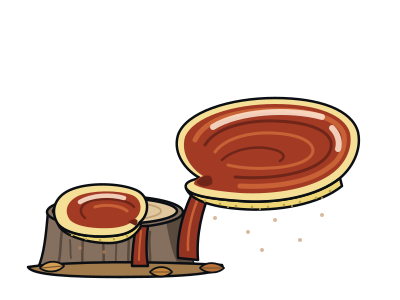
- ReishiA glossy red-brown bracket that looks varnished; prized in Chinese tradition for over 2,000 years.
- Tinder fungusA hoof-shaped bracket used for fire-starting; the Iceman Ötzi carried some 5,300 years ago.
Next to it on the tree
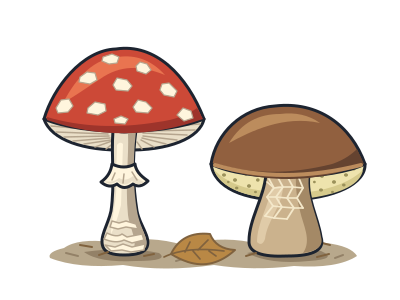
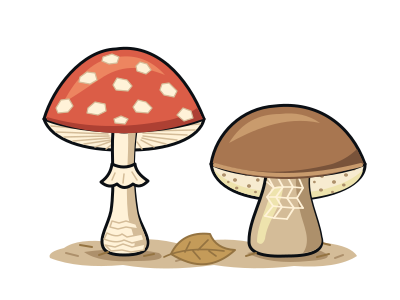
- Gilled mushrooms and boletesClassic cap-and-stalk mushrooms with gills or sponge-like pores underneath.
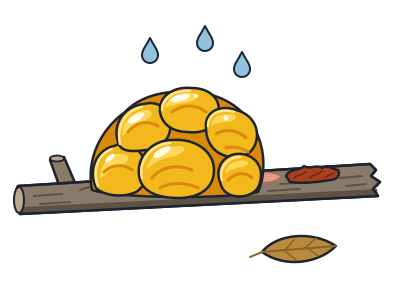
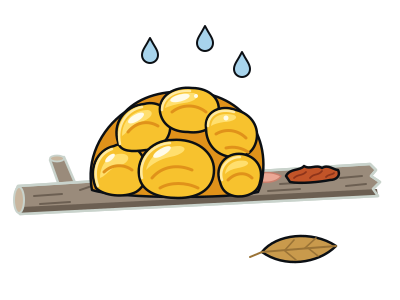
- Witch's butterA wobbly yellow jelly on dead branches that dries crisp and revives after rain.
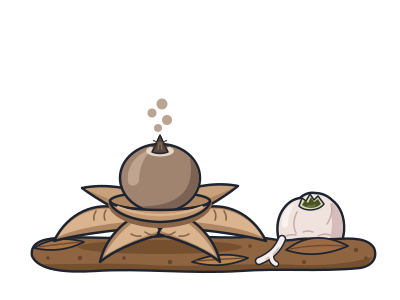
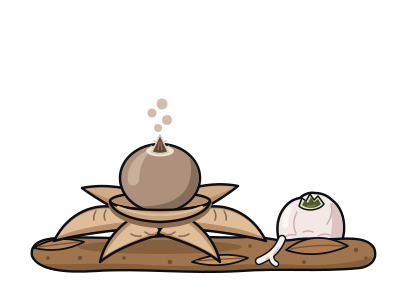
- Stinkhorns and earthstarsFungi that hatch from eggs: smelly stinkhorns that use flies, and earthstars that peel open into stars.
- Chanterelles and kinAn early branch of the mushroom fungi, with wrinkles or spines instead of gills, plus orchid helpers.
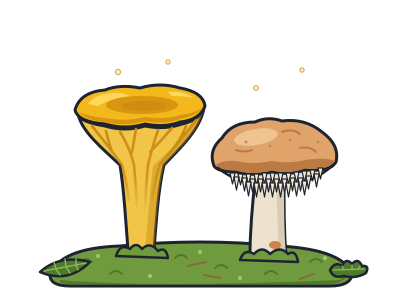
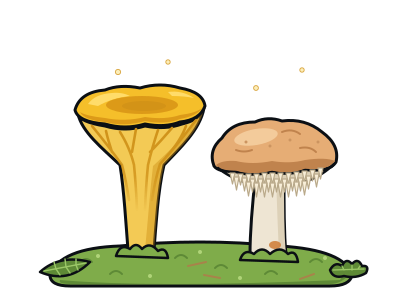
- Milkcaps, brittlegills and lion's maneA group of very different shapes: milky gilled caps, crumbly brittlegills and icicle-like tooth fungi.
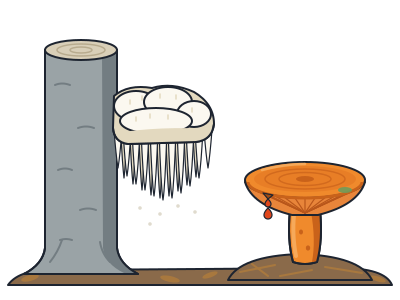
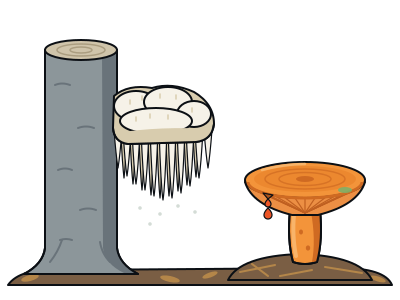
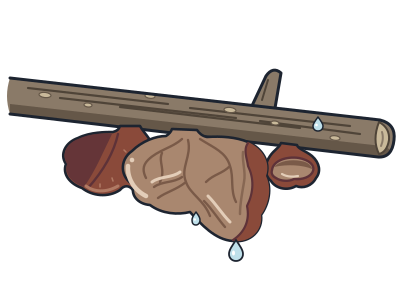
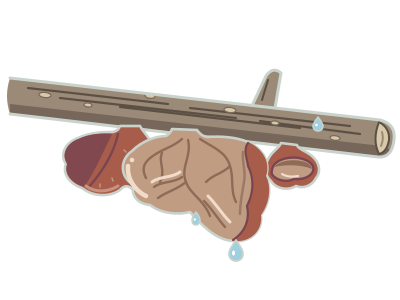
- Jelly earA rubbery brown ear on elder branches; its close relative, wood ear, is a staple of Chinese cooking.
- Astaxanthin yeastA pink yeast from birch sap; its pigment is one of the colours fed to farmed salmon to turn them pink.