A group of living things
Milkcaps, brittlegills and lion's mane
Russulales
Orange milky caps, chalky brittlegills and icicle fungi all belong to one surprising group.
This branch is shown at about 125 million years ago; its age is a rough estimate.
You and milkcaps, brittlegills and lion's mane meet in the Fungi and animals branch, shown at about 1.3 billion years ago (on 10 September, in a calendar from life's shared ancestor to today).
This group looks like a crowd of strangers. It includes neat gilled mushrooms, crumbly caps that snap like chalk, coral-like branching fungi, shelf-like crusts on wood and tooth fungi that hang like icicles. There are about 3,400 kinds. They belong on one branch of the tree even though they look so different.
The brittlegills and milkcaps have gills under their caps. Surprisingly, they are not close relatives of most other gilled mushrooms. Their gills evolved separately. Brittlegills often have brightly coloured caps. Their flesh is packed with round cells, so it breaks cleanly like chalk or an apple instead of tearing into strings.
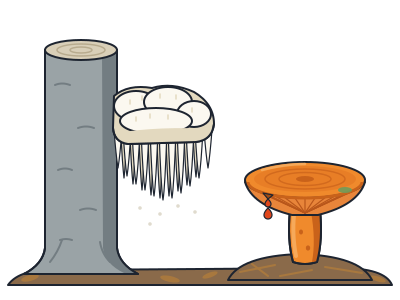
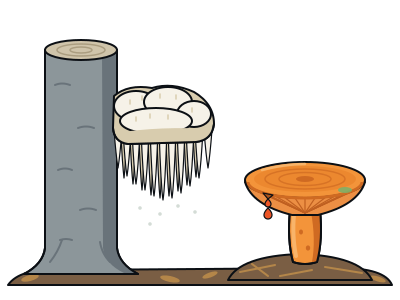
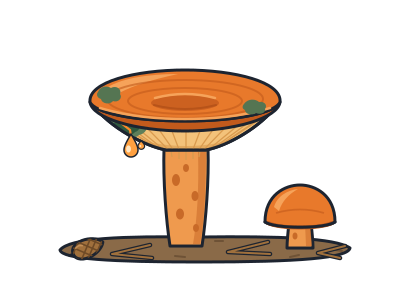
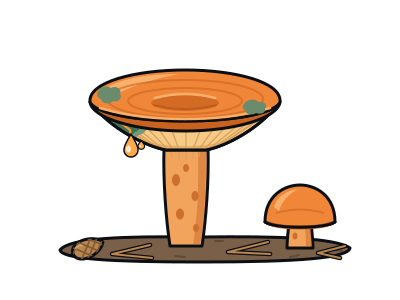
The saffron milk cap has a carrot-orange cap, about palm-sized, that becomes vase-shaped as it grows. Broken flesh oozes orange-red 'milk', and bruised spots slowly turn green. It comes from Europe, but it was carried to Australia with pine trees and now grows in pine plantations there.
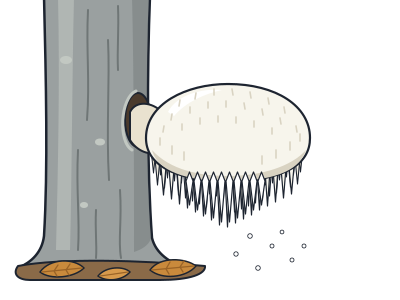
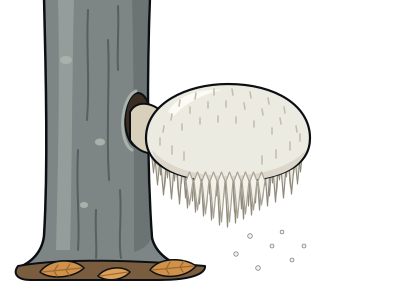
Lion's mane has no cap and no stem. It is a white, rounded clump that can be anything from smaller than a tennis ball to bigger than a football. It grows on hardwood trees such as beech and oak. Soft spines more than a centimetre long hang down like icicles. It makes its spores on these spines instead of on gills.
Orange surprise
Eating a lot of saffron milk caps can turn a person's urine orange-red.
Hard to get started
Wild lion's mane is red-listed in several European countries, partly because its spores struggle to sprout and take hold.
Woodland snack
Slugs, squirrels and deer eat brittlegill mushrooms as a seasonal food.
Inside milkcaps, brittlegills and lion's mane
Next to it on the tree
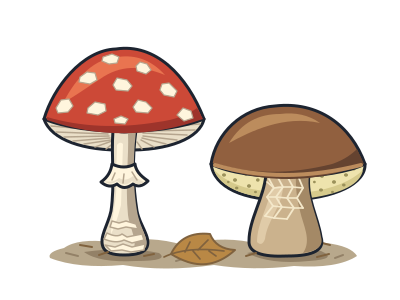
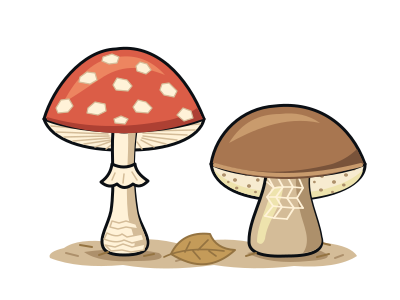
- Gilled mushrooms and boletesClassic cap-and-stalk mushrooms with gills or sponge-like pores underneath.
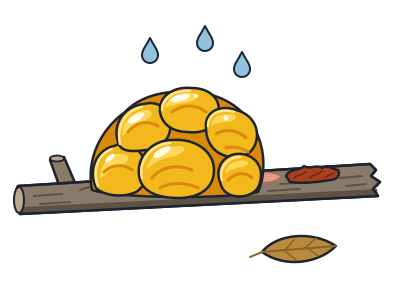
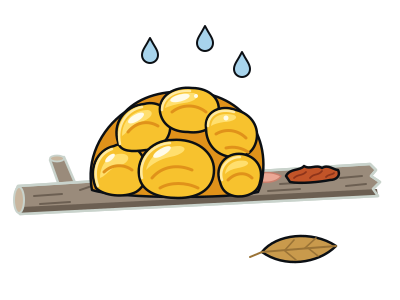
- Witch's butterA wobbly yellow jelly on dead branches that dries crisp and revives after rain.
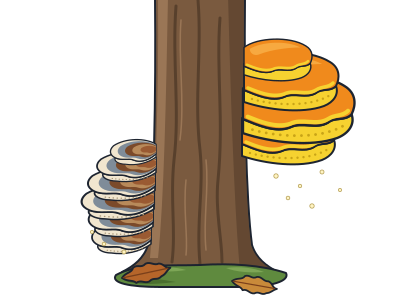
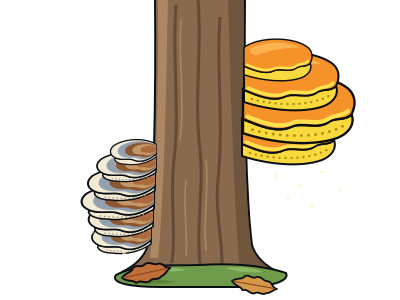
- Bracket fungiShelves and brackets on trees that recycle wood, with pores instead of gills underneath.
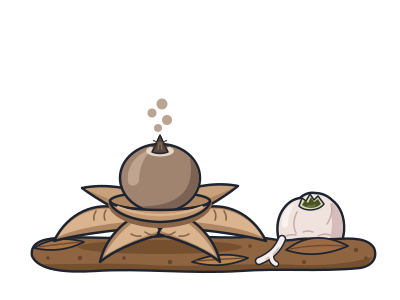
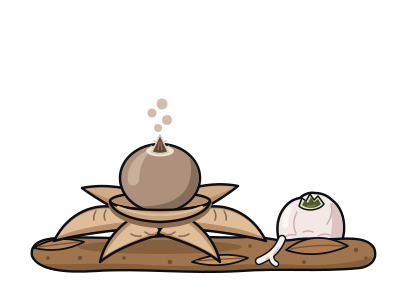
- Stinkhorns and earthstarsFungi that hatch from eggs: smelly stinkhorns that use flies, and earthstars that peel open into stars.
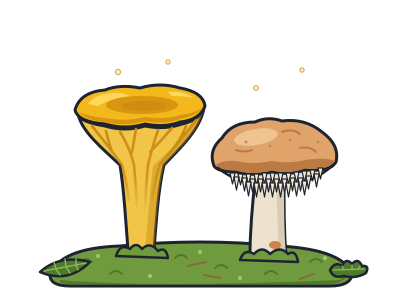
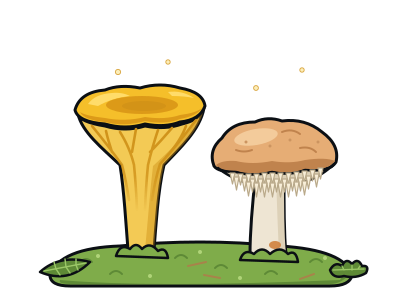
- Chanterelles and kinAn early branch of the mushroom fungi, with wrinkles or spines instead of gills, plus orchid helpers.
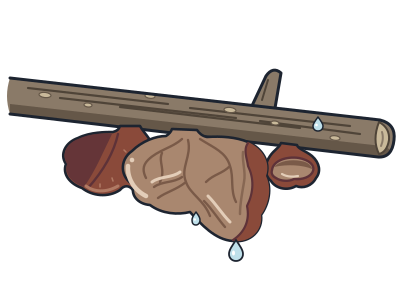
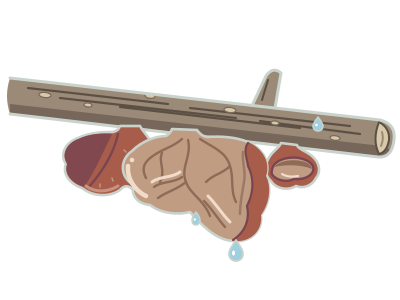
- Jelly earA rubbery brown ear on elder branches; its close relative, wood ear, is a staple of Chinese cooking.
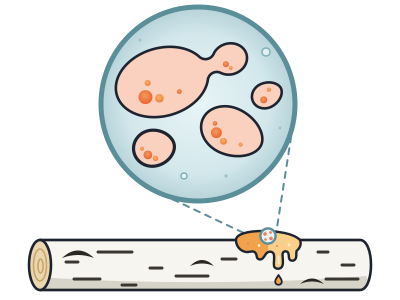
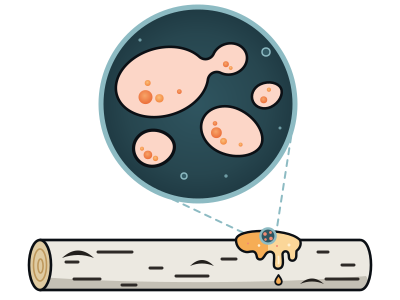
- Astaxanthin yeastA pink yeast from birch sap; its pigment is one of the colours fed to farmed salmon to turn them pink.