A group of living things
Sac and mushroom fungi
Dikarya
From bread yeast to toadstools, one enormous fungal branch.
This branch is shown at about 900 million years ago; its age is a rough estimate.
You and sac and mushroom fungi meet in the Fungi and animals branch, shown at about 1.3 billion years ago (on 10 September, in a calendar from life's shared ancestor to today).
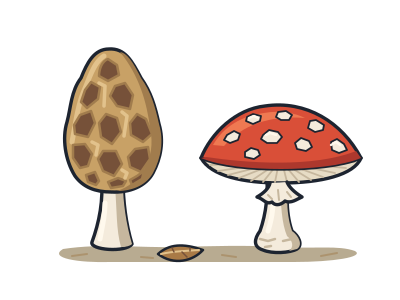
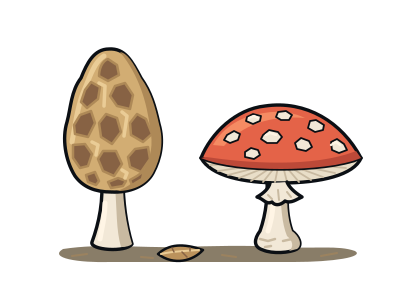
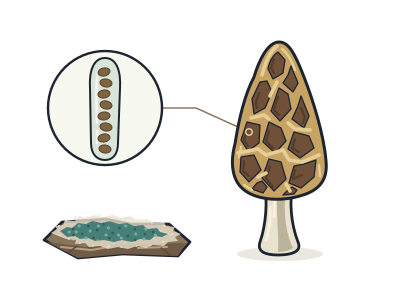
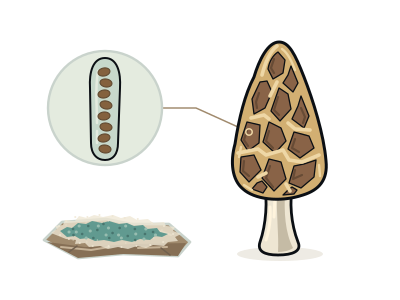
Most fungi you know, from yeast to truffles to toadstools, belong to this one big branch. Its two main branches are sac fungi and mushroom fungi. Baker’s yeast belongs to the sac fungi, alongside morels and truffles, despite looking nothing like them. Picture a morel beside a toadstool: they represent two different branches within this larger fungal family.
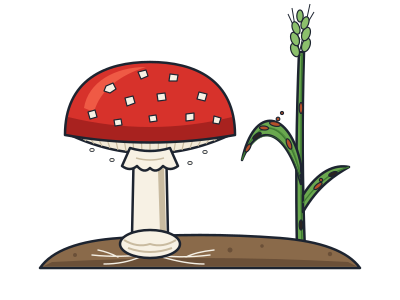
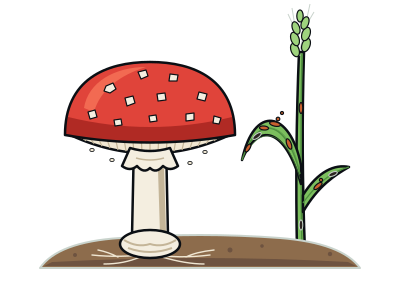
The clearest difference between those branches is too small to see without a microscope. Sac fungi make their sexual spores inside tiny sacs. Mushroom fungi make theirs on the outside of tiny cells, commonly shaped like clubs. Spores are reproductive cells that can grow into new fungi. Their position tells us more about these family relationships than a cap or stalk does.
A mushroom is only the spore-producing part of a fungus, not its whole body. Much of the fungus can stay hidden as a network of fine threads. One hidden network may produce many mushrooms, or none when conditions are unsuitable.
Yeasts cross the divide
Both main branches contain yeasts. Living as a single cell is a way of life, not a sign of belonging to just one fungal family.
More than caps and stalks
The mushroom-fungus branch also includes puffballs, stinkhorns, bracket fungi and jelly fungi.
Tiny travellers
Mushroom spores are typically less than a hundredth of a millimetre long. Gentle air currents can carry them.
Inside sac and mushroom fungi
Next to it on the tree
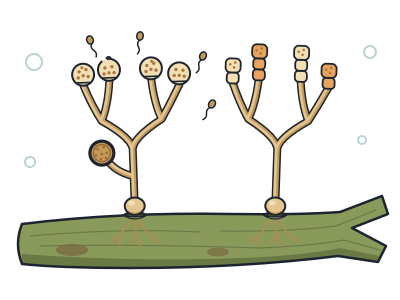
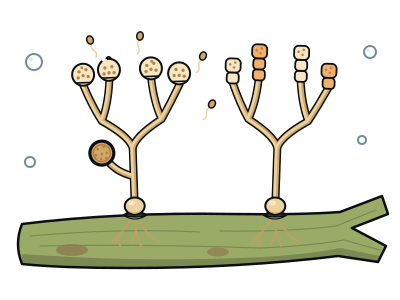
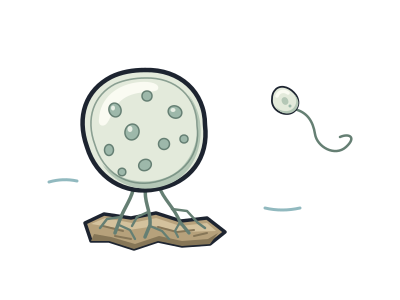
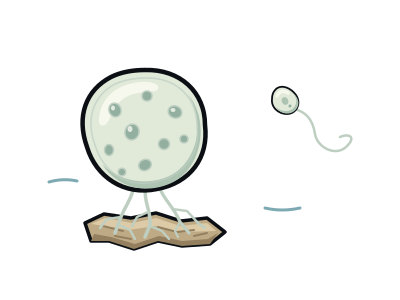
- ChytridsTiny water fungi with swimming spores and tails, like the fungi of the earliest kind.
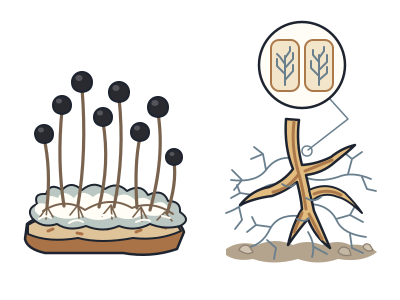
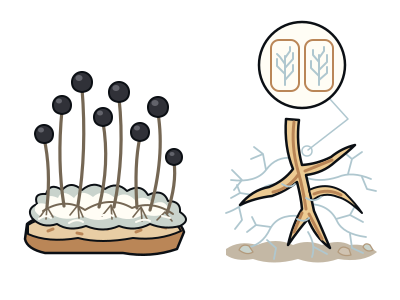
- Pin moulds and root partnersFuzzy bread mould is a cousin of the fungi that helped the first plants move onto land.
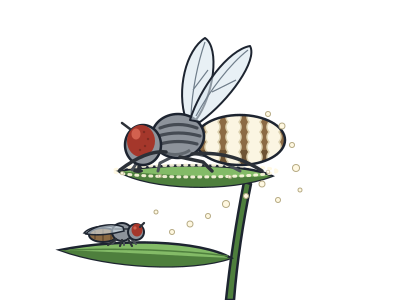
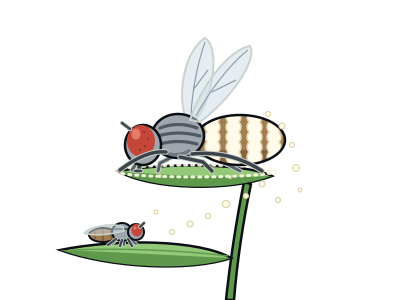
- Fly-killing fungusInfects house flies, makes them climb high, then sprays spores from their bodies onto flies below.
- OurasphairaMicroscopic threads and spores from a billion years ago, possibly the oldest fungus fossil known.
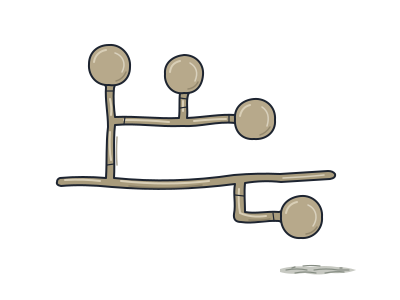
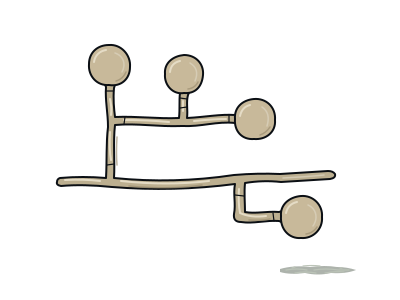
- TortotubusBranching threads 440 million years old, among the oldest fossils of a fungus living on land.
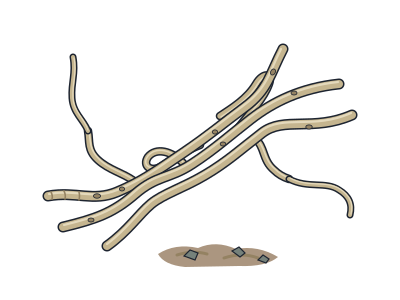
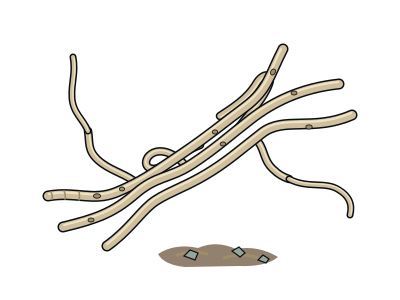
- Allomyces water mouldA water fungus whose swimming cells use one tail to find partners; a lab model for how sex cells meet.
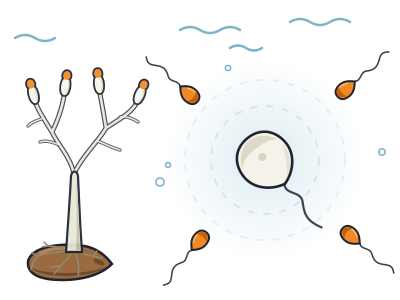
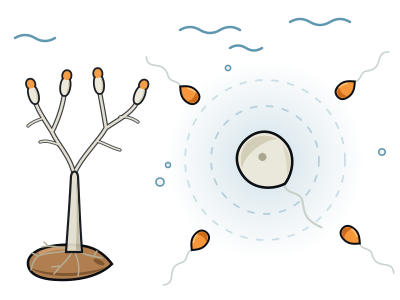
- PalaeoblastocladiaTiny fungi on a 407-million-year-old plant stem, with swimming-spore sacs like living Allomyces.