A species
Allomyces water mould
Allomyces macrogynus
A pond fungus whose tiny swimming sex cells follow a chemical trail to find each other.
You and the allomyces water mould meet in the Fungi and animals branch, shown at about 1.3 billion years ago (on 10 September, in a calendar from life's shared ancestor to today).
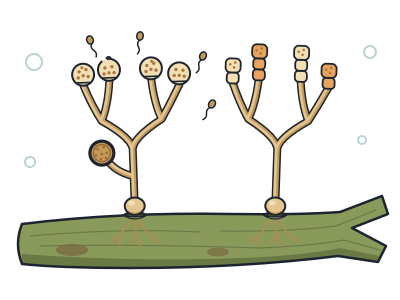
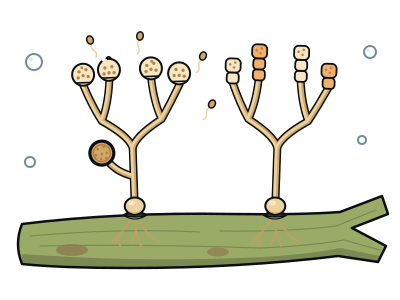
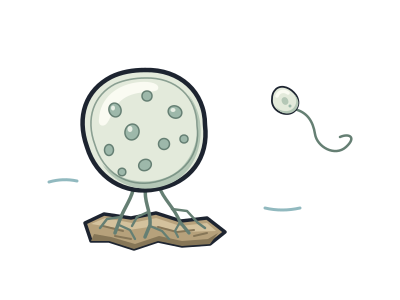
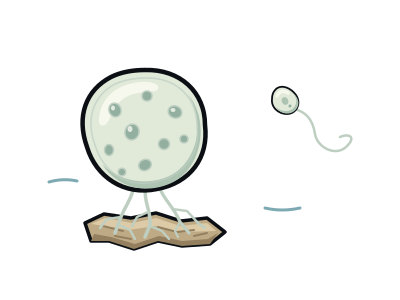
This tiny fungus lives in ponds and wet soil. Its body stays put, but it does something a mushroom never does: it makes cells that swim. Each swimming cell has a single tail at the back that pushes it along. Some of these cells are sex cells, and each one has to find a partner in the water.
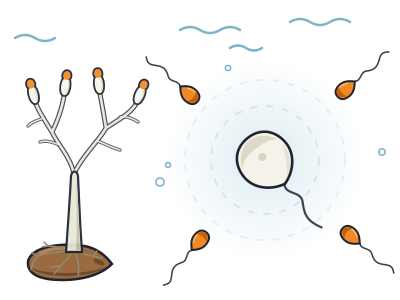
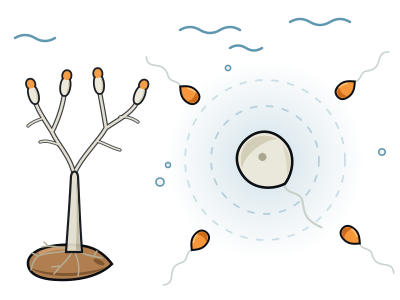
The male sex cells are small, orange and quick. The female cells are colourless, slower and about twice as big. The females give off a scent-like chemical that draws the males in, and the males make their own chemical that attracts the females. The males are amazingly sensitive to the female's signal: about twenty million times more sensitive than they are to chemicals from food. Because all of this is so clear under a microscope, scientists use this fungus to study how sex cells meet.
Here is the surprise. This fungus still carries genes for a calcium channel that biologists long thought was found only in animal sperm. Most other fungi and land plants have lost these genes. The female's signal chemical can even switch on this channel in human sperm. That hints that the tools sperm use to steer are very old. They may go back close to the very beginning of complex cells, long before fungi or animals existed.
Two lookalike generations
Its life swaps between two generations that look alike. One has a single set of chromosomes and makes sex cells. The other has a double set and makes spores. This pattern is better known from plants and seaweeds.
Built to wait out droughts
When conditions turn bad, it makes thick-walled resting spore cases, coloured reddish-brown by the pigment melanin. These can survive drying out and later release swimming spores.
Caught with a seed
It feeds on dead plant and animal matter, such as fallen fruit and leaf litter. To collect it, scientists drop a sterilised seed into a soil or water sample as bait and wait for it to grow.
Next to it on the tree
- ChytridsTiny water fungi with swimming spores and tails, like the fungi of the earliest kind.
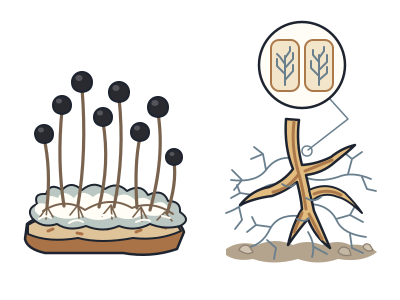
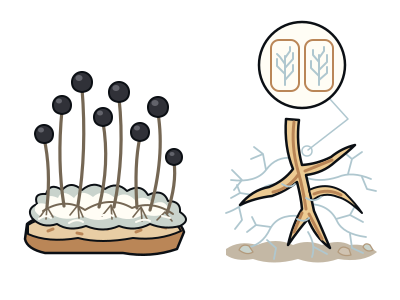
- Pin moulds and root partnersFuzzy bread mould is a cousin of the fungi that helped the first plants move onto land.
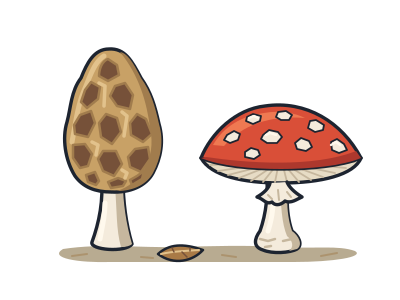
- Sac and mushroom fungiMost fungi you know, from yeast to truffles to toadstools, belong to this one big branch.
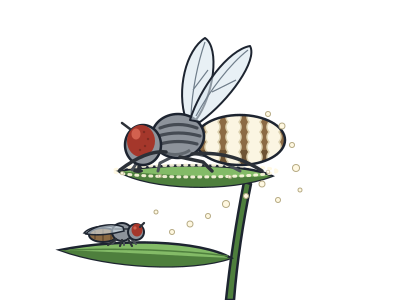
- Fly-killing fungusInfects house flies, makes them climb high, then sprays spores from their bodies onto flies below.
- OurasphairaMicroscopic threads and spores from a billion years ago, possibly the oldest fungus fossil known.
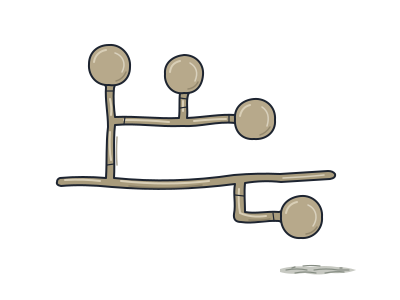
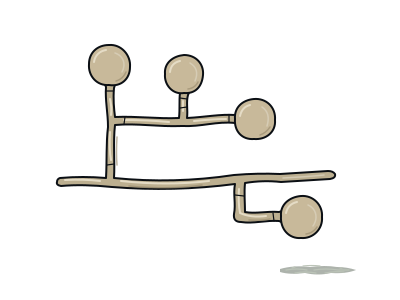
- TortotubusBranching threads 440 million years old, among the oldest fossils of a fungus living on land.
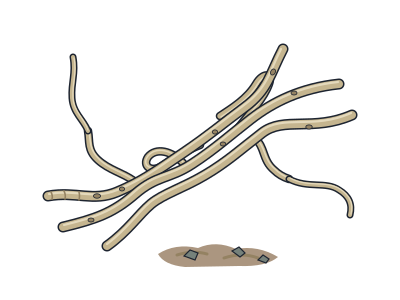
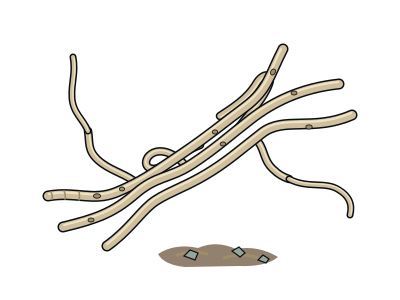
- PalaeoblastocladiaTiny fungi on a 407-million-year-old plant stem, with swimming-spore sacs like living Allomyces.