A group of living things
Pin moulds and root partners
Mucoromycota
An unlikely family, from bread to roots.
This branch is shown at about 900 million years ago; its age is a rough estimate.
You and pin moulds and root partners meet in the Fungi and animals branch, shown at about 1.3 billion years ago (on 10 September, in a calendar from life's shared ancestor to today).
Fuzzy bread mould has surprising cousins: root-partner fungi like those that probably helped the first plants settle on land. This branch brings together moulds that break down plant material and fungi that trade with living roots. They are different members of the family, not one fungus switching between two jobs.
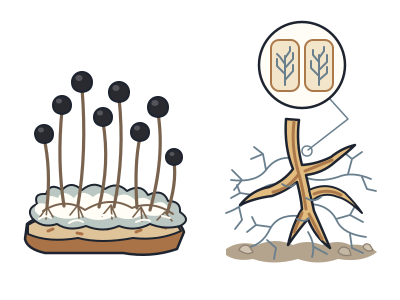
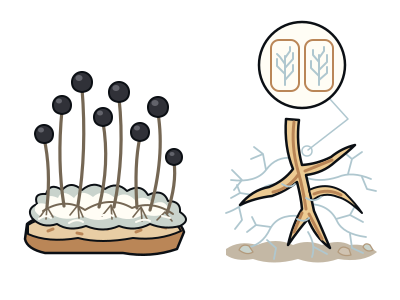
On black bread mould, slender brown stalks end in round black cases. These pin-heads are spore cases, not miniature mushrooms. Below them, connecting threads link tufts that anchor the mould in place.
Root partners work out of sight. Their fine threads reach from roots into soil, exploring gaps too small for roots to enter. They can help plants obtain water and nutrients, receiving plant-made sugars in return. A fungus inside a root is therefore not necessarily harming the plant: it may be part of a useful exchange.
Tiny shrubs inside roots
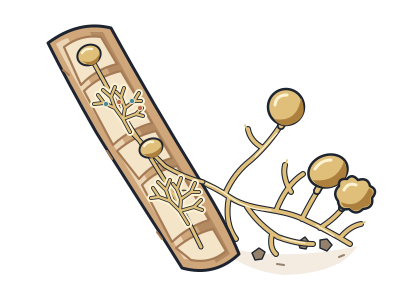
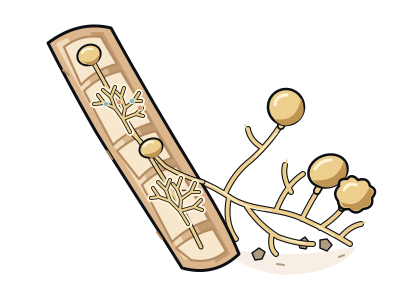
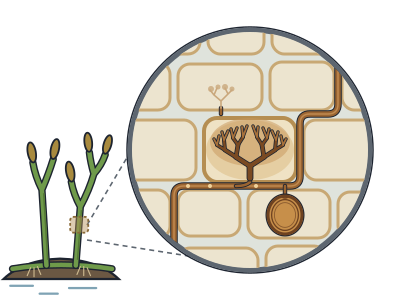
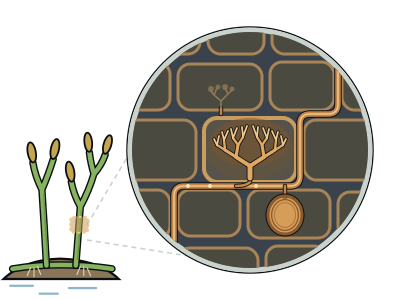
Some root partners form densely branching structures inside root cells. Called arbuscules, they look like miniature shrubs.
Stalks point away from anchors
In black bread mould, the spore-bearing stalks rise in the opposite direction from the root-like anchoring tufts.
Other families make partnerships too
Not every root-partner fungus belongs to this group. Some mushroom-forming fungi also live in partnership with roots.
Inside pin moulds and root partners
- Black bread mouldThe fuzz on old bread, topped with tiny black balls each packed with thousands of spores.
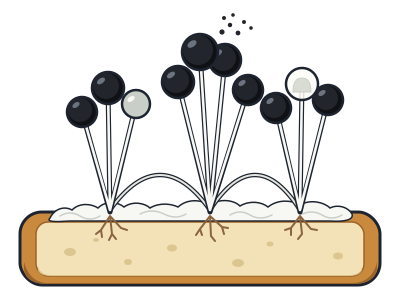
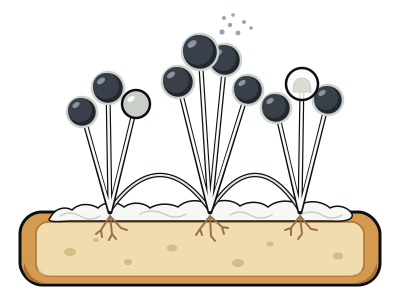
- Root-partner fungusGrows inside plant roots, trading water and minerals for sugar with most of the world's plants.
- Hat thrower fungusGrows on dung and aims at the light, firing its spore cap up to 2 metres to land on fresh grass.
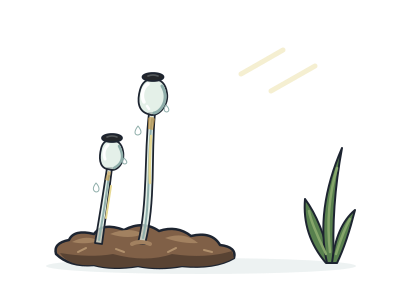
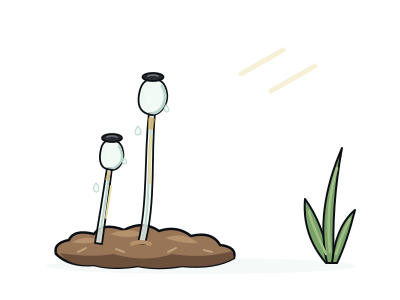
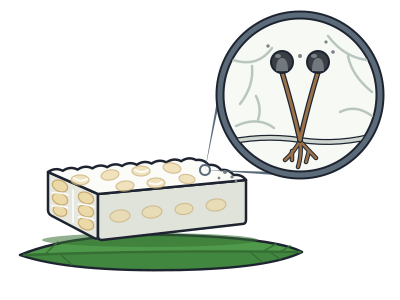
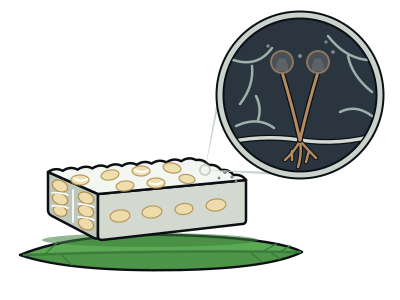
- Tempeh mouldBinds boiled soybeans into a firm white cake overnight, making tempeh, a staple food of Java.
- MortierellaA soil mould grown in tanks to make an oil added to baby formula.
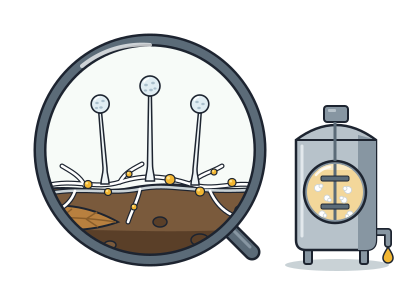
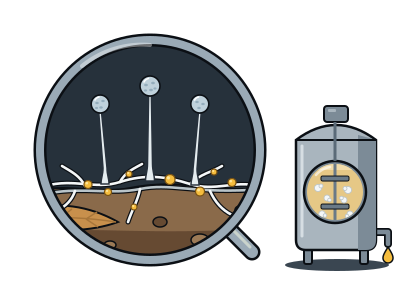
- GeosiphonA fungus that grows tiny bladders on soil and keeps living cyanobacteria inside to make its food.
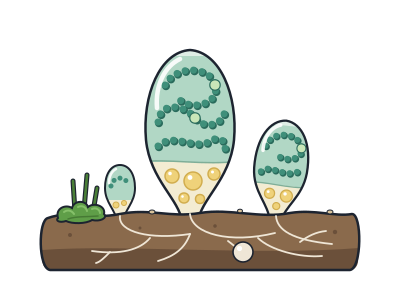
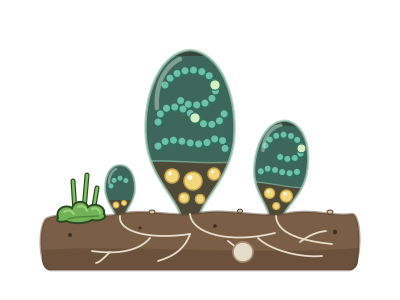
- GlomitesTiny tree-shaped feeding structures inside a 407-million-year-old plant, proof that root partners are ancient.
Next to it on the tree
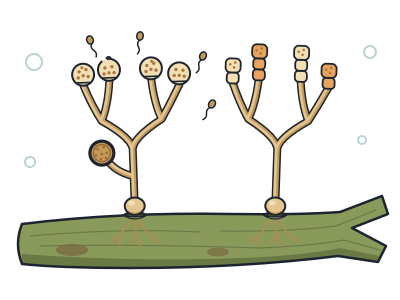
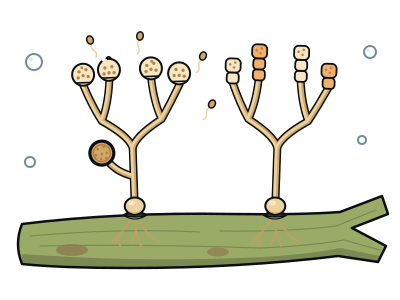
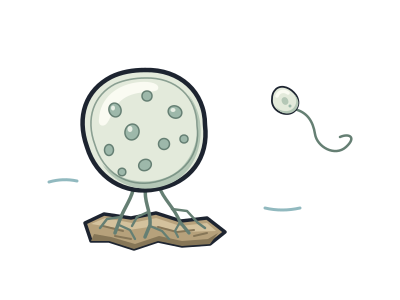
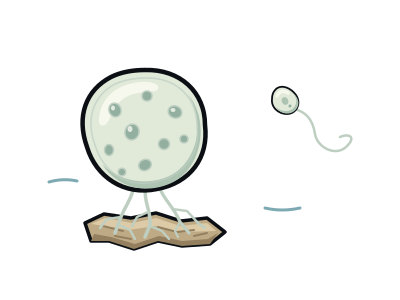
- ChytridsTiny water fungi with swimming spores and tails, like the fungi of the earliest kind.
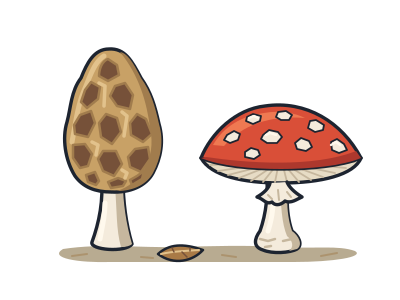
- Sac and mushroom fungiMost fungi you know, from yeast to truffles to toadstools, belong to this one big branch.
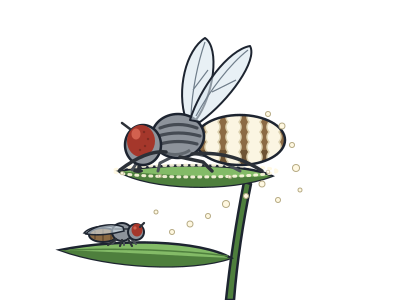
- Fly-killing fungusInfects house flies, makes them climb high, then sprays spores from their bodies onto flies below.
- OurasphairaMicroscopic threads and spores from a billion years ago, possibly the oldest fungus fossil known.
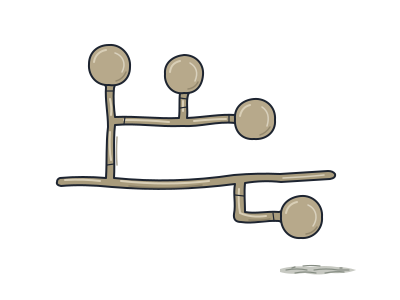
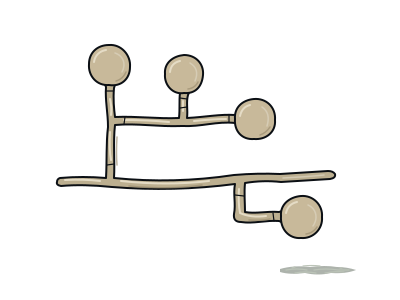
- TortotubusBranching threads 440 million years old, among the oldest fossils of a fungus living on land.
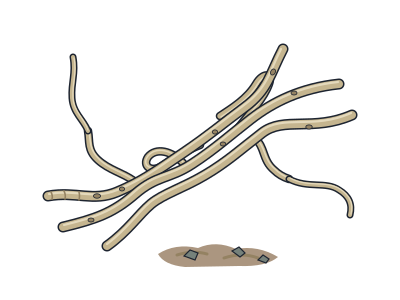
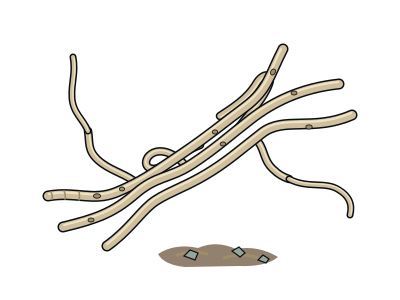
- Allomyces water mouldA water fungus whose swimming cells use one tail to find partners; a lab model for how sex cells meet.
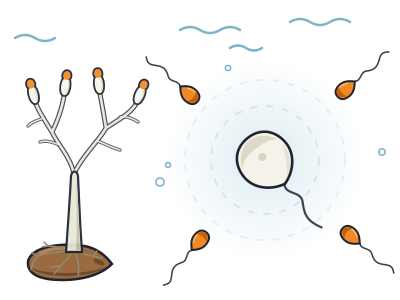
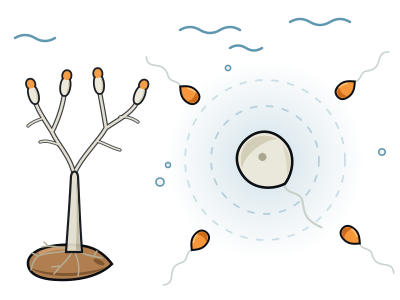
- PalaeoblastocladiaTiny fungi on a 407-million-year-old plant stem, with swimming-spore sacs like living Allomyces.