A species
Root-partner fungus
Rhizophagus irregularis
A fungus that trades with living roots
You and the root-partner fungus meet in the Fungi and animals branch, shown at about 1.3 billion years ago (on 10 September, in a calendar from life's shared ancestor to today).
Inside plant roots, this fungus trades minerals for sugars and fats—and can supply water too. Surprisingly, it belongs to the same broad fungal branch as bread mould relatives. It is not part of the plant it lives with.
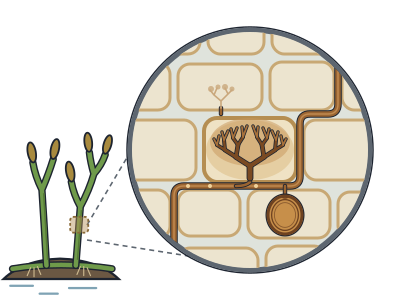
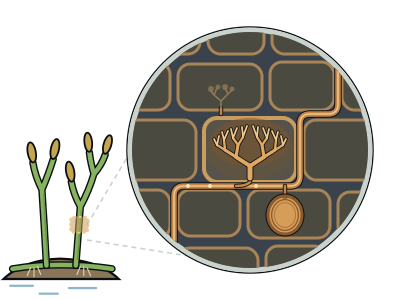
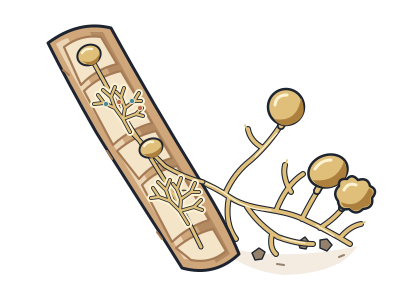
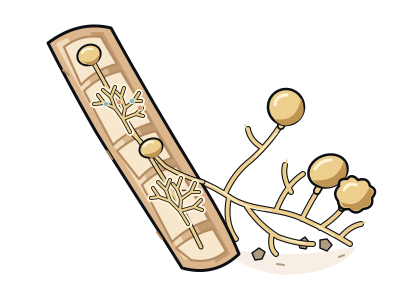
Inside roots, it grows finely branched structures like miniature trees. These are exchange points where phosphorus and nitrogen pass to the plant, while food passes to the fungus. Together, fungi with these tree-shaped root structures partner with most plant species. That statistic describes the group, not this single species. Threads also spread into the surrounding soil. This partnership with living roots is different from feeding on dead plant material.
In a study with maize, its threads kept carrying water to the plant even as the soil became very dry. The importance of this water supply depends on conditions: the fungus does not guarantee protection from drought.
Changing colours and shapes
Its spores range from almost transparent to yellow-brown, with rounded, oval, stretched or knobbly shapes.
Hidden clusters
Spores can form alone or in groups, including dense clusters inside roots.
A genetic first
In 2013, it became the first fungus in this tree-shaped-root-partner group to have its genetic instructions sequenced.
Next to it on the tree
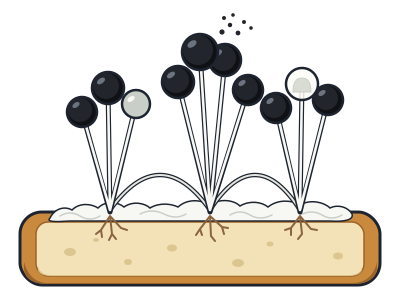
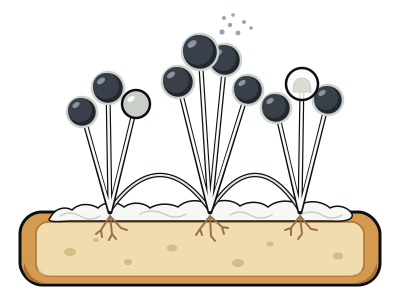
- Black bread mouldThe fuzz on old bread, topped with tiny black balls each packed with thousands of spores.
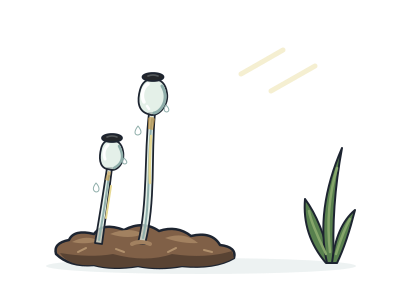
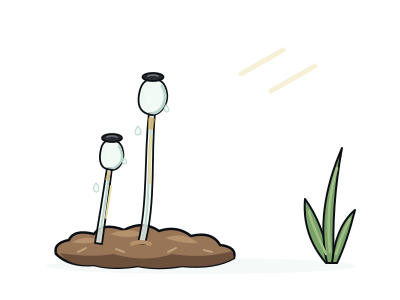
- Hat thrower fungusGrows on dung and aims at the light, firing its spore cap up to 2 metres to land on fresh grass.
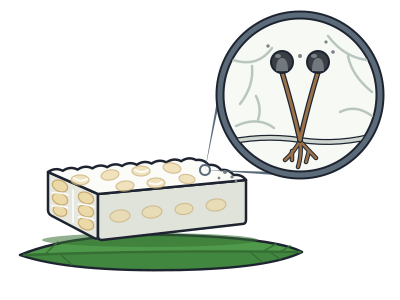
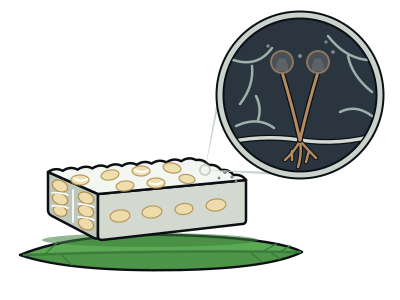
- Tempeh mouldBinds boiled soybeans into a firm white cake overnight, making tempeh, a staple food of Java.
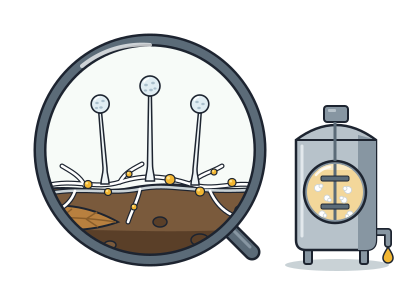
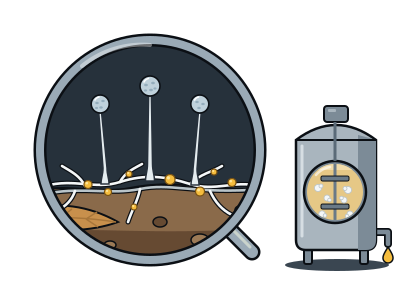
- MortierellaA soil mould grown in tanks to make an oil added to baby formula.
- GeosiphonA fungus that grows tiny bladders on soil and keeps living cyanobacteria inside to make its food.
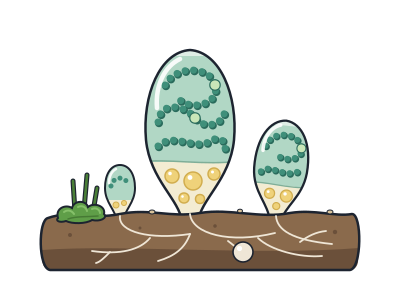
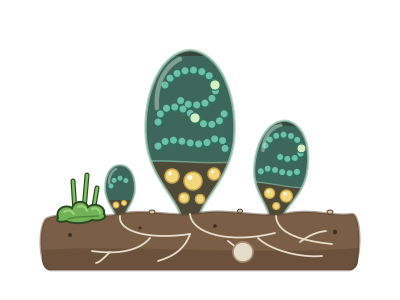
- GlomitesTiny tree-shaped feeding structures inside a 407-million-year-old plant, proof that root partners are ancient.