A species
Tempeh mould
Rhizopus microsporus var. oligosporus
The fluffy white mould that turns boiled soybeans into tempeh
You and the tempeh mould meet in the Fungi and animals branch, shown at about 1.3 billion years ago (on 10 September, in a calendar from life's shared ancestor to today).
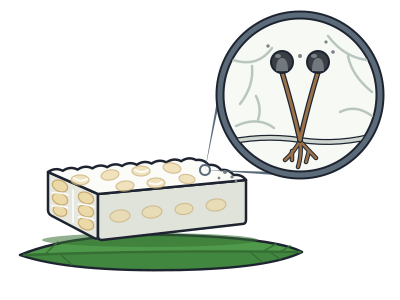
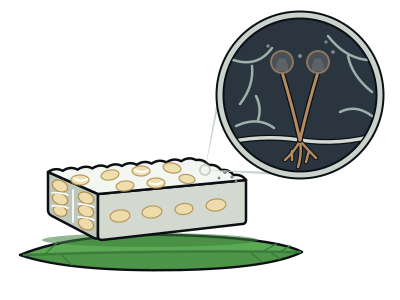
Take a tray of soaked, partly cooked soybeans, add a pinch of this mould and keep it warm, at about 30 °C, like a hot summer's day. In a day or so, fine white threads grow through and around the beans. They knit them together into one firm, white cake with a nutty flavour. That cake is tempeh, a staple source of protein on the island of Java in Indonesia.
This mould is a bit like a farm animal of the fungus world. It is thought to be a tamed form of a wild mould that lives in soil and rotting plants and can make crops such as rice, maize and sunflower sick. As far as we know, the tempeh mould is found only where people keep it: kitchens, tempeh workshops and packets of starter.
Taming changed it. Some wild forms carry poisons, but the tempeh mould is not known to make anything harmful to people. As it grows, it also holds back some bacteria and moulds, and breaks down fats and proteins in the beans.
It belongs to the pin moulds and is a close relative of black bread mould. Both belong to the same small group of very closely related moulds, called a genus.
Leaves as a starter
Traditional tempeh makers in Java used dried leaves of the sea hibiscus to start their tempeh. The leaves naturally carry Rhizopus moulds.
Wonky spores
More than one in ten of the tempeh mould's spores are oddly shaped. This sign of faulty spore-making may be linked to its long life with people.
A poison made by lodgers
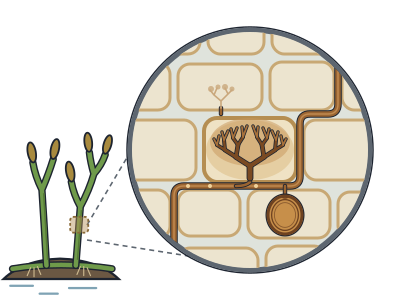
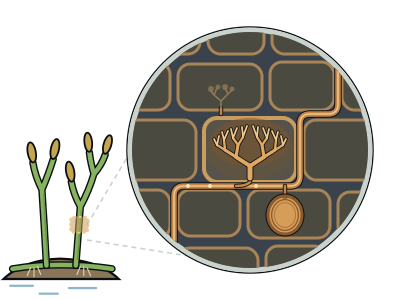
In some strains of the wild relative, one poison is actually made by bacteria living inside the fungus's cells. Take those bacteria away, and these strains stop making their usual spores.
Next to it on the tree
- Black bread mouldThe fuzz on old bread, topped with tiny black balls each packed with thousands of spores.
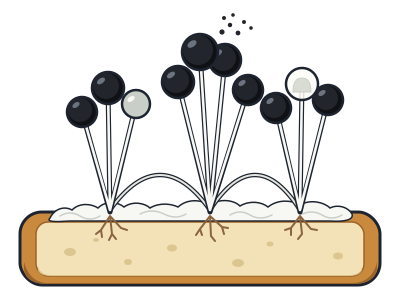
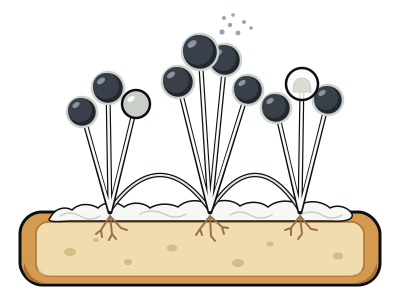
- Root-partner fungusGrows inside plant roots, trading water and minerals for sugar with most of the world's plants.
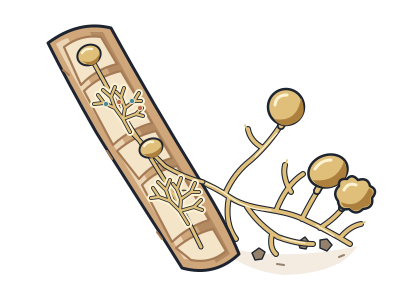
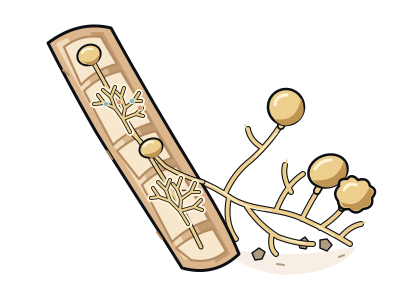
- Hat thrower fungusGrows on dung and aims at the light, firing its spore cap up to 2 metres to land on fresh grass.
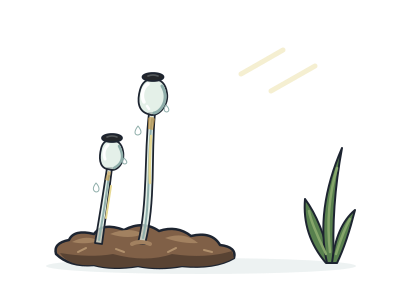
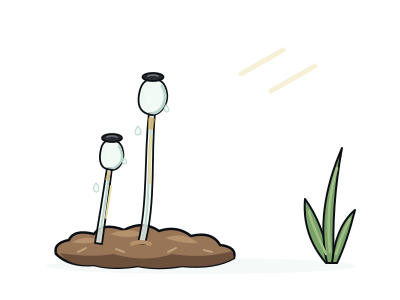
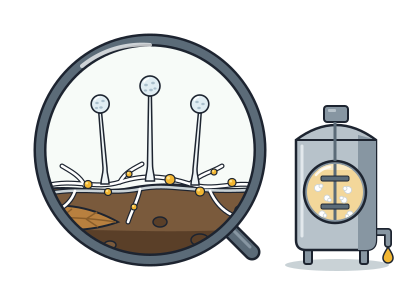
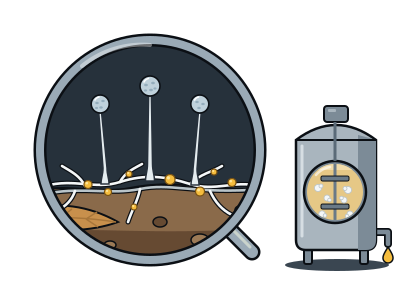
- MortierellaA soil mould grown in tanks to make an oil added to baby formula.
- GeosiphonA fungus that grows tiny bladders on soil and keeps living cyanobacteria inside to make its food.
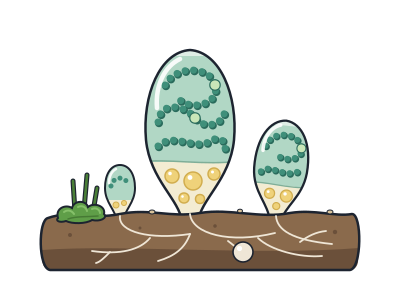
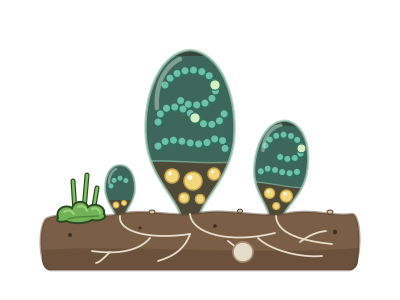
- GlomitesTiny tree-shaped feeding structures inside a 407-million-year-old plant, proof that root partners are ancient.