An extinct species
Glomites †
Glomites rhyniensis
A fossil fungus that is evidence plants and fungi were already living together as partners about 407 million years ago.
Known from about 407 million years ago.
You and the glomites meet in the Fungi and animals branch, shown at about 1.3 billion years ago (on 10 September, in a calendar from life's shared ancestor to today).
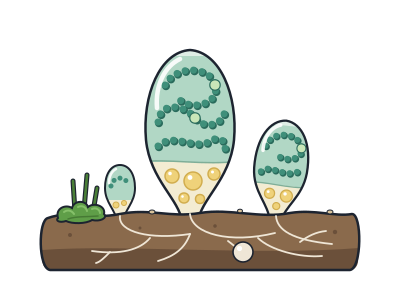
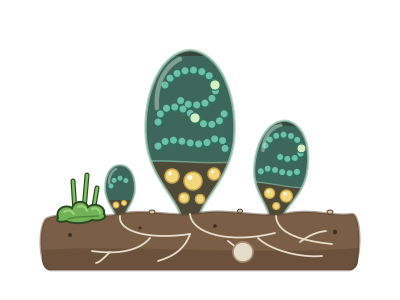
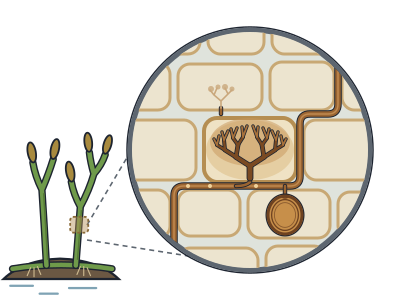
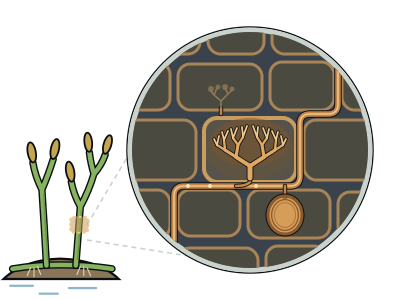
About 407 million years ago, long before the dinosaurs, a fungus too small to see grew inside a little plant in Scotland. Inside the plant's cells it built tiny tree-shaped structures called arbuscules. Each one had a short trunk that split again and again into a bushy tuft. They look the same as the arbuscules made today by root-partner fungi, which team up with more than two-thirds of all known plant species, including wheat and rice.
Its host plant was called Aglaophyton. It was only about 15 cm tall and had no true roots or leaves. The fungus lived in the mud around it, got in through the plant's breathing pores and spread through the spaces between its cells. It built its arbuscules only in one narrow band of cells just under the stem's surface. Inside the stem it also made swollen storage sacs and spores.
Everything we know comes from chert, a stone formed when silica-rich hot-spring water soaked the plants. It turned the fungus's real threads, arbuscules and spores to stone in 3D. In living partnerships, the fungus helps the plant take up phosphorus and the plant feeds the fungus sugars. Scientists think this ancient pair worked the same way, but the swap itself can't be seen in stone.
Caught in a flash
In living plants, a single arbuscule lasts only a few days. The fossils show arbuscules at many stages of growing and breaking down, which suggests the plants were turned to stone extremely quickly.
Not the only one
Scientists have since found a second fossil fungus with arbuscules in the Windyfield chert, a rock layer near Rhynie of about the same age. It also looks like today's root-partner fungi.
Looking through rock
To study it, scientists glue a slice of chert onto a glass slide and grind it so thin that light passes through. Then they look at it under a microscope.
Next to it on the tree
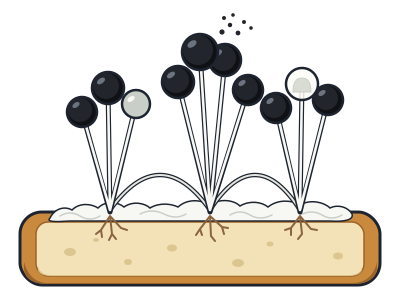
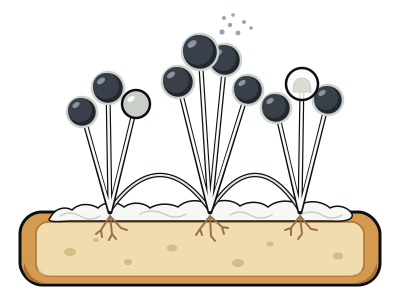
- Black bread mouldThe fuzz on old bread, topped with tiny black balls each packed with thousands of spores.
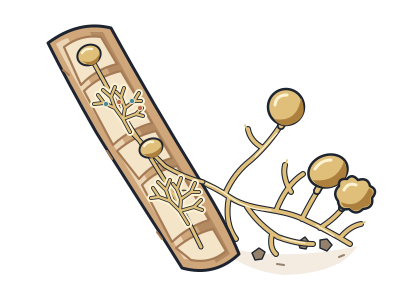
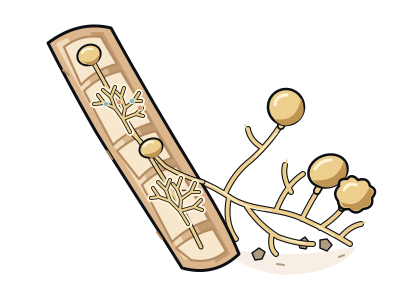
- Root-partner fungusGrows inside plant roots, trading water and minerals for sugar with most of the world's plants.
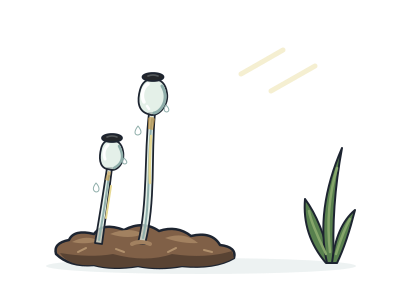
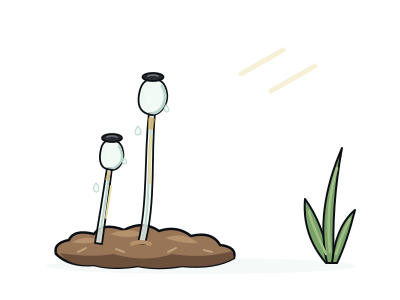
- Hat thrower fungusGrows on dung and aims at the light, firing its spore cap up to 2 metres to land on fresh grass.
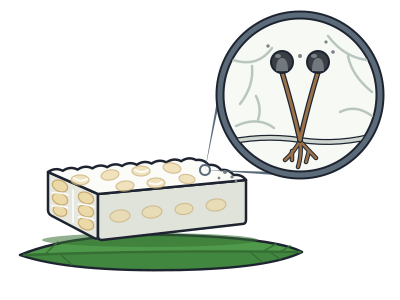
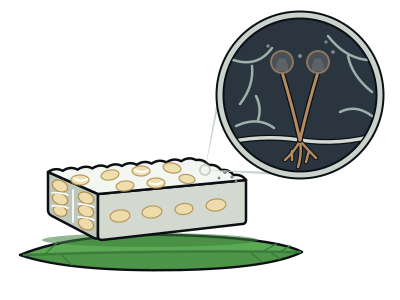
- Tempeh mouldBinds boiled soybeans into a firm white cake overnight, making tempeh, a staple food of Java.
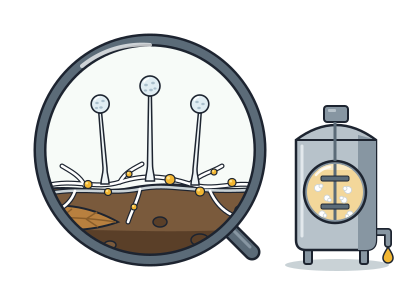
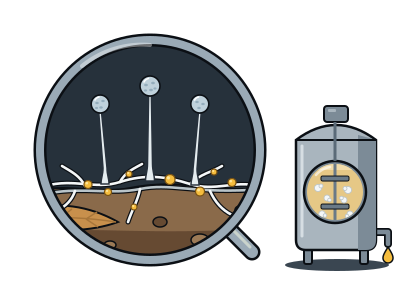
- MortierellaA soil mould grown in tanks to make an oil added to baby formula.
- GeosiphonA fungus that grows tiny bladders on soil and keeps living cyanobacteria inside to make its food.