A species
Mortierella
Mortierella alpina
A soil mould grown in tanks to make an oil for baby formula
You and the mortierella meet in the Fungi and animals branch, shown at about 1.3 billion years ago (on 10 September, in a calendar from life's shared ancestor to today).
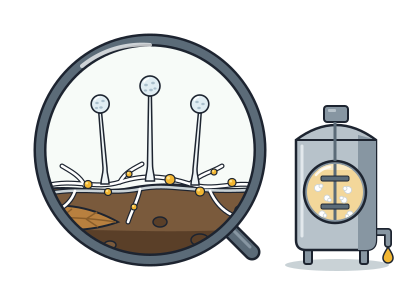
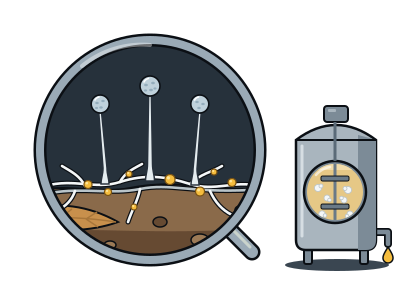
Read the ingredients on a tin of baby formula and you may find an oil made by a mould. Often it comes from this one, a soil fungus usually hidden among rotting leaves. Factories grow chosen strains in huge stirred tanks. Then they collect the fungus and extract its oil.
Why use this mould? It is a champion fat-storer. Up to about half of its dry weight can be fat, the same kind found in cooking oil. More than half of that fat can be arachidonic acid, or ARA. In 2008 the European Union approved the oil for formula for both premature and full-term babies. The formula contains only the purified oil, not the living mould. Scientists describe the fungus as not causing disease or allergies.
Its family is surprising too. It belongs to the same large fungus group as black bread mould and tempeh mould, and also the fungi that team up with plant roots. But it sits on its own branch, apart from the true pin moulds. Under a microscope its spore sacs are usually smaller than those of pin moulds such as Mucor, hold fewer spores and have no little dome in the middle.
Out in nature it is a quiet recycler that helps break down dead leaves in the soil.
Cold makes it change its oil
When grown at a chilly 12 °C, it built up about 40 times more omega-3 fats than at 25 °C.
Its full DNA was published in 2011
Its genome is about 38 million DNA letters long and holds about 12,800 predicted genes. Around half of those genes belong to families of duplicated genes.
Named after a botanist in parliament
The genus is named after Barthélemy Dumortier (1797–1878), a Belgian botanist who was also a member of parliament.
Next to it on the tree
- Black bread mouldThe fuzz on old bread, topped with tiny black balls each packed with thousands of spores.
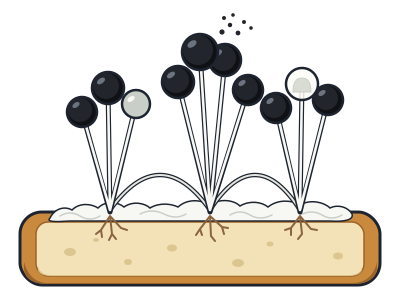
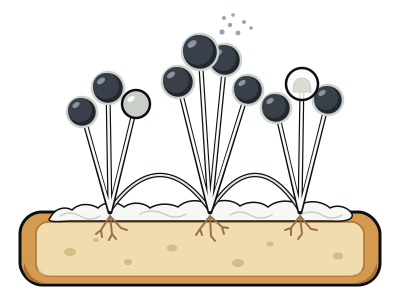
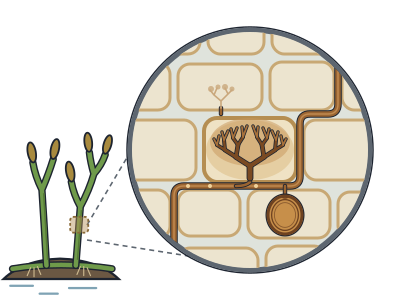
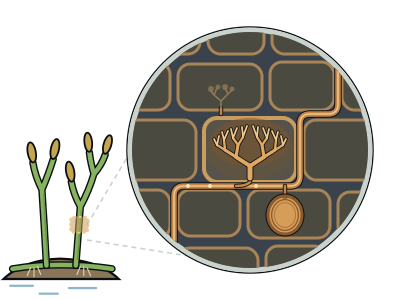
- Root-partner fungusGrows inside plant roots, trading water and minerals for sugar with most of the world's plants.
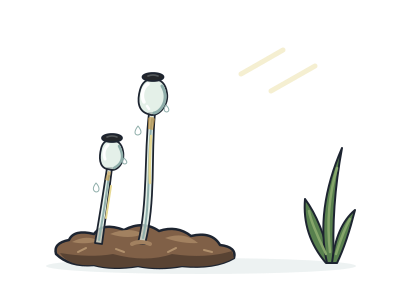
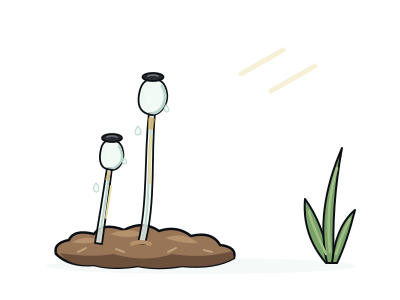
- Hat thrower fungusGrows on dung and aims at the light, firing its spore cap up to 2 metres to land on fresh grass.
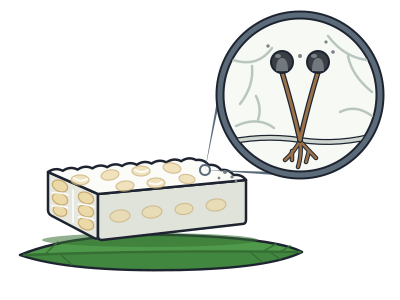
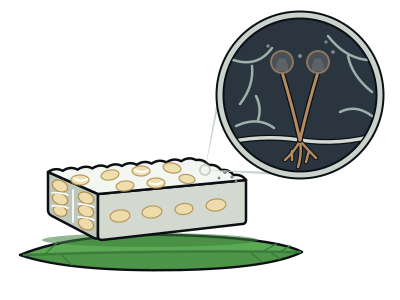
- Tempeh mouldBinds boiled soybeans into a firm white cake overnight, making tempeh, a staple food of Java.
- GeosiphonA fungus that grows tiny bladders on soil and keeps living cyanobacteria inside to make its food.
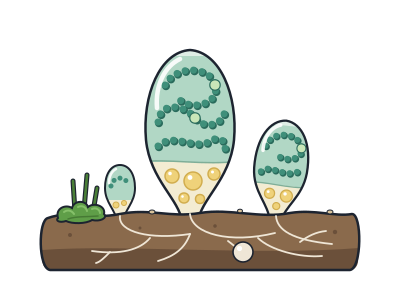
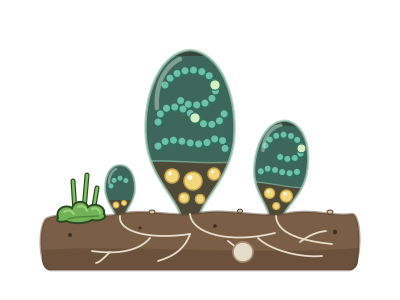
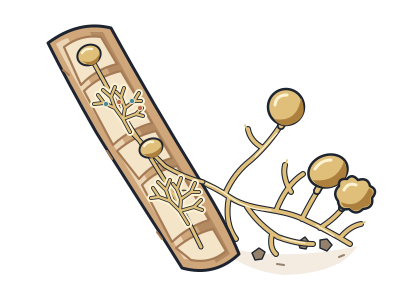
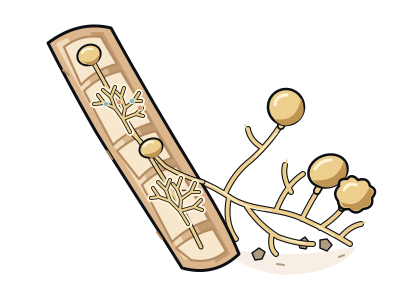
- GlomitesTiny tree-shaped feeding structures inside a 407-million-year-old plant, proof that root partners are ancient.