A species
Black bread mould
Rhizopus stolonifer
The fuzz on old bread, topped with tiny black balls full of spores
You and the black bread mould meet in the Fungi and animals branch, shown at about 1.3 billion years ago (on 10 September, in a calendar from life's shared ancestor to today).
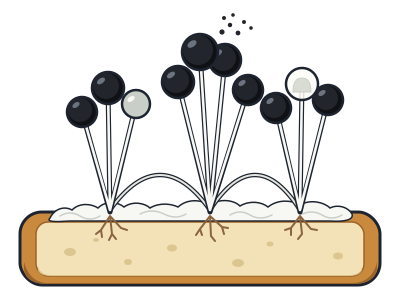
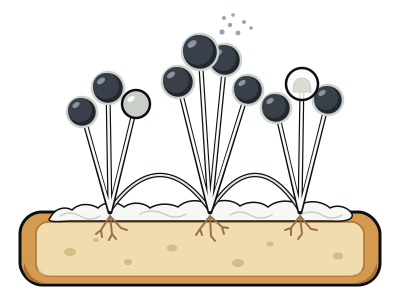
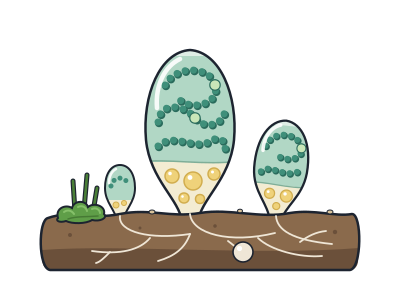
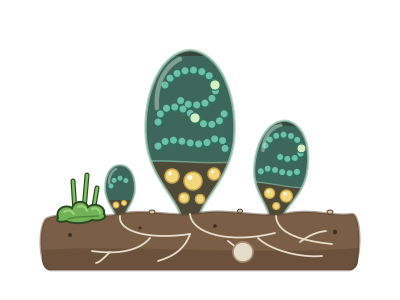
Old bread sometimes grows a white or grey fuzz, dotted with tiny black balls. That fuzz is often this mould. Each black ball is a spore case perched on a stalk thinner than a hair. A ripe one can be packed with thousands of spores, each far too small to see by itself.
The balls start out white or see-through and turn black when they are ripe. Runners spread sideways across the food. Where they touch down, root-like threads grip the food and soak it up. Many of these threads grow deep inside, out of sight. From a distance, the colony looks like a tiny forest of black-headed pins.
Mould is not a plant. It is a fungus, and fungi are closer relatives of animals than of plants. Its nearest neighbours on the tree are surprising too. The hat thrower fungus belongs to the same group of pin moulds. The root-partner fungi that live inside plant roots sit on the same larger branch, which is separate from mushrooms and yeasts.
Factory worker
This mould has been used in factories to make very pure fumaric acid and lactic acid.
An old name
A German scientist first described it in 1818 and named it after its blackish colour. It got its current name in 1902.
Likes it warm and sour
It grows best at about 25 to 30 °C and copes with very acidic conditions. Heating it to 60 °C kills it.
Next to it on the tree
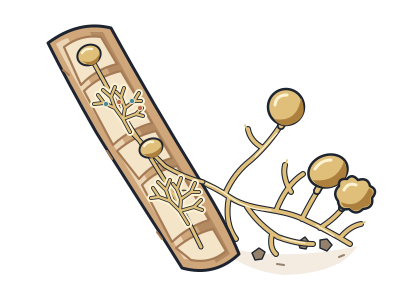
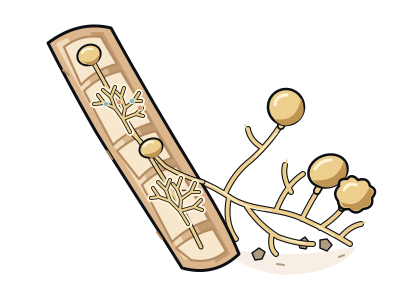
- Root-partner fungusGrows inside plant roots, trading water and minerals for sugar with most of the world's plants.
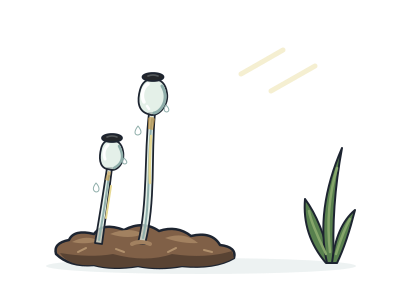
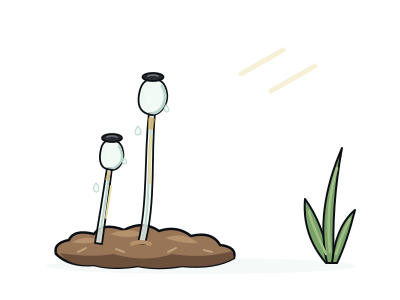
- Hat thrower fungusGrows on dung and aims at the light, firing its spore cap up to 2 metres to land on fresh grass.
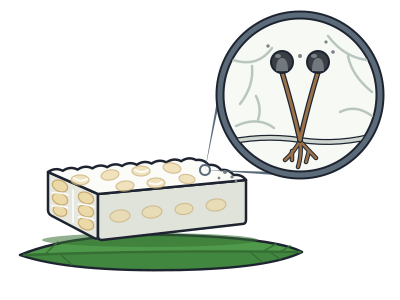
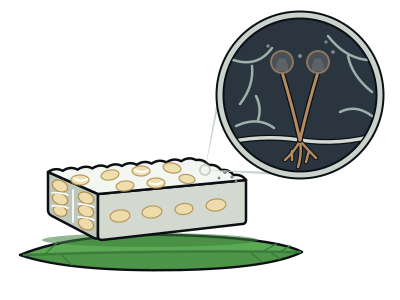
- Tempeh mouldBinds boiled soybeans into a firm white cake overnight, making tempeh, a staple food of Java.
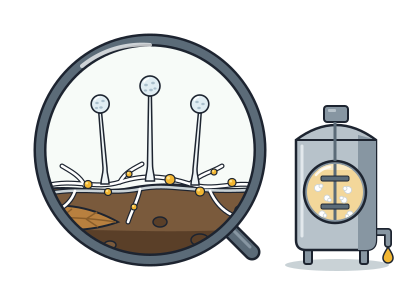
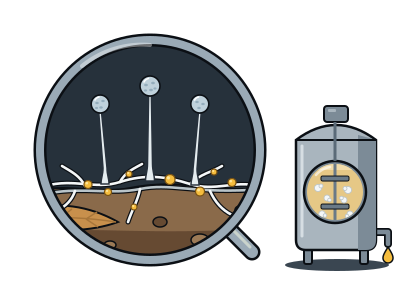
- MortierellaA soil mould grown in tanks to make an oil added to baby formula.
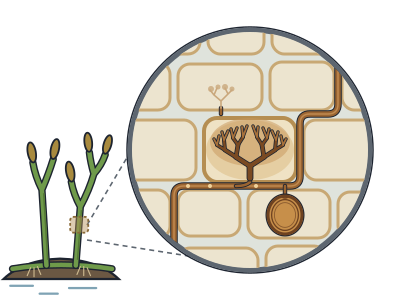
- GeosiphonA fungus that grows tiny bladders on soil and keeps living cyanobacteria inside to make its food.
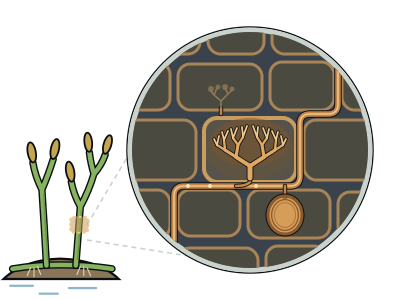
- GlomitesTiny tree-shaped feeding structures inside a 407-million-year-old plant, proof that root partners are ancient.