A species
Geosiphon
Geosiphon pyriformis
A soil fungus that keeps living bacteria inside tiny bladders to make its food
You and the geosiphon meet in the Fungi and animals branch, shown at about 1.3 billion years ago (on 10 September, in a calendar from life's shared ancestor to today).
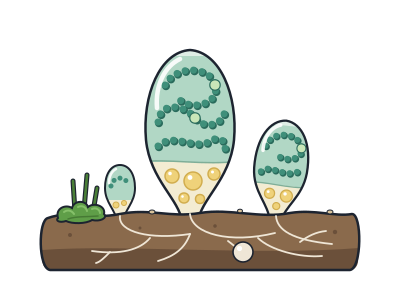
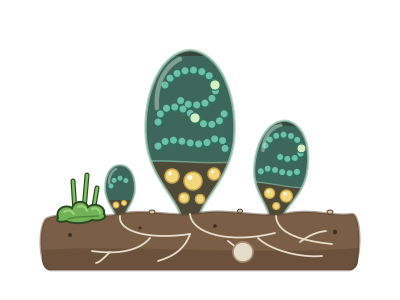
Geosiphon is a fungus that grows its own food supply. On damp soil it puts up tiny bladders, each about 0.5 to 2 millimetres tall, about the size of a pinhead. Inside each one live chains of cyanobacteria. These are tiny bacteria that make sugar from sunlight. It is the only known fungus that keeps cyanobacteria alive inside its own cells.
Both partners gain something. The cyanobacteria make sugar and take nitrogen from the air. The fungus gives them water and minerals from the soil. Each bladder is a single swollen fungal thread. The top two-thirds hold the bacteria, and the bottom third stores droplets of fat.
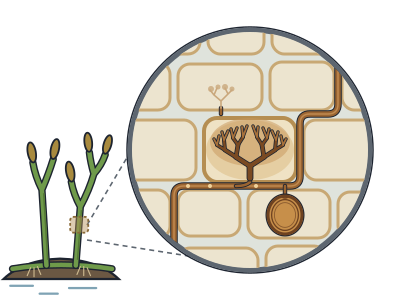
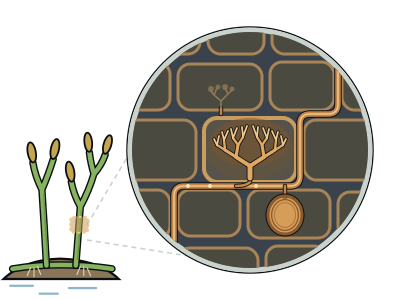
Its relatives are the root-partner fungi, which team up with more than 70% of known land plants. Their partnership with plants goes back more than 400 million years. Geosiphon belongs to the same group, but it is the only member not known to form that root partnership. It lives with bacteria instead.
Because its partner lives inside the fungus, not beside it, Geosiphon is not a lichen. In a lichen, the partners live side by side.
Mistaken for an alga
It was first described in 1849 as an alga. It was treated as an alga again in 1915. A scientist first suggested it was really a fungus in 1933.
Lost and found
This fungus was 'long lost' to science until researchers found it again in nature. They used that rediscovered sample to read its full set of genes, published in 2021.
Extra lodgers
The bladders also hold other very small bacteria besides the cyanobacteria. These bacteria have very stripped-down sets of genes.
Next to it on the tree
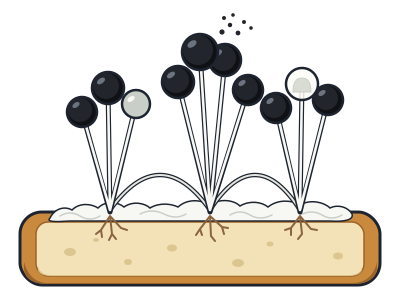
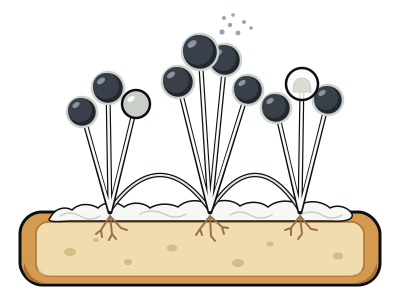
- Black bread mouldThe fuzz on old bread, topped with tiny black balls each packed with thousands of spores.
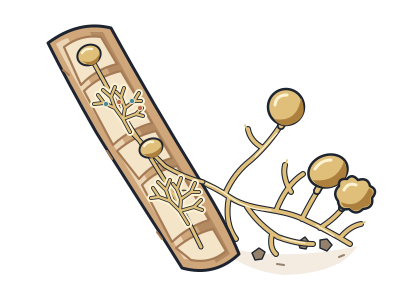
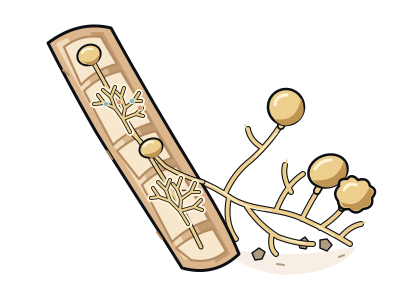
- Root-partner fungusGrows inside plant roots, trading water and minerals for sugar with most of the world's plants.
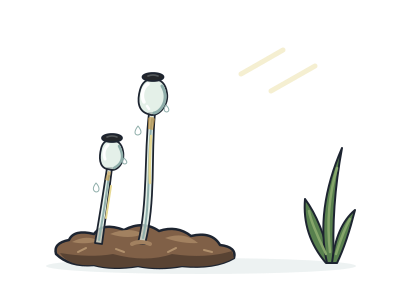
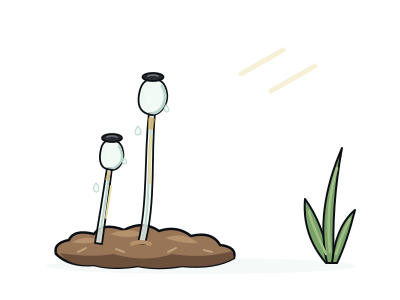
- Hat thrower fungusGrows on dung and aims at the light, firing its spore cap up to 2 metres to land on fresh grass.
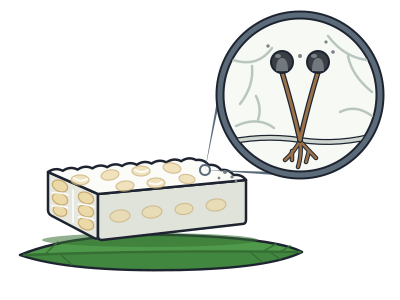
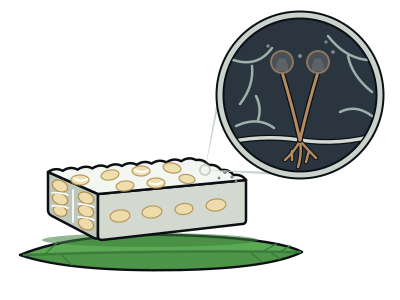
- Tempeh mouldBinds boiled soybeans into a firm white cake overnight, making tempeh, a staple food of Java.
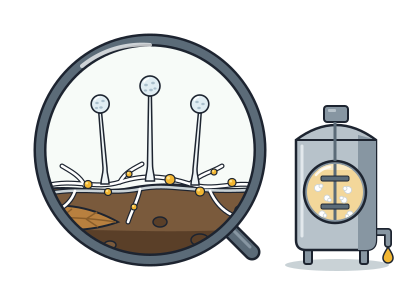
- MortierellaA soil mould grown in tanks to make an oil added to baby formula.
- GlomitesTiny tree-shaped feeding structures inside a 407-million-year-old plant, proof that root partners are ancient.