A species
Cow-stomach fungus
Neocallimastix frontalis
A fungus that helps cows tackle tough grass—without oxygen.
You and the cow-stomach fungus meet in the Fungi and animals branch, shown at about 1.3 billion years ago (on 10 September, in a calendar from life's shared ancestor to today).
Inside a cow’s stomach, this fungus lives without oxygen and helps break down tough grass. Its home is the rumen, a large stomach chamber filled with swallowed plant material. It works alongside bacteria and other microscopic life. The cow depends on these tiny helpers because it cannot make its own tools for breaking down cellulose, a tough material in plant cell walls.
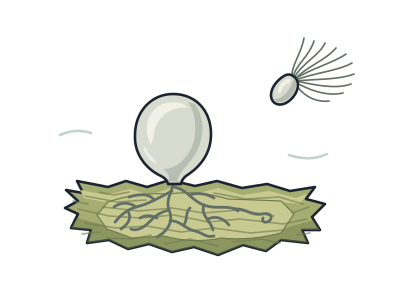
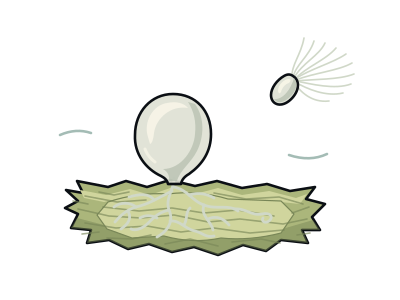
The fungus tackles plants in two ways. Its branching, root-like threads push into plant fragments, physically opening the tissues. It also releases enzymes, tiny chemical tools that break down this tough building material. Those threads are not plant roots: they are part of the fungus’s feeding body.
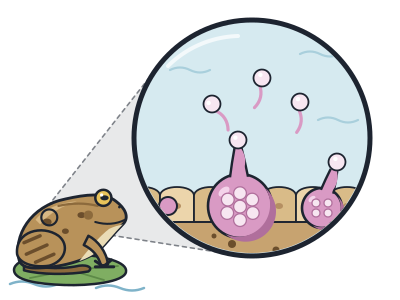
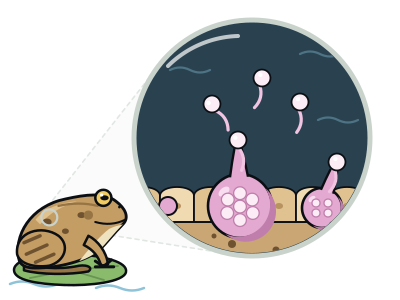
It does not stay attached throughout its life. A young travelling stage, called a spore, swims using several fine, whip-like tails called flagella. It follows chemical signals leaking from plant material, including sugars. Once it attaches to a plant fragment, it sheds its tails and develops into the feeding stage.
Not just cows
This species also lives in sheep, goats, water buffalo and deer.
A sac, not a mushroom
Its attached body normally has one main sac that produces new swimming cells.
A mistaken identity
Its swimming cells were once mistaken for tiny animal-like organisms. Work in the 1970s revealed that these stomach swimmers were fungi.