A species
Amphibian chytrid fungus
Batrachochytrium dendrobatidis
A tiny skin fungus that has put frogs around the world in danger
You and the amphibian chytrid fungus meet in the Fungi and animals branch, shown at about 1.3 billion years ago (on 10 September, in a calendar from life's shared ancestor to today).
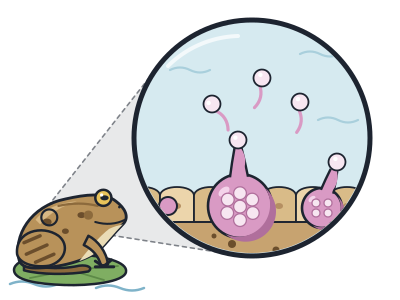
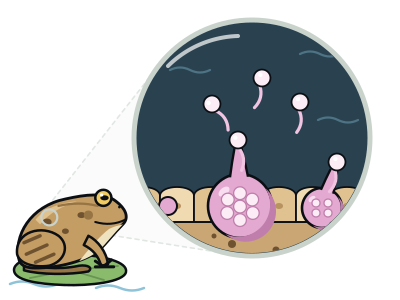
This fungus is far too small to see, yet it has changed the fate of frogs all over the world. It lives mainly in the outer skin of frogs and toads and feeds on keratin, a tough protein found there. Here is the surprise: on the tree of life, fungi sit on the same big branch as animals. That makes this fungus a very distant relative of the frogs it infects.
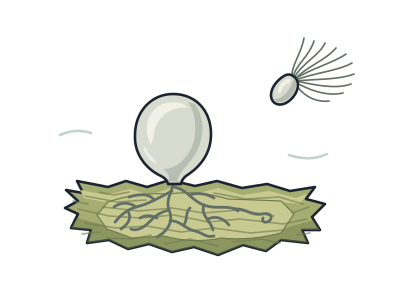
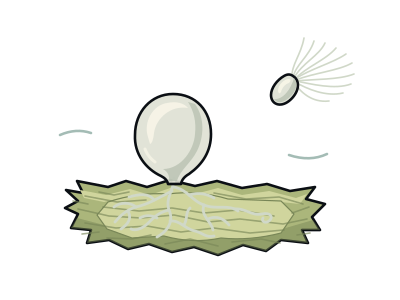
It belongs to the chytrids, a group of fungi whose spores can swim. Each spore is only about 3 to 5 thousandths of a millimetre across and moves with a single whip-like tail. Inside a frog's skin, it grows into a tiny round pot. The pot fills with new spores and lets them out into the water through one spout.
Frogs use their skin to keep the right balance of water and salts. The fungus damages that skin. In badly infected frogs, the salts in the blood can fall so low that the heart stops. Not every frog gets sick, though. American bullfrogs and African clawed frogs can carry the fungus while usually showing few or no signs of illness, which helps it spread.
The fungus has been found on every continent where frogs live. Scientists link it to declines in hundreds of amphibian species, and dozens of those species are thought to have died out. Zoos now breed threatened frogs, such as Panama's golden frog, to keep them safe.
A name meaning 'frog pot'
The first part of its scientific name comes from Greek words for 'frog' and 'earthen pot'. The second part refers to poison dart frogs, the frogs in which scientists confirmed that the fungus caused disease.
It doesn't like the heat
The fungus grows best between about 17 and 25 °C and stops growing above about 28 °C. That is why keeping frogs warm is one way to treat them in captivity.
Identified in 1998
A team led by Australian researchers, including Lee Berger, identified the fungus in 1998 as a cause of frog deaths. Joyce Longcore formally described and named it the following year.