An extinct species
Palaeoblastocladia †
Palaeoblastocladia milleri
A microscopic fungus on a 407-million-year-old plant, with spore sacs like a fungus still alive today
Known from about 407 million years ago.
You and the palaeoblastocladia meet in the Fungi and animals branch, shown at about 1.3 billion years ago (on 10 September, in a calendar from life's shared ancestor to today).
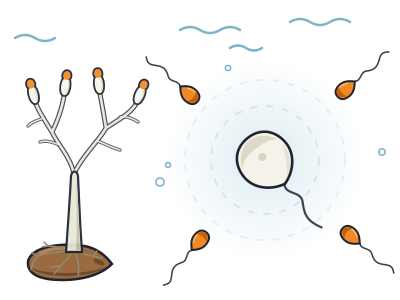
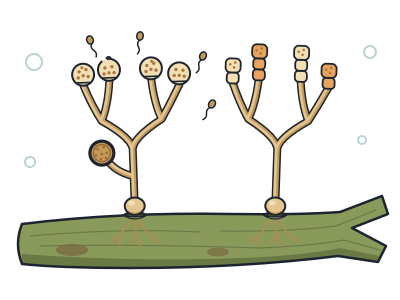
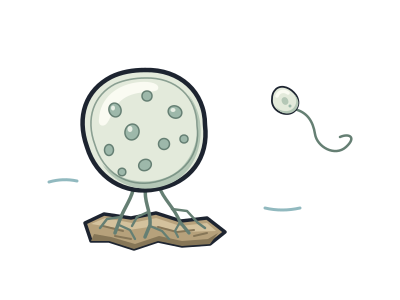
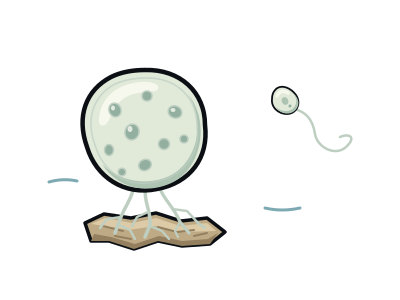
About 407 million years ago, long before the dinosaurs, tiny fungi grew in tufts on the stems of an early land plant in what is now Scotland. Under a microscope, they share many features with a fungus that still lives in ponds and wet soil today: the Allomyces water mould. Both have little round sacs at their branch tips, like the ones Allomyces uses to make swimming spores.
The fossils come from the Rhynie chert. This rock formed when silica-rich water from hot springs soaked a whole wetland and turned it to stone, keeping even single cells. The fungus grew on a leafless plant called Aglaophyton, mostly on stems that were already partly rotting, so it was probably a decomposer. Each tuft poked out through a breathing pore or from under the plant's waxy skin.
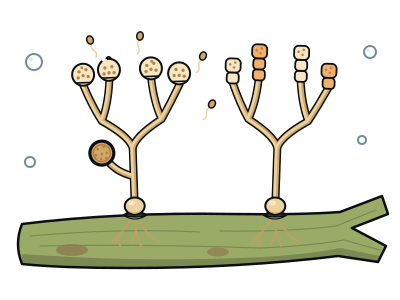
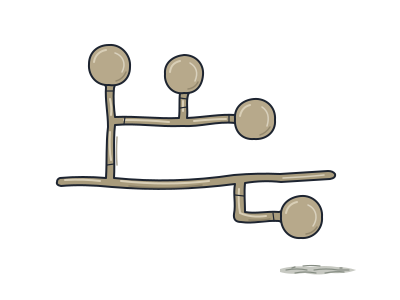
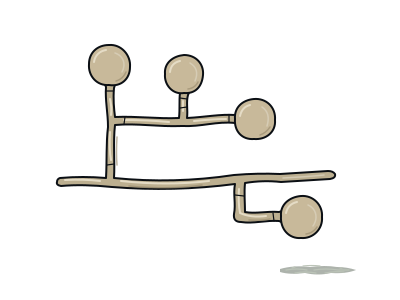
Each fungus had a swollen base cell. Root-like threads reached down into the plant, while stiff threads above forked in two again and again, like a tiny candelabra. There were two look-alike kinds. One carried round spore sacs and thick-walled resting sacs. The other carried short chains of two or three barrel-shaped sacs for making sex cells. Because of those sex-cell sacs, scientists think this fungus reproduced sexually. Some living Allomyces, including the water mould beside it on the tree, also switch between two look-alike generations like this.
A doctor's discovery
The Rhynie chert was discovered between 1910 and 1913 by Dr William Mackie, a doctor from Elgin, while he was mapping the rocks of the area.
Almost every kind of fungus
The Rhynie chert holds more well-preserved fossil fungi than any other ancient site. It includes every major fungal group except the one that contains mushrooms.
A neighbour of the same age
Another fossil fungus from the same rock, Retesporangicus, is also compared with Allomyces and its relatives. Unlike this one, it had no obvious root-like threads and had a complex network of feeding threads.
Next to it on the tree
- ChytridsTiny water fungi with swimming spores and tails, like the fungi of the earliest kind.
- Pin moulds and root partnersFuzzy bread mould is a cousin of the fungi that helped the first plants move onto land.
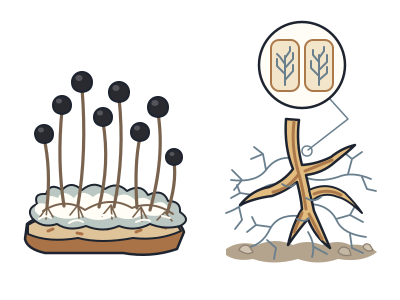
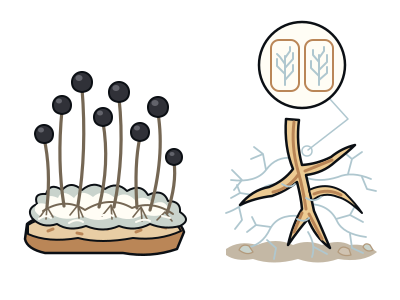
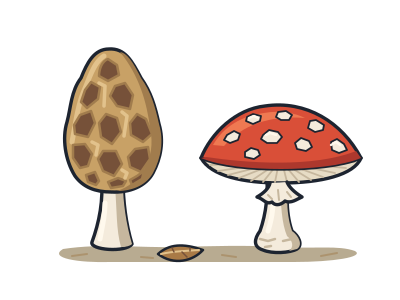
- Sac and mushroom fungiMost fungi you know, from yeast to truffles to toadstools, belong to this one big branch.
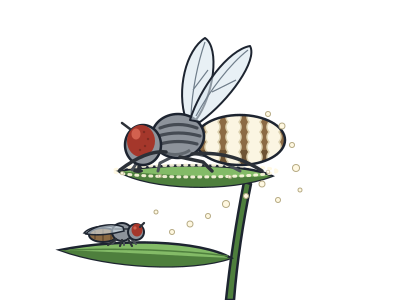
- Fly-killing fungusInfects house flies, makes them climb high, then sprays spores from their bodies onto flies below.
- OurasphairaMicroscopic threads and spores from a billion years ago, possibly the oldest fungus fossil known.
- TortotubusBranching threads 440 million years old, among the oldest fossils of a fungus living on land.
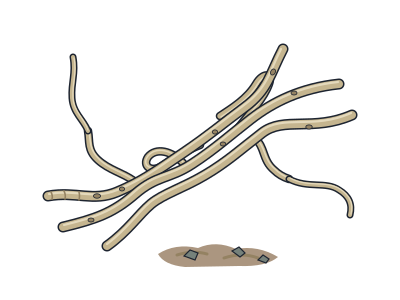
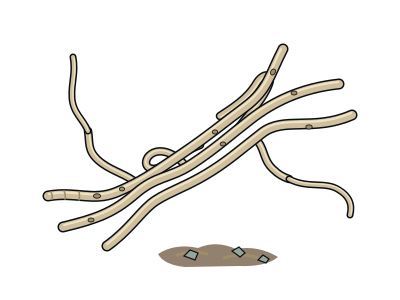
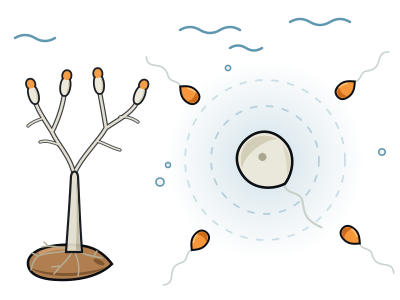
- Allomyces water mouldA water fungus whose swimming cells use one tail to find partners; a lab model for how sex cells meet.