A group of living things
Sac fungi
Ascomycota
Tiny sacs, a huge family: bread, cheese and penicillin
This branch is shown at about 750 million years ago; its age is a rough estimate.
You and sac fungi meet in the Fungi and animals branch, shown at about 1.3 billion years ago (on 10 September, in a calendar from life's shared ancestor to today).
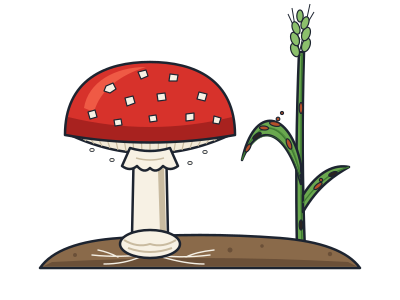
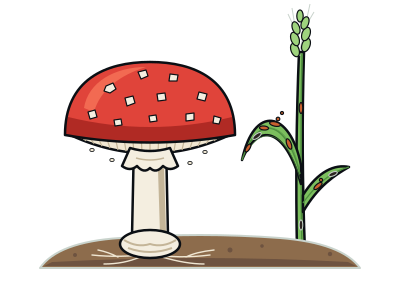
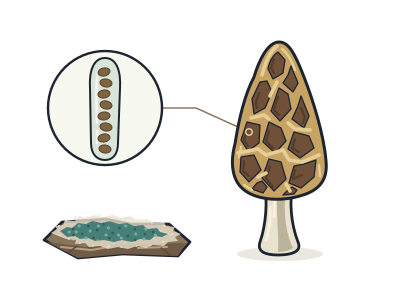
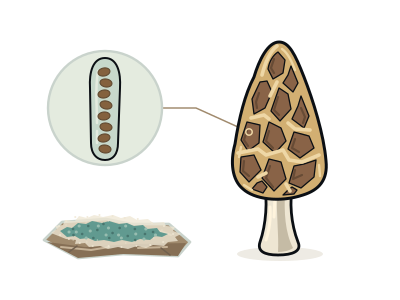
Sac fungi have more named species than any other major fungal group. Members help us make bread, some cheeses and penicillin. They are the sister group of mushroom fungi: two neighbouring branches of the fungal family tree. Their name comes from microscopic sacs where spores form during sexual reproduction.
This family has no single look. Most members grow as fine threads, but many yeasts are just one cell. Some species can grow in either form. A morel’s honeycombed head looks very different from a patch of mould, yet both belong here. Inside the morel’s pits lies the surface that produces its spores.
You may meet this family in the kitchen without realising it. Baker’s yeast releases carbon dioxide gas that helps bread dough rise. Different Penicillium moulds help ripen blue cheese and Camembert. Another Penicillium mould caught Alexander Fleming’s attention in 1928, leading to the discovery of penicillin. These everyday connections come from very different members of one enormous family.
Often eight, not always
A spore sac commonly holds eight spores. Depending on the species, it can hold one to more than a hundred.
Inside versus outside
The neighbouring mushroom-fungus group makes its sexual spores on the outside of specialised cells, rather than inside sacs.
Some cause plant diseases
Sac fungi also include powdery mildews and fungi that cause tree cankers and needle diseases.
Inside sac fungi
- Rhynie chert sac fungusA 407-million-year-old fungus caught in stone inside one of the very first land plants.
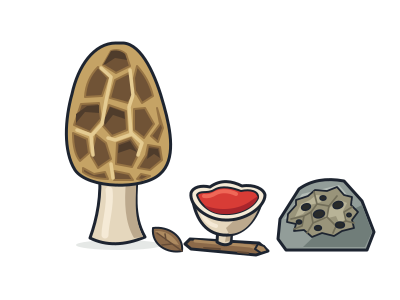
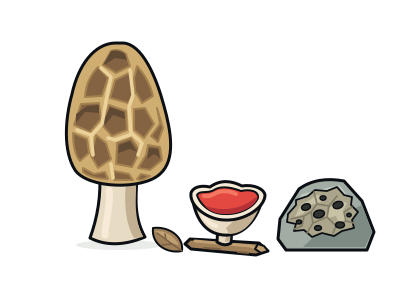
- Moulds, morels and lichensMany-celled sac fungi: life-saving moulds, prized cup fungi, insect hunters and lichen partners.
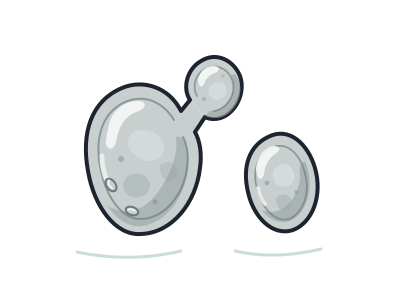
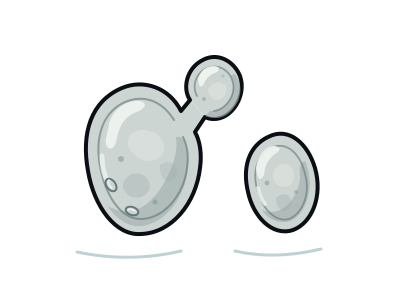
- Budding yeastsSingle cells that multiply by budding off daughter cells; bakers, brewers and a few troublemakers.
- Fission yeastA yeast that splits in two down the middle; it helped scientists discover how cells divide.