An extinct species
Rhynie chert sac fungus †
Paleopyrenomycites devonicus
An ancient fungus caught in stone inside an early land plant
Known from about 407 million years ago.
You and the rhynie chert sac fungus meet in the Fungi and animals branch, shown at about 1.3 billion years ago (on 10 September, in a calendar from life's shared ancestor to today).
About 407 million years ago, a tiny fungus lived inside an early land plant and was preserved in stone. It was a sac fungus, related to the branch that includes morels and many moulds. Yet its unusual mix of features did not fit neatly into any living subgroup.
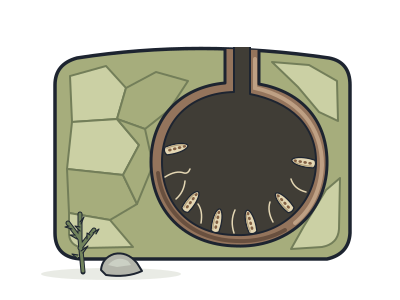
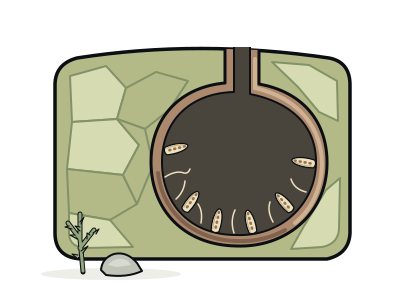
Its host plant was related to clubmosses. The fungus occupied its stems and small, leaf-like projections. Rounded chambers lay just beneath the plant’s surface, with short necks opening through the plant’s breathing pores. Inside these chambers were tiny sacs containing spores. These were parts of a separate fungus, not structures made by the plant.
The fossils came from Rhynie in Scotland, where early plants, fungi and small joint-legged animals lived around hot springs. Water rich in silica, a mineral ingredient of rock, preserved organisms in remarkable detail. The fungus’s fossils showed chamber walls, spore sacs and spores—not just outlines pressed into stone.
Sixteen in a sac
A single spore sac held up to 16 spores.
Fine threads
Delicate threads that did not make spores also lined the chambers.
A fossil time marker
Researchers used this fossil as an age marker when estimating the history of sac fungi through DNA comparisons.
Next to it on the tree
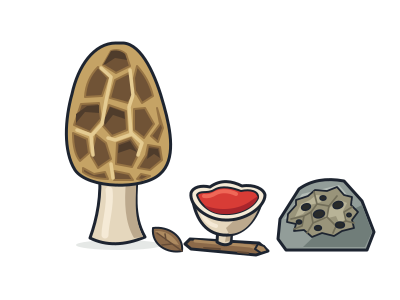
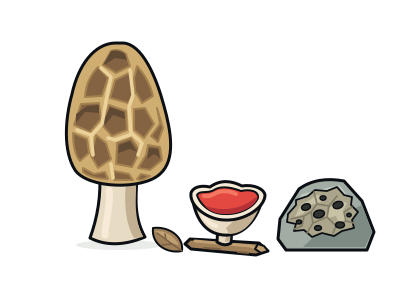
- Moulds, morels and lichensMany-celled sac fungi: life-saving moulds, prized cup fungi, insect hunters and lichen partners.
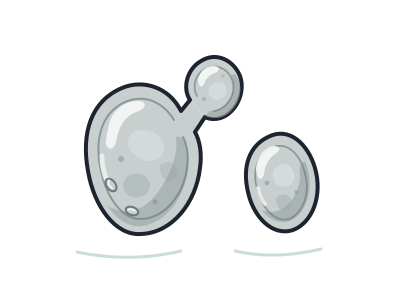
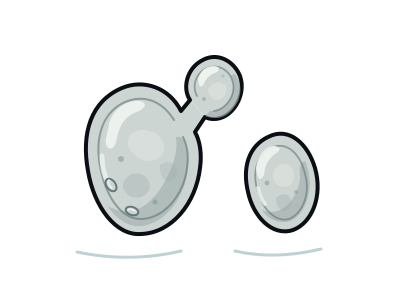
- Budding yeastsSingle cells that multiply by budding off daughter cells; bakers, brewers and a few troublemakers.
- Fission yeastA yeast that splits in two down the middle; it helped scientists discover how cells divide.