A group of living things
Budding yeasts
Saccharomycotina
Tiny cells, small buds, and a family of bakers, brewers and occasional troublemakers.
This branch is shown at about 500 million years ago; its age is a rough estimate.
You and budding yeasts meet in the Fungi and animals branch, shown at about 1.3 billion years ago (on 10 September, in a calendar from life's shared ancestor to today).
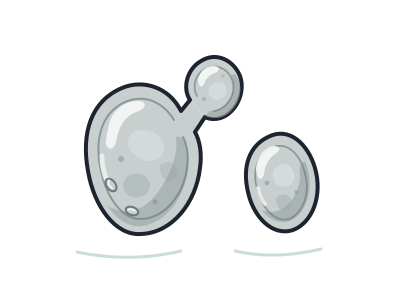
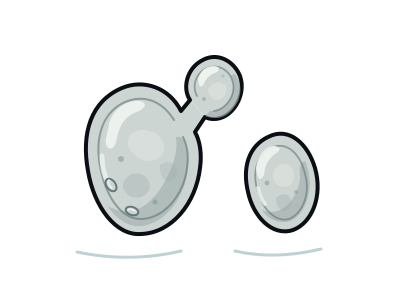
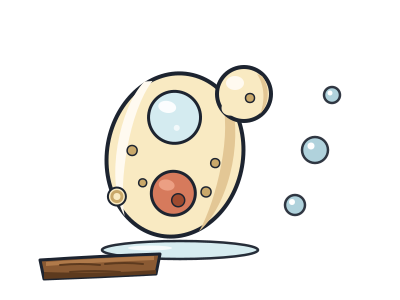
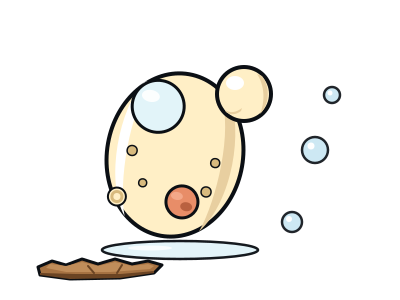
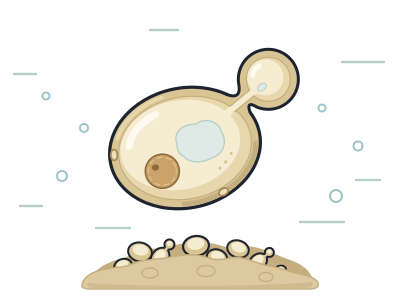
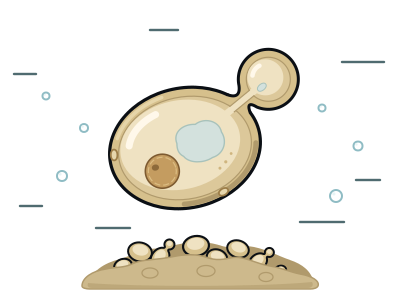
Most budding yeasts make new cells by growing small buds from their surface. These tiny fungi include familiar helpers used in baking and brewing. Baker’s yeast belongs to this branch of the sac fungi. Despite their name, not every fungus called a yeast belongs to the budding-yeast branch.
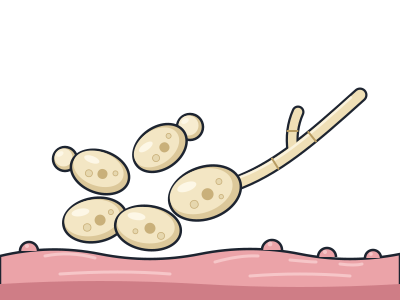
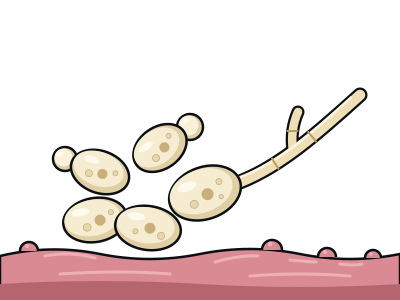
A bud starts as a small bump on a parent cell. It grows into a daughter cell, then separates. In baker’s yeast, the new daughter is usually smaller than its parent: this is not an equal split. The nearby fission yeast does things differently, dividing into two roughly equal cells.
Baking yeasts use sugars and release carbon dioxide gas, helping bread dough rise. Yeasts used in brewing also make alcohol. Other members play a part in the fermentation of cacao beans, helping develop the flavours of chocolate. This branch contains many species with different ways of living.
Marks of past buds
A departing bud leaves a small mark on its parent’s surface, called a bud scar.
Not always separate cells
Some members can also grow as thread-like cells, rather than only as separate oval cells.
Chocolate helpers
Yeasts help develop chocolate’s flavour while cacao beans ferment.
Inside budding yeasts
Next to it on the tree
- Rhynie chert sac fungusA 407-million-year-old fungus caught in stone inside one of the very first land plants.
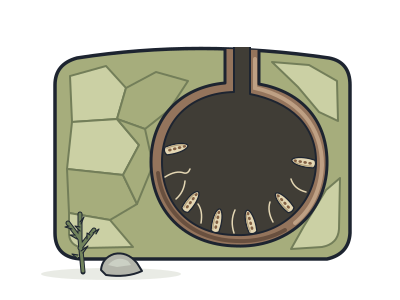
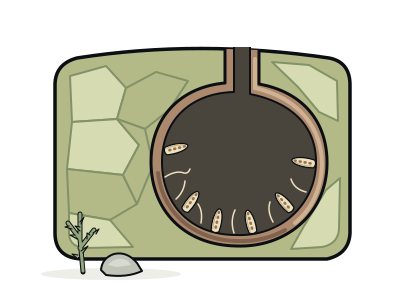
- Moulds, morels and lichensMany-celled sac fungi: life-saving moulds, prized cup fungi, insect hunters and lichen partners.
- Fission yeastA yeast that splits in two down the middle; it helped scientists discover how cells divide.