A species
Lager yeast
Saccharomyces pastorianus
Half baker's yeast, half cold-loving wild yeast
You and the lager yeast meet in the Fungi and animals branch, shown at about 1.3 billion years ago (on 10 September, in a calendar from life's shared ancestor to today).
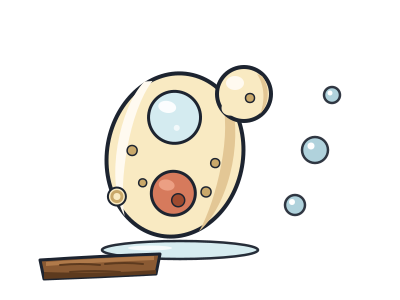
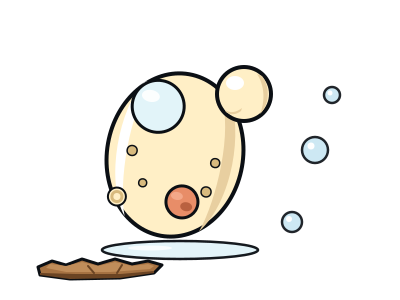
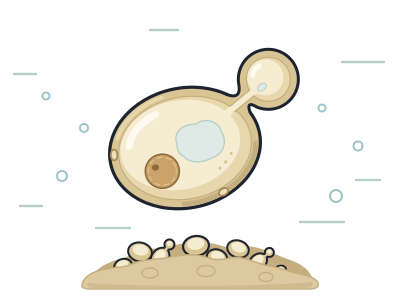
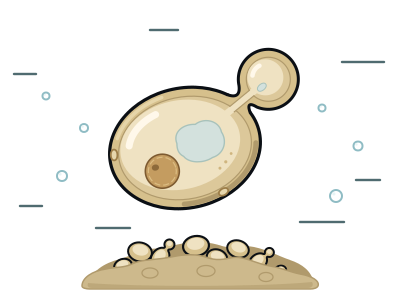
Lager yeast is a living mix of two different yeasts. One parent is baker's yeast, the same species that makes bread rise and brews ale. The other is a wild yeast that copes well with the cold. Scientists confirmed in 1985 that lager yeast was a hybrid, but they couldn't find the wild parent for decades.
In 2011 a team from Portugal, Argentina and the USA finally found it in southern beech forests in Patagonia, at the southern tip of South America. It lives in sugary swellings on the trees, caused by another fungus. Its genes were about 99.5% the same as the part of lager yeast that doesn't come from baker's yeast. Since then, the wild parent has also turned up on the Tibetan Plateau and elsewhere in China, in North America and even in Ireland.
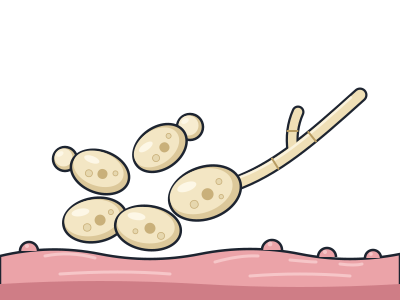
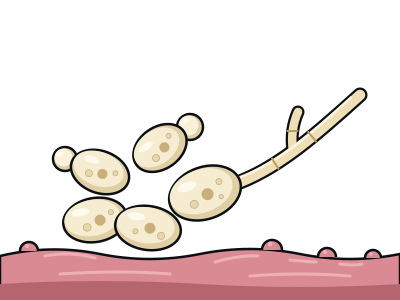
That cold-loving parent explains a lot. Lager yeast keeps working at about 5°C. At that temperature baker's yeast shuts down and rests. Lager yeast clumps together and sinks to the bottom of chilly brewing tanks. Each lager yeast is a single cell, far too small to see without a microscope. Lager yeast is known only from brewing, not from the wild.
Named after a famous scientist
It was named in 1870 by Max Reess in honour of Louis Pasteur. For a long time it was also widely called by another name, Saccharomyces carlsbergensis.
Grown from a single cell
In 1883 Emil Chr. Hansen at the Carlsberg Laboratory in Copenhagen grew a pure batch of lager yeast from just one cell. He showed that wild yeasts were spoiling beer.
A wrong guess
Before 2011, scientists thought a yeast called S. bayanus was lager yeast's other parent. It turned out to be a hybrid itself, with about one-third of its genes from the real wild parent.