A species
Candida yeast
Candida albicans
A tiny yeast that lives quietly inside many of us, and sometimes causes thrush
You and the candida yeast meet in the Fungi and animals branch, shown at about 1.3 billion years ago (on 10 September, in a calendar from life's shared ancestor to today).
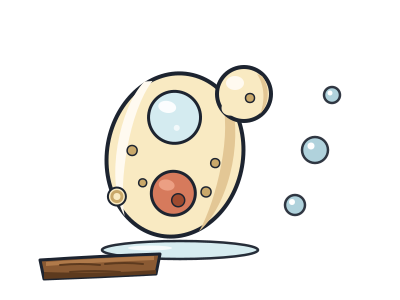
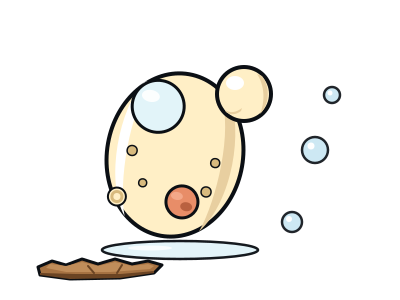
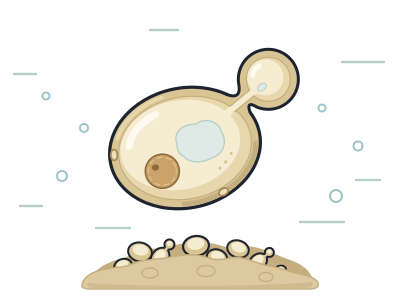
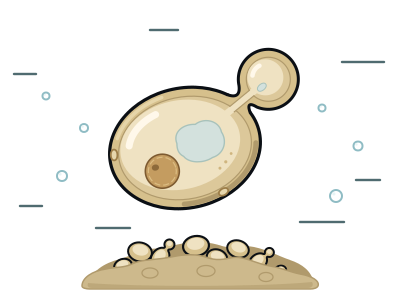
Right now, a tiny yeast may be living quietly in your mouth and gut. About half of healthy adults carry it and never notice. It can turn up on skin too, mostly on the feet and in warm, damp skin folds, though other yeasts are far more common there. It is a fungus that mostly lives as single cells. Its cells are so small that 10 to 20 of them in a row would only just span the width of a human hair. Babies usually pick it up from their mother or carers around the time they are born.
Most of the time it does no harm. But if the balance in the body changes, it can grow too much and cause an infection called thrush. This can happen after taking antibiotics or when the body's defences are weak. In the mouth, thrush shows up as white patches. On a baby's tongue it can look like cottage cheese. Thrush is common and usually easy to treat, so anyone who thinks they have it should see a doctor, nurse or pharmacist. Despite the name, the infection is not linked to the bird called a thrush.
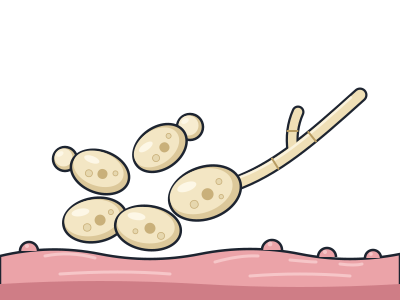
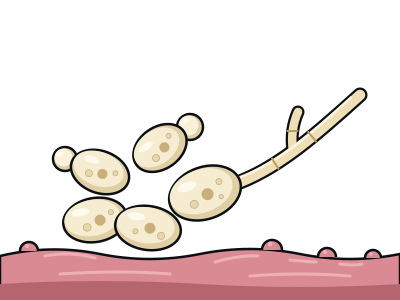
Its relative on the tree is baker's yeast. Both are budding yeasts, but they sit on different branches. This yeast even reads its genes with a slightly different genetic code from baker's yeast and most other life. It can change shape too. It can be a plump oval cell with small buds pinching off, or it can stretch into long, thin threads.
A shining white name
Its name comes from Latin. 'Candidus' means shining white, and 'albicans' means becoming white. That suits its smooth, creamy white colonies.
Known since ancient times
People have known about thrush for a very long time. The oldest known description, most likely caused by this yeast, is in the writings of the Greek doctor Hippocrates, from around 400 BC.
On the WHO watch list
In 2022 the World Health Organization published its first list of the fungi that most threaten human health. It put this yeast in the top 'critical priority' group.