A species
Antarctic rock fungus
Cryomyces antarcticus
A tiny black fungus from inside Antarctic rocks that survived a year and a half outside the space station
You and the antarctic rock fungus meet in the Fungi and animals branch, shown at about 1.3 billion years ago (on 10 September, in a calendar from life's shared ancestor to today).
This tiny black fungus normally lives inside rocks in Antarctica. It once spent about a year and a half fixed to the outside of the International Space Station. From 2008 to 2009, dried colonies rode on a European Space Agency platform. Some faced open space, where temperatures swung from about −22 °C to about +60 °C. Others sat in pretend Mars air, which was thin and almost all carbon dioxide, under strong ultraviolet light.
Back on Earth, most of the cells could no longer multiply. But roughly one in ten could still grow new colonies, and many more cells were still whole. Scientists think its thick, dark cell walls help to shield it. The walls are packed with melanin.
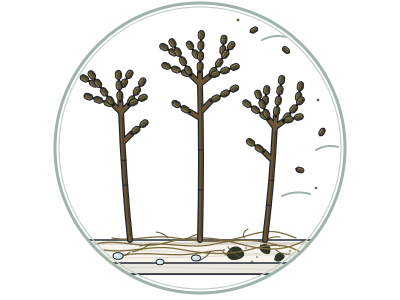
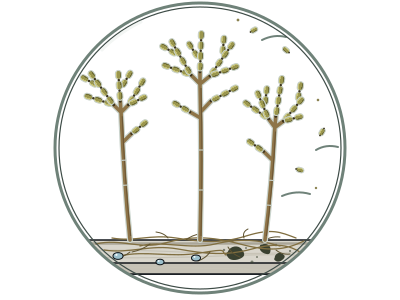
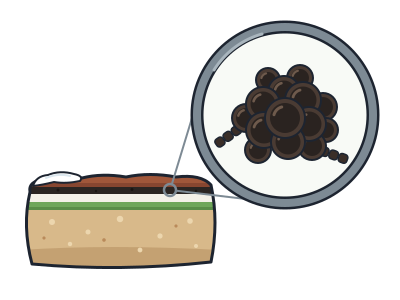
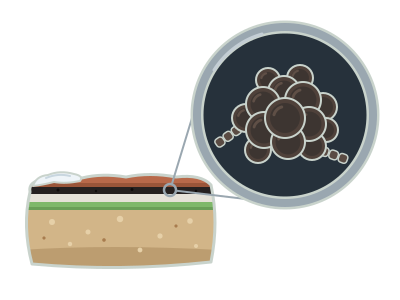
At home, the fungus lives a few millimetres under the surface of sandstone in Antarctica's freezing, very dry valleys. It sits in tiny gaps between the sand grains, mixed in with lichen fungi. Inside the rock it is a little more sheltered than on the open surface.
Its relative on the tree, Cladosporium mould, is much easier to meet: it grows on damp bathroom walls. Both belong to the same big group of sac fungi, which includes many dark moulds.
Pink without its pigment
In 2024, scientists used gene editing to switch off a gene it needs to make its black pigment. The edited fungus turned light pinkish. The work took 8 to 9 months because the fungus grows so slowly.
Tougher than its relative
A related rock fungus flew on the same mission. The Antarctic rock fungus came through better: its DNA picked up no more than about 5% mutations, while the other fungus's DNA was much more damaged.
Tiny travellers
Before launch, the colonies were grown for three months, but they were still only about 1 millimetre across. They were then slowly dried out over 20 days.