A group of living things
Dark moulds and rock fungi
Dothideomycetes
Tough fungi, many with dark walls, that live almost everywhere from bathroom grout to Antarctic rock
This branch is shown at about 350 million years ago; its age is a rough estimate.
You and dark moulds and rock fungi meet in the Fungi and animals branch, shown at about 1.3 billion years ago (on 10 September, in a calendar from life's shared ancestor to today).
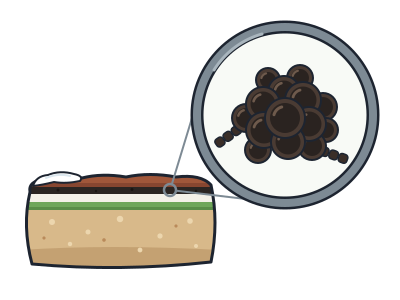
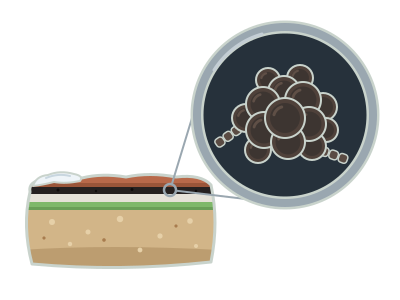
This is the biggest class of sac fungi. Sac fungi are a huge group that also includes blue-green moulds, flask fungi, morels and truffles. Many members have dark brown to black cell walls, coloured by a pigment called melanin. It works like built-in sunscreen, helping them survive strong sunlight, heat, drying out and big swings in temperature.
They turn up almost everywhere fungi can live: on and inside plants, on dead leaves and wood, in fresh water and the sea, as part of lichens and on bare rock. Some cause serious crop diseases, harming wheat, barley, apples, bananas and cabbage-family crops around the world.
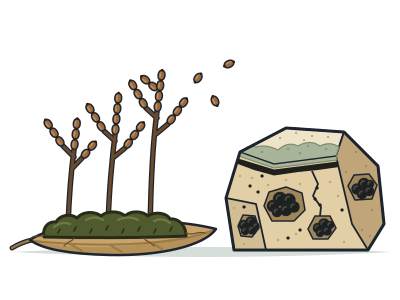
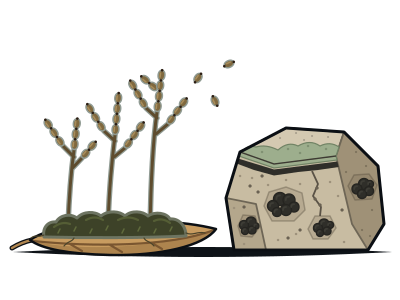
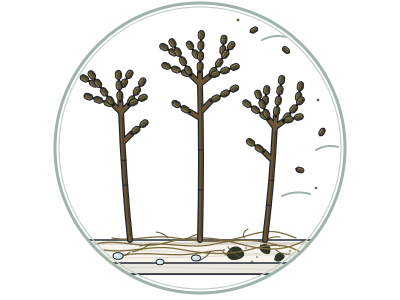
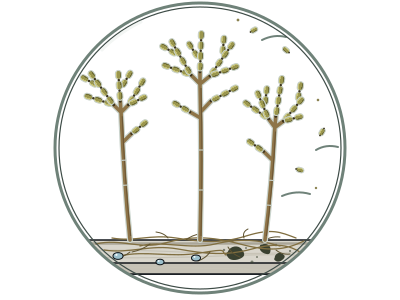
One familiar member is a dark mould that is among the most common fungi in the air, both outdoors and indoors. Its tiny brown spores grow in branching chains that break apart easily and drift away on the wind. Breathing them in can set off allergies and asthma.
At the other extreme, the Antarctic rock fungus lives inside sandstone in Antarctica's ice-free valleys, in tiny spaces just under the rock surface. Scientists once left dried samples of it outside the International Space Station for 18 months, and it survived.
Jack-in-the-box spores
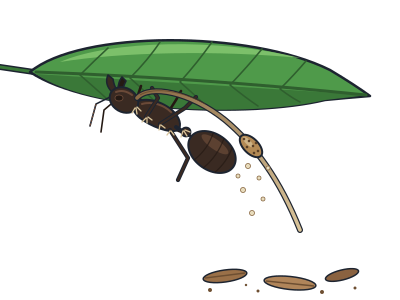
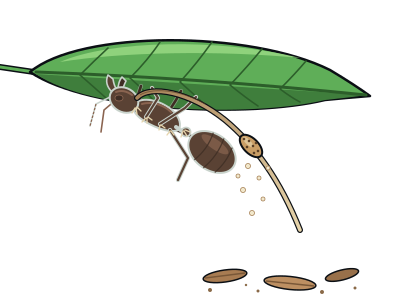
In members that make spore sacs, each sac has two layers. The tough outer layer splits open, then the stretchy inner layer pops out and shoots the spores into the air.
A summer sky full of spores
In summer, a box of outdoor air one metre long, wide and high can hold about 2,000 to 50,000 spores of just one other species of the same dark mould.
Slow and steady
Rock fungi grow extremely slowly. Colonies grown in a lab reached only about 14 millimetres across on average, roughly the size of a fingernail, and many made no spores at all.
Inside dark moulds and rock fungi
Next to it on the tree
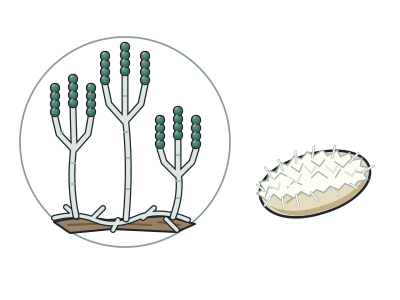
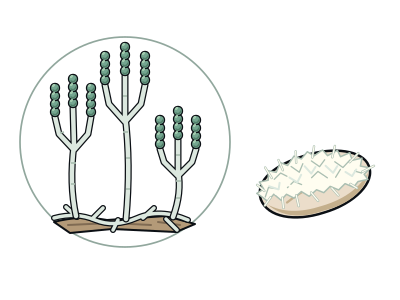
- Blue-green moulds and kinMoulds that gave us penicillin, soy sauce and sake, plus the fungus behind athlete's foot.
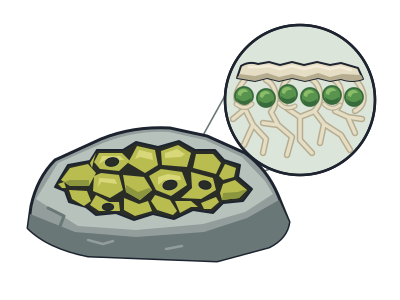
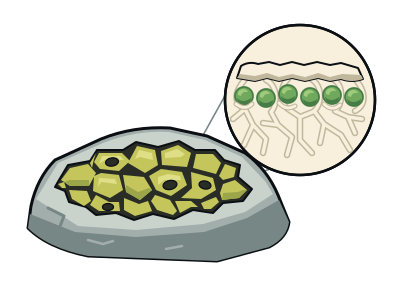
- Lichen fungiFungi that farm algae inside themselves, building lichens that can live on bare rock.
- Flask fungiFungi that fire spores from tiny flasks; many infect insects, crops and trees.
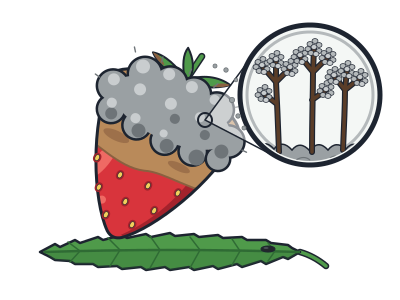
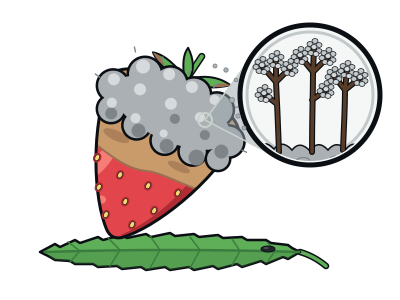
- Grey mouldThe fuzz on rotting strawberries, and the 'noble rot' that sweetens some wines.
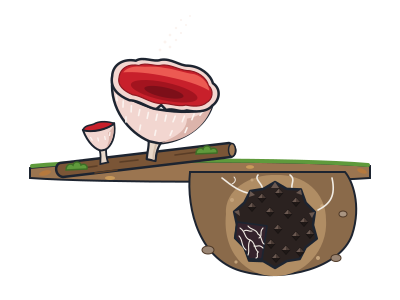
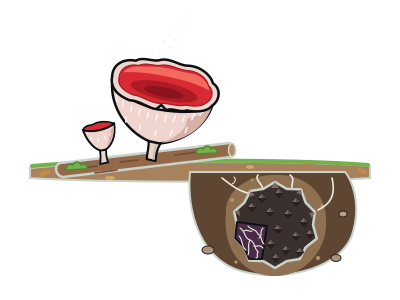
- Cup fungi, morels and trufflesTheir spores form in open cups; truffles are cups that folded up and moved underground.