A group of living things
Blue-green moulds and kin
Eurotiomycetes
Medicine-makers, food-makers and an itchy relative
This branch is shown at about 300 million years ago; its age is a rough estimate.
You and blue-green moulds and kin meet in the Fungi and animals branch, shown at about 1.3 billion years ago (on 10 September, in a calendar from life's shared ancestor to today).
The moulds that gave us penicillin, soy sauce and sake belong to the same broad fungal branch as fungi that cause athlete’s foot. That is a surprisingly varied family connection: some members help us make medicine or food, while others can infect our skin.
Penicillin is not the mould itself. It is a substance made by certain moulds that can kill competing bacteria. Koji mould does a different job. It supplies enzymes that break down grain starch and proteins, helping people make soy sauce, sake and miso. In sake-making, koji helps release sugar from rice starch; separate yeast fungi turn that sugar into alcohol.
Athlete’s foot is another part of this story. One member of this branch is among several fungi that cause it. The helpful food-making moulds do not represent the whole group.
Tiny brushes
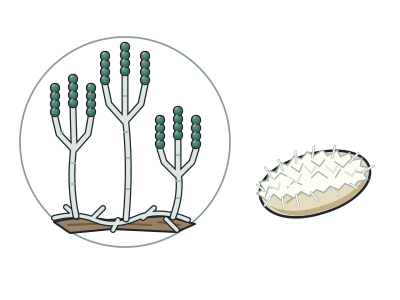
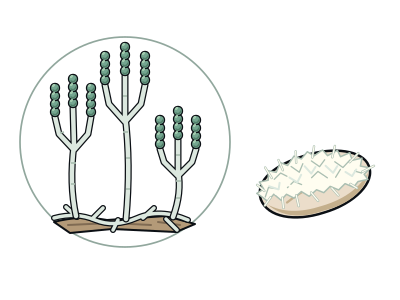
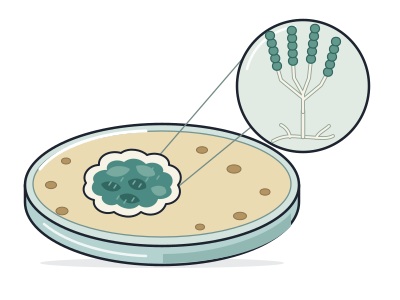
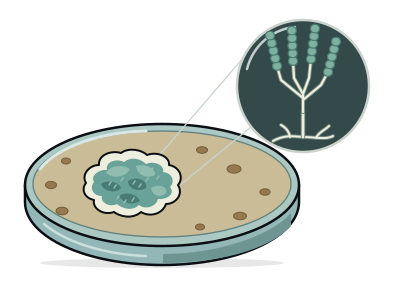
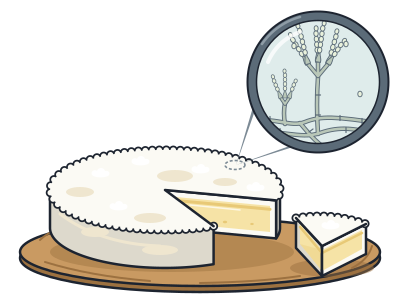
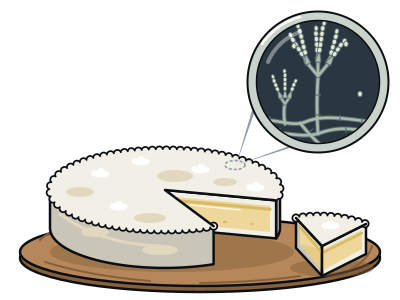
Under a microscope, typical penicillin mould spore stalks look like tiny brushes, with bead-like chains of spores extending from their tips.
A domesticated fungus
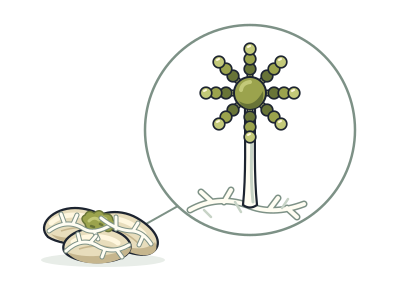
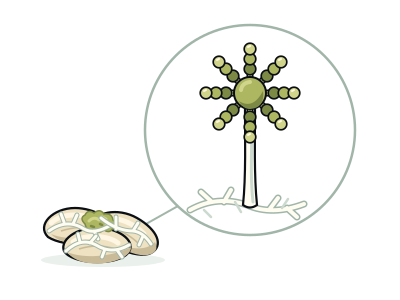
People passed down useful forms of koji for food-making, changing the fungus over generations.
Cheese-making relatives
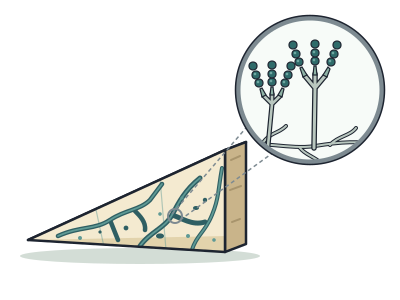
Other members help make the blue veins in blue cheese and the mould-made rind of Camembert and Brie.
Inside blue-green moulds and kin
- Penicillin mouldA blue-green mould on a lab dish led to penicillin, the first widely used antibiotic.
- Koji mouldTamed in Japan over a thousand years ago to make soy sauce, miso and sake.
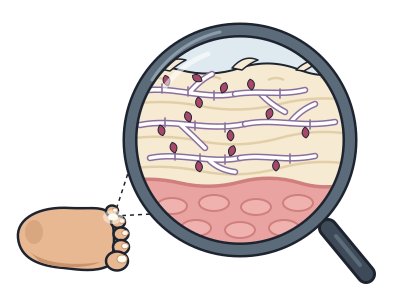
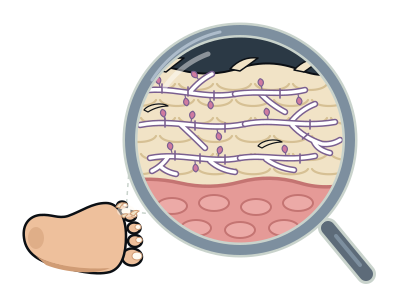
- Athlete's foot fungusFeeds on the dead outer layer of skin, causing itchy feet; easy to treat.
- Blue cheese mouldMakes the blue-green veins and sharp taste of Roquefort, Stilton and Gorgonzola.
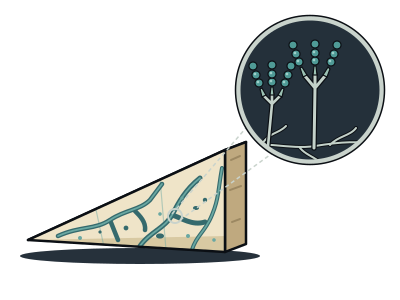
- Camembert mouldThe soft white fuzzy rind on Camembert and Brie, grown on purpose by cheesemakers.
Next to it on the tree
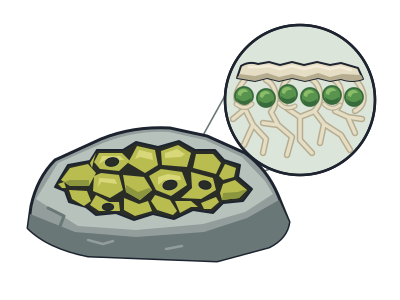
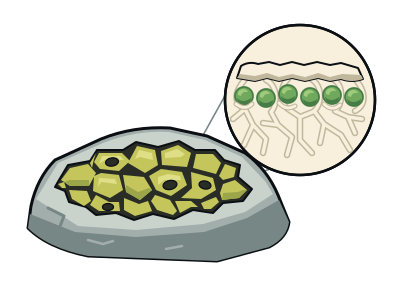
- Lichen fungiFungi that farm algae inside themselves, building lichens that can live on bare rock.
- Flask fungiFungi that fire spores from tiny flasks; many infect insects, crops and trees.
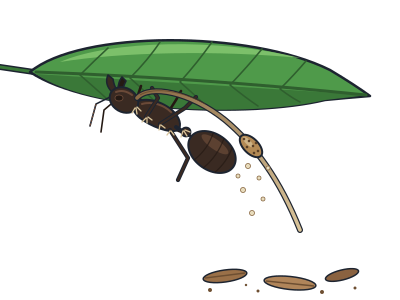
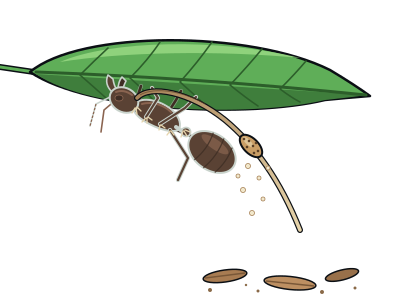
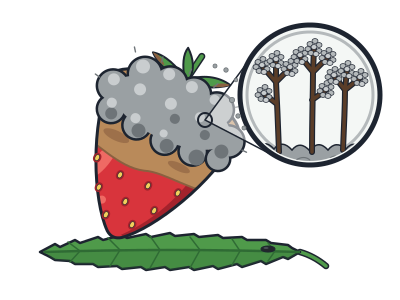
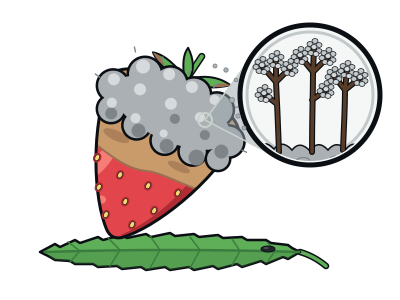
- Grey mouldThe fuzz on rotting strawberries, and the 'noble rot' that sweetens some wines.
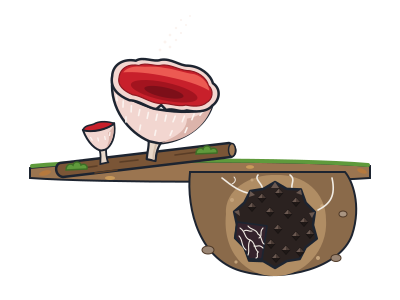
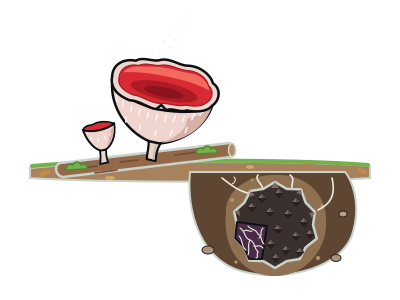
- Cup fungi, morels and trufflesTheir spores form in open cups; truffles are cups that folded up and moved underground.
- Dark moulds and rock fungiThe largest class of sac fungi, many with dark walls that shield them from sun, frost and drought.