A species
Blue cheese mould
Penicillium roqueforti
The living mould that paints the blue veins in blue cheese.
You and the blue cheese mould meet in the Fungi and animals branch, shown at about 1.3 billion years ago (on 10 September, in a calendar from life's shared ancestor to today).
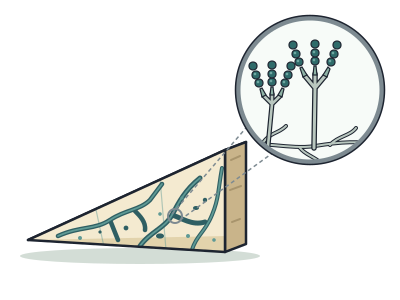
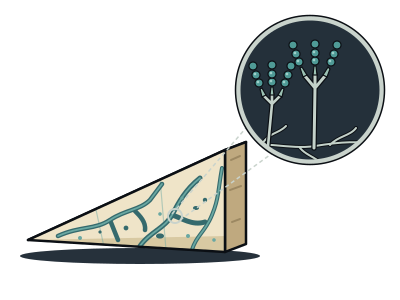
The blue-green veins in Roquefort, Stilton and Gorgonzola are a living mould. Cheesemakers add it on purpose, and it gives these cheeses both their colour and their sharp taste. The colour comes from tiny spores that hold a dark blue-green pigment, a type of melanin. The bite comes mainly from the mould breaking down fats in the milk. This makes strong-smelling substances.
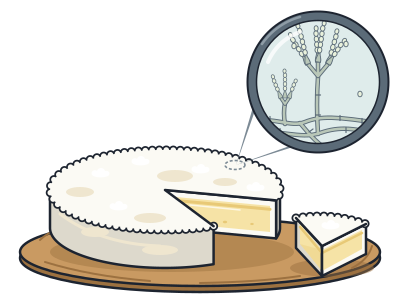
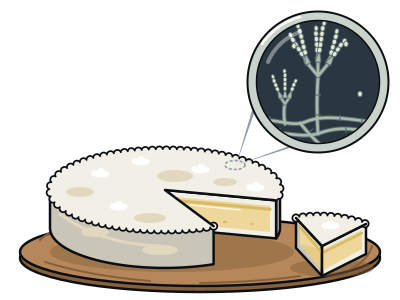
Its family may surprise you. On the tree it sits among the blue-green moulds, right beside the mould that gave us penicillin and the mould that ripens Camembert. Koji mould and the fungus that causes athlete's foot are nearby too. Eating blue cheese does not give you a dose of antibiotic, though.
People have tamed this mould at least twice. Roquefort uses its own separate group of the mould, tamed longer ago. It grows slowly and was traditionally multiplied on rye bread. Most other blue cheeses, including Gorgonzola and Stilton, use a single fast-growing clone that copes well with salt and suits big cheese factories.
Outside the cheese shop it can be a nuisance. It copes with cold and little air, so it can spoil bread and food in the fridge. Yet out in the wild, it is surprisingly hard to find.
A painter's brush
The group name Penicillium comes from the Latin for a painter's brush. Under a microscope, the spore-bearing tips fan out like bristles.
Blue cheese in new colours
In 2024, scientists in Nottingham, England, used food-safe methods to block steps in the way the mould makes its colour. They made 'blue' cheeses with white, yellow-green, pinkish red-brown and light blue veins. Lab tests found the flavour barely changed, yet tasters thought the paler cheeses tasted milder.
Borrowed DNA
Cheese strains picked up large chunks of DNA from other, distantly related Penicillium moulds. These borrowed genes help them grow faster on cheese and beat other microbes.
Next to it on the tree
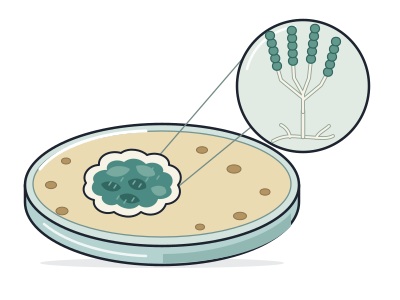
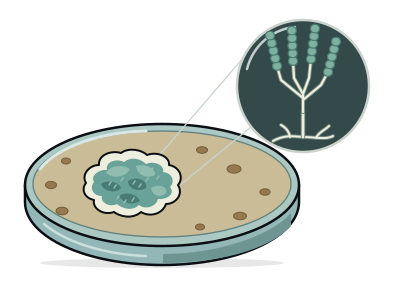
- Penicillin mouldA blue-green mould on a lab dish led to penicillin, the first widely used antibiotic.
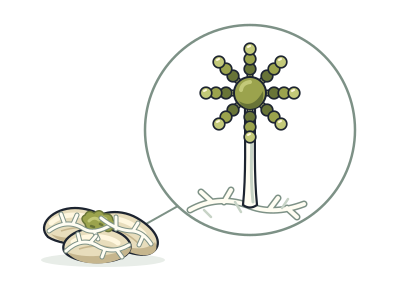
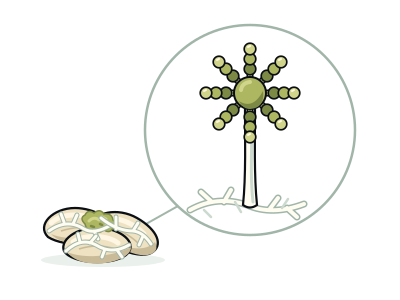
- Koji mouldTamed in Japan over a thousand years ago to make soy sauce, miso and sake.
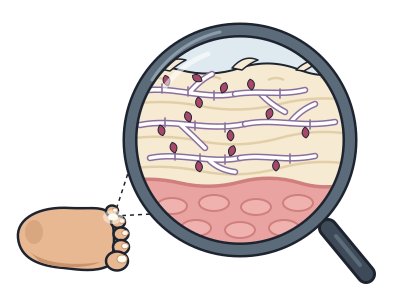
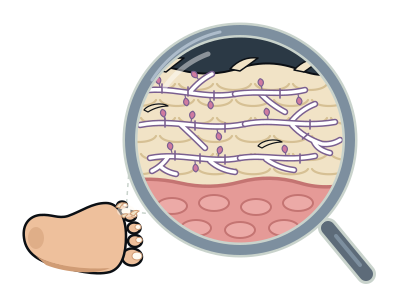
- Athlete's foot fungusFeeds on the dead outer layer of skin, causing itchy feet; easy to treat.
- Camembert mouldThe soft white fuzzy rind on Camembert and Brie, grown on purpose by cheesemakers.