A species
Koji mould
Aspergillus oryzae
A tamed mould behind soy sauce, miso and sake.
You and the koji mould meet in the Fungi and animals branch, shown at about 1.3 billion years ago (on 10 September, in a calendar from life's shared ancestor to today).
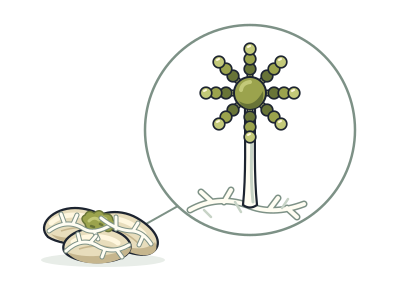
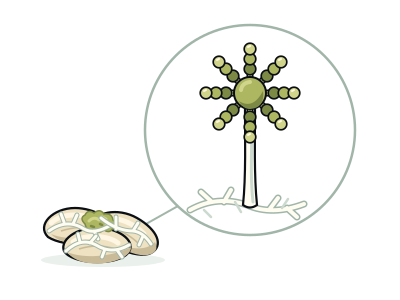
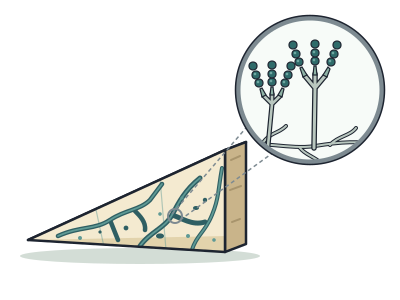
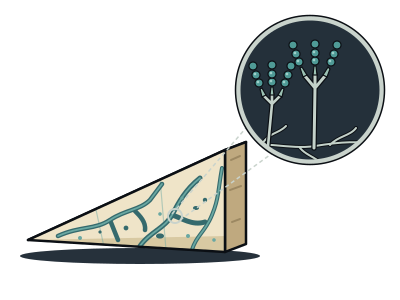
People in Japan have used koji mould in brewing for over 1,000 years. Today, this tamed mould helps make soy sauce, miso and sake. A relative of penicillin mould, it has become a valued food-making partner. Like crops and farm animals, it has been shaped by people choosing useful inherited traits.
The mould releases enzymes—tiny helpers that speed up chemical changes. Some break rice starch down into sugars. In sake-making, yeast turns those sugars into alcohol while the starch breakdown continues. The mould is not yeast, and the two do different work. Other enzymes break food proteins into smaller pieces, helping give soy sauce its savoury taste.
Food makers choose varieties with different colours and qualities to suit different products. Specialist Japanese suppliers have maintained selected moulds across generations. Other mould species are also called koji moulds. This long partnership depends on carefully chosen moulds: a similar-looking patch growing on food is not automatically food-grade koji.
A national honour
In 2006, the Brewing Society of Japan named koji moulds, including this one, Japan’s national fungi.
A large toolkit
It has more than 100 types of genes for enzymes that break down proteins.
Rice plus mould
Rice koji means rice carrying the mould, rather than the fungus alone.
Next to it on the tree
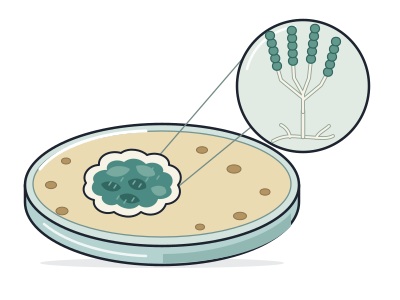
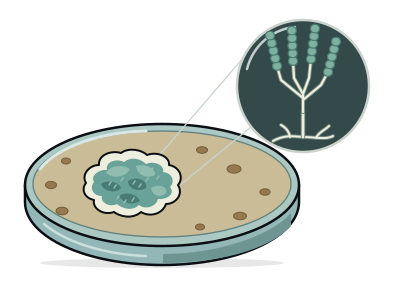
- Penicillin mouldA blue-green mould on a lab dish led to penicillin, the first widely used antibiotic.
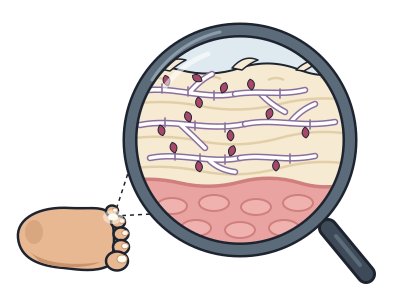
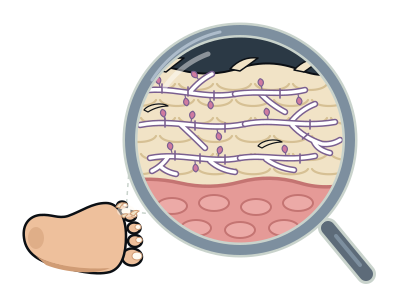
- Athlete's foot fungusFeeds on the dead outer layer of skin, causing itchy feet; easy to treat.
- Blue cheese mouldMakes the blue-green veins and sharp taste of Roquefort, Stilton and Gorgonzola.
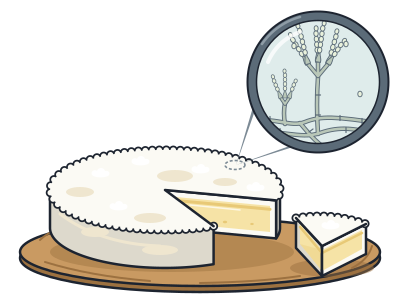
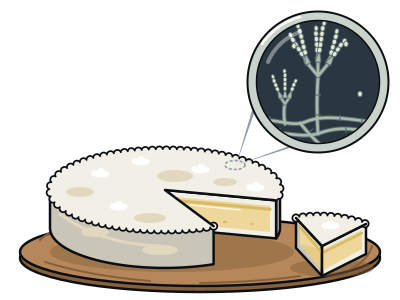
- Camembert mouldThe soft white fuzzy rind on Camembert and Brie, grown on purpose by cheesemakers.