A species
Athlete's foot fungus
Trichophyton rubrum
A tiny mould that eats dead skin between your toes
You and the athlete's foot fungus meet in the Fungi and animals branch, shown at about 1.3 billion years ago (on 10 September, in a calendar from life's shared ancestor to today).
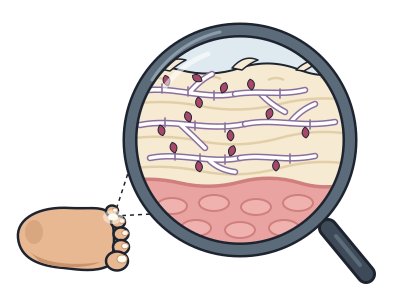
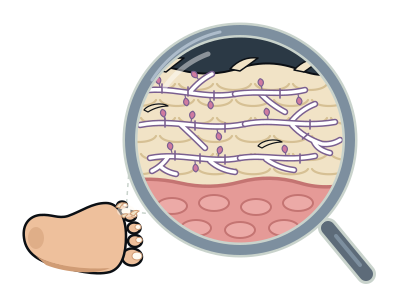
Athlete's foot fungus lives on people, mostly between the toes, but also on nails and in other warm skin folds. It feeds on keratin, the tough protein in the dead outer layer of skin and nails. Because it eats skin that is already dead, it usually stays on the surface. It still causes itchy white patches between the toes, and sometimes sore, flaky, red skin.
Here is the surprise: it is a mould. It is a relative of penicillin mould and koji mould. All three are sac fungi in the same broad group of moulds, though they sit on different branches of it, so they are cousins rather than closest kin. Like all fungi, it is more closely related to animals than to plants.
This fungus is adapted to living on humans. It spreads mainly from person to person, through shared towels, shoes and damp changing-room floors. You don't have to be an athlete, or dirty, to catch it. It just does well where it is warm and damp.
The good news is that on the skin it is easy to treat. Antifungal creams, sprays and powders from a pharmacy work, though they can take a few weeks. It is unlikely to clear up on its own. If it spreads to the toenails it is harder to get rid of, and may need tablets for weeks or months. Keeping your feet dry, wearing cotton socks and not sharing towels all help to stop it coming back.
Red underneath
Grown in a lab dish, it forms a white, cottony colony. Turn the dish over and the underside is often a striking wine-red, which is where its name 'rubrum' (meaning red) comes from.
Birds on a wire
Under a microscope, its tiny teardrop-shaped spores sit one by one along the sides of its thin threads, a bit like birds perched on a wire.
Once an animal fungus
Scientists think its ancestors lived on animals. Over time it switched to people, and today it is only rarely found on animals.
Next to it on the tree
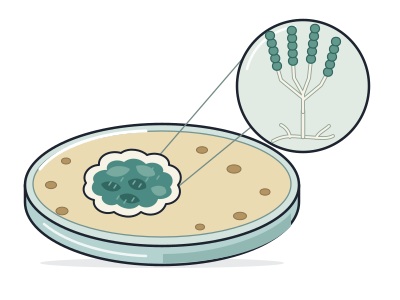
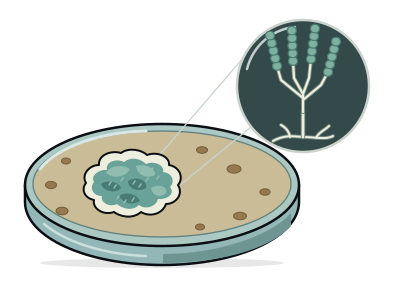
- Penicillin mouldA blue-green mould on a lab dish led to penicillin, the first widely used antibiotic.
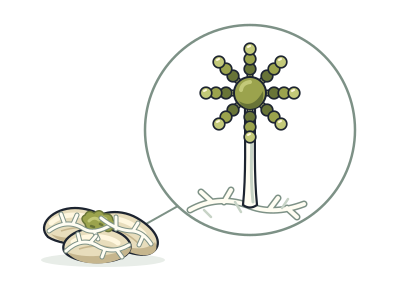
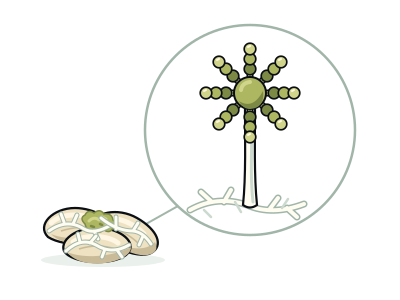
- Koji mouldTamed in Japan over a thousand years ago to make soy sauce, miso and sake.
- Blue cheese mouldMakes the blue-green veins and sharp taste of Roquefort, Stilton and Gorgonzola.
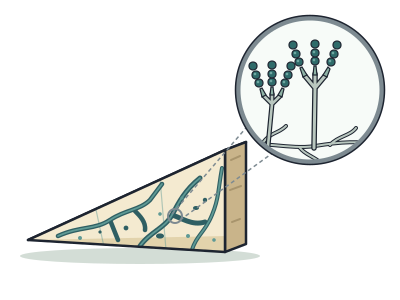
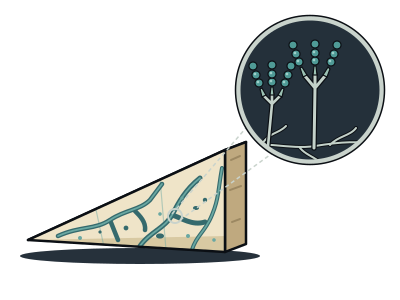
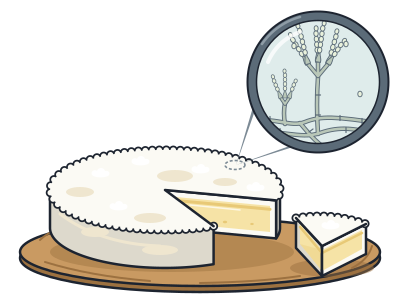
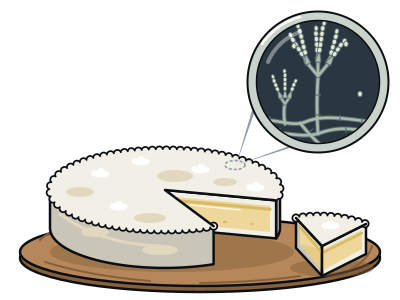
- Camembert mouldThe soft white fuzzy rind on Camembert and Brie, grown on purpose by cheesemakers.