A species
Penicillin mould
Penicillium rubens
An ordinary-looking mould that changed medicine
You and the penicillin mould meet in the Fungi and animals branch, shown at about 1.3 billion years ago (on 10 September, in a calendar from life's shared ancestor to today).
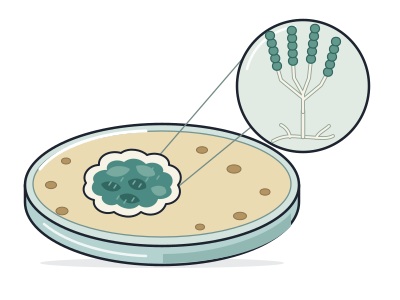
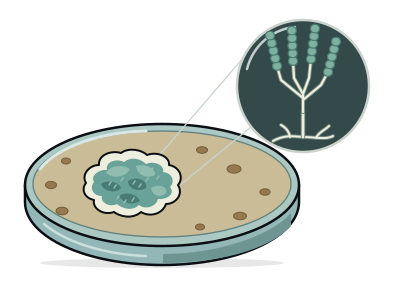
A blue-green mould on a laboratory dish led to penicillin, the first widely used antibiotic. In 1928, Alexander Fleming noticed the mould growing on a dish of bacteria in his London laboratory. Around it was a clear area where bacteria had not grown. Penicillin is the substance made by the fungus, not the fungus itself.
Turning that discovery into a useful medicine took a team. In the 1940s, researchers at Oxford led by Australian Howard Florey and German refugee Ernst Chain helped make that happen. By the second half of 1944, penicillin was in common use among Allied forces.
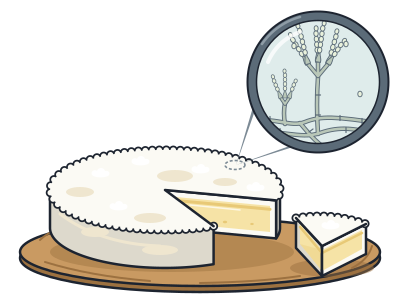
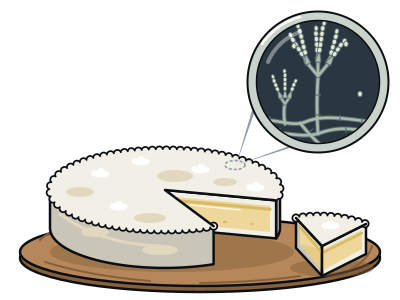
This mould also has a family connection to your cheese board. Other species in the same group help ripen Roquefort and Camembert. They are relatives, not the same species. A mould that helped change medicine belongs to a wider family whose members also help make familiar foods.
A shared prize
Fleming, Florey and Chain shared the 1945 Nobel Prize in medicine for discovering and developing penicillin.
Not just a laboratory resident
This species is a common indoor mould.
An identity clarified
DNA comparisons in 2011 identified Fleming’s original mould as this species. Older accounts often use different scientific names.
Next to it on the tree
- Koji mouldTamed in Japan over a thousand years ago to make soy sauce, miso and sake.
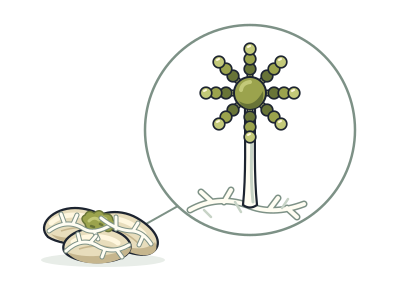
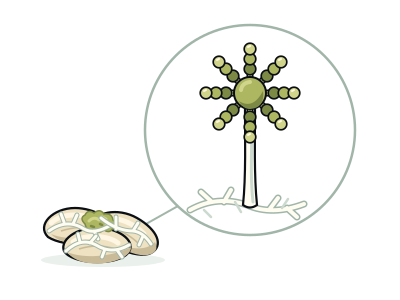
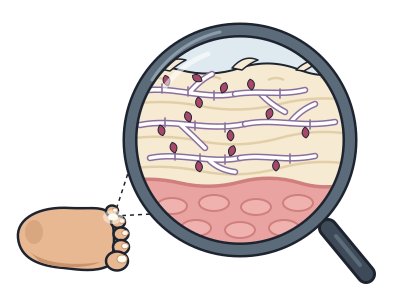
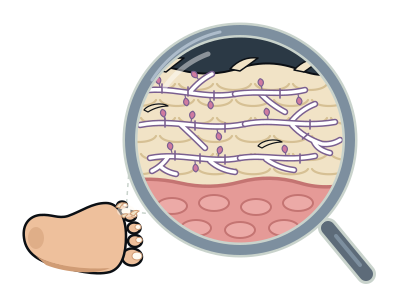
- Athlete's foot fungusFeeds on the dead outer layer of skin, causing itchy feet; easy to treat.
- Blue cheese mouldMakes the blue-green veins and sharp taste of Roquefort, Stilton and Gorgonzola.
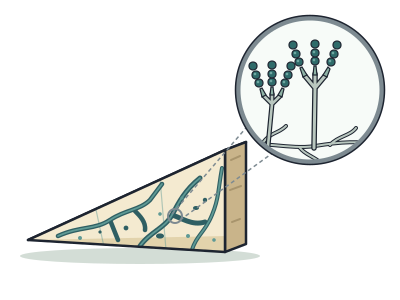
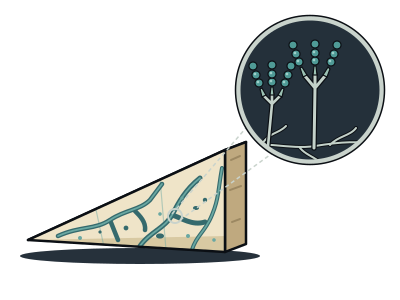
- Camembert mouldThe soft white fuzzy rind on Camembert and Brie, grown on purpose by cheesemakers.