A species
White truffle
Tuber magnatum
A prized underground fungus that dogs sniff out in Italian oak woods
You and the white truffle meet in the Fungi and animals branch, shown at about 1.3 billion years ago (on 10 September, in a calendar from life's shared ancestor to today).
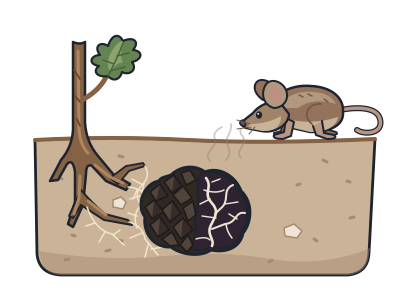
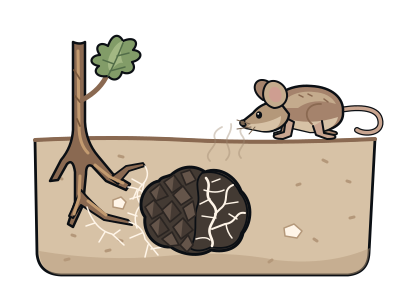
Each autumn in Italian oak woods, trained dogs sniff the ground and point to a hidden prize. Under the soil lies one of the costliest foods on Earth by weight. In ordinary markets it sells for about €1,500 to €3,000 a kilogram. At the peak of the auction season, prices can reach about €50,000 a kilogram.
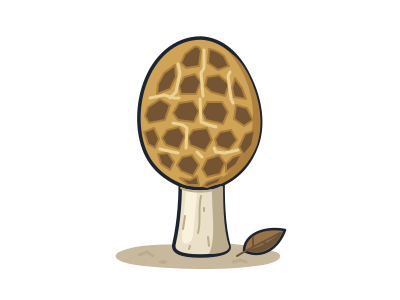
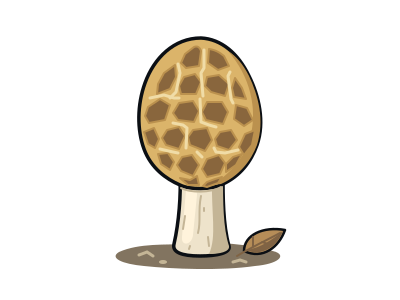
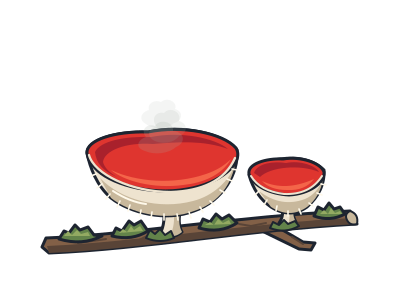
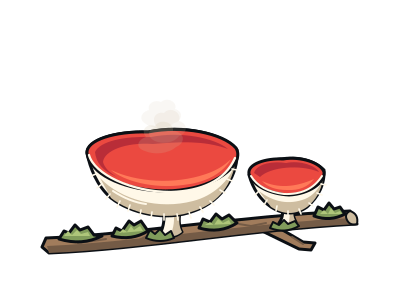
A truffle is not a plant root or a vegetable. It is the fruiting body of a fungus, a bit like a mushroom that grows underground. The surprise is who its relatives are. It is not grouped with everyday gilled mushrooms. Instead, it shares a branch with the black truffle, a fellow true truffle, and with morels and the bright scarlet elf cup.
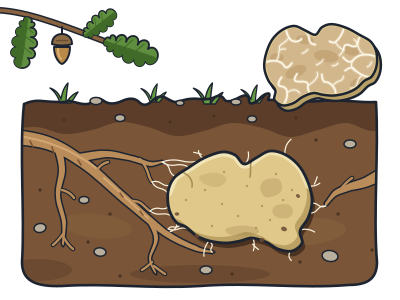
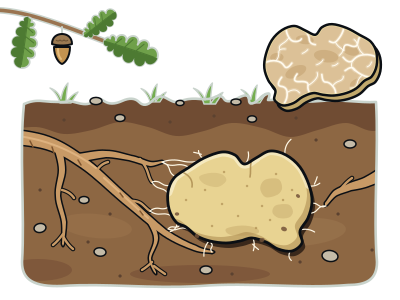
Most are about the size of a walnut or a fist. The skin is smooth and pale olive-yellow, and the flesh inside is creamy to light brown, marbled with fine white veins. Its strong smell is garlicky, with buttery and malty notes.
The fungus lives in partnership with tree roots, especially oaks, poplars and hazel. It is most famous from Piedmont, around the town of Alba, but it also grows in other parts of Italy and in the Balkans. Almost all white truffles are still gathered from the wild, because the species has long resisted farming.
No pigs allowed
Italy has banned truffle hunting with pigs since 1985. Digging pigs damage the fungus's underground threads and cut later harvests. Dogs are also less likely to eat the find.
World heritage hunt
In 2021, UNESCO added Italy's traditional truffle hunting and digging to its list of the world's Intangible Cultural Heritage.
A first in France
In 2019, a four-year-old planted orchard in France produced white truffles. It was the first time this had happened outside the species' natural range, though there were only three truffles that year.