A species
Black truffle
Tuber melanosporum
An underground fungus with a smell that invites discovery.
You and the black truffle meet in the Fungi and animals branch, shown at about 1.3 billion years ago (on 10 September, in a calendar from life's shared ancestor to today).
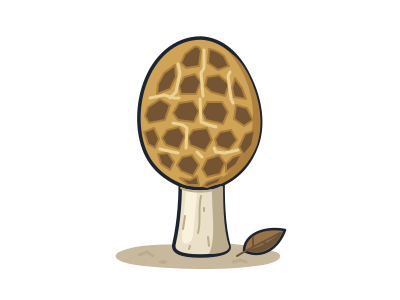
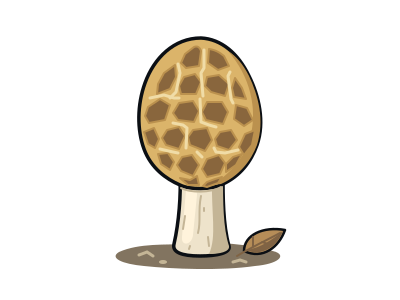
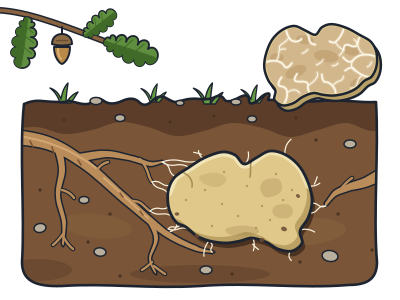
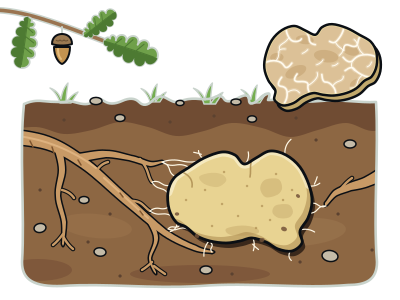
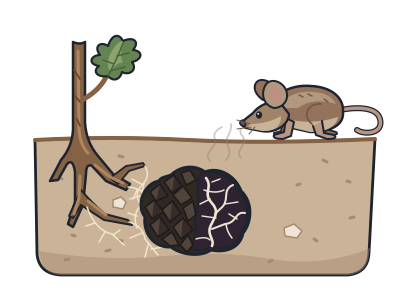
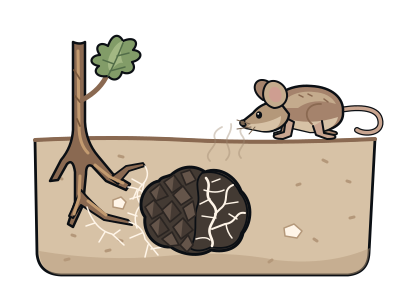
Hidden beside oak roots, the black truffle uses its strong smell to get animals to dig it up. Wild boars and rodents follow the scent and eat the buried truffles. Despite its unusual underground life, this fungus is a relative of the yellow morel.
The edible lump is not a swollen tree root. It is the fungus’s fruiting body: the part that makes tiny spores, which can grow into new fungi. Beneath the soil, the fungus and its living tree partner exchange supplies. The tree provides sugars, while the fungus supplies water and nutrients from the soil. Hazels can be partners too.
Being eaten helps the truffle spread. Its spores can survive a journey through an animal’s digestive system and leave in its droppings. The animal carries them away from the buried lump, giving this underground fungus a way to reach new places.
A bumpy coat
The brown-black surface is covered in small, pyramid-shaped warts.
A pattern inside
A mature truffle has a very dark interior crossed by thin, branching whitish veins.
A blended scent
Its aroma comes from a mixture of many compounds, not a single smell-producing chemical.