A species
Scarlet elf cup
Sarcoscypha coccinea
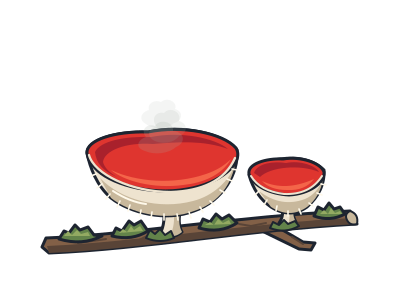
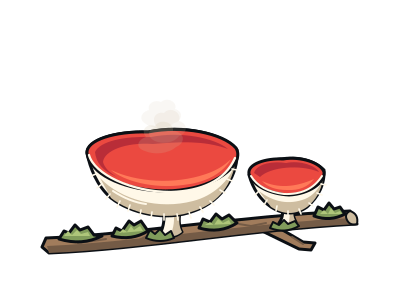
Red woodland cups with a smoke-like puff.
You and the scarlet elf cup meet in the Fungi and animals branch, shown at about 1.3 billion years ago (on 10 September, in a calendar from life's shared ancestor to today).
Bright red cups on mossy winter sticks can release a puff that looks like smoke. But this is a fungus sending out spores—tiny reproductive particles—not burning wood. It belongs to the same group of sac fungi as morels, despite their very different shapes.
The cups appear on fallen woodland twigs in winter and early spring, often partly hidden by moss. Each cup is a reproductive structure, not the whole fungus. The main body is a network of fine threads. It breaks down dead wood, including branches from hazel, beech and elm.
Inside the cup, spores develop in tiny sacs too small to see without magnification. Their release can create that brief, smoke-like cloud. Look for the cups in damp, shaded woodland, where their vivid colour stands out among moss and fallen leaves.
White, not red
Collected spores form a white powder, despite the cup’s bright red colour.
Eight in a sac
Each spore-producing sac normally holds eight spores.
Table decorations
The colourful cups were historically used as table decorations.
Next to it on the tree
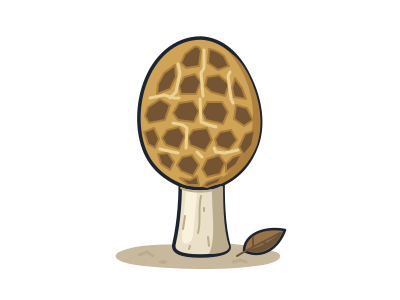
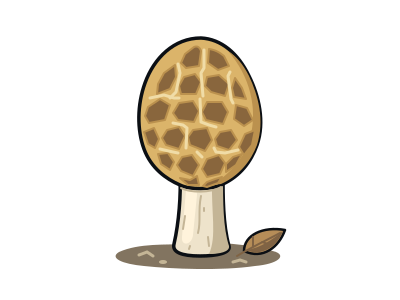
- Yellow morelA spring mushroom with a honeycomb cap, hunted by foragers; it is a sac fungus, not a toadstool.
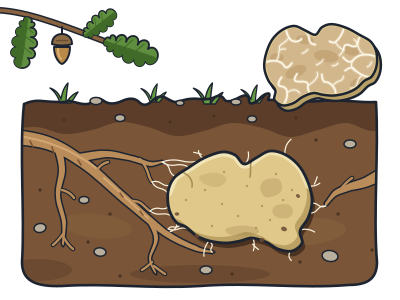
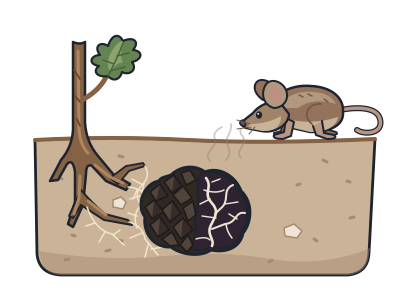
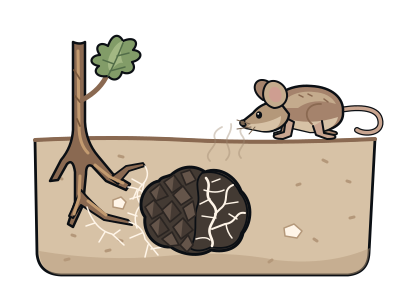
- Black truffleGrows underground on oak roots and uses its smell to get dug up by animals.
- White truffleSniffed out by dogs in Italian oak woods, it is among the costliest foods on Earth by weight.