A species
Cladosporium mould
Cladosporium herbarum
The dark mould floating in the air and speckling damp windows
You and the cladosporium mould meet in the Fungi and animals branch, shown at about 1.3 billion years ago (on 10 September, in a calendar from life's shared ancestor to today).
Breathe in outdoors on most summer days and you will take in spores of this kind of mould. Its kind is one of the most common moulds both indoors and out, and its spores are often found in huge numbers in outdoor air. This species and its close relatives also make the dark speckles on damp window frames, rubber window seals and bathroom walls. They can grow on surfaces where damp lingers.
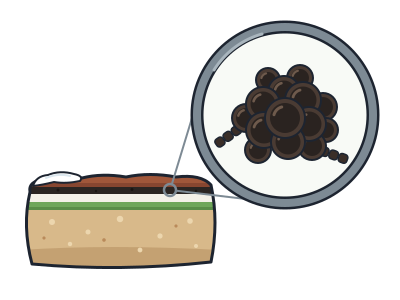
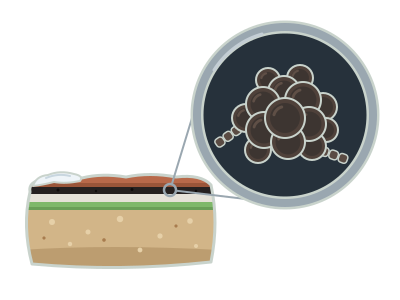
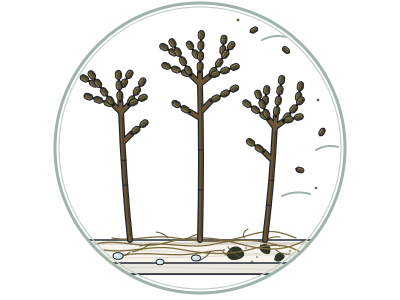
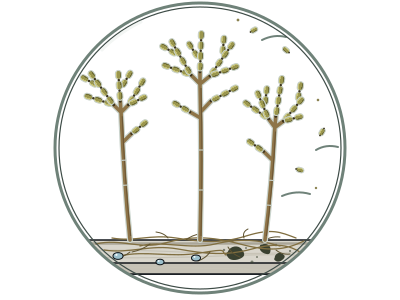
Outdoors it lives mainly on dead and dying plants, on leaves, stems and seeds, and in soil. It is found all over the world, from polar regions to the tropics. Its spores grow in chains on tiny upright stalks about a quarter of a millimetre tall. The chains snap apart easily, so the wind can carry off single spores.
Its olive-black colour comes from a dark pigment. On the tree it sits beside a fungus that lives on bare rock in Antarctica. Many dark fungi that live on rock use a dark pigment like this as a shield against drying out and strong sunlight.
Here is the surprising part: fungi share a bigger branch of the tree with animals, not plants. So this mould is more closely related to you than to the dead leaves it feeds on.
Fruit spoiler
It causes black spots on fresh fruit and vegetables such as peaches, plums, cherries, tomatoes and melons. It also spoils meat kept in the fridge.
Sneeze trigger
In many places it is one of the main fungal causes of asthma and hay fever. Scientists have found more than 60 substances in it, and 36 of them are ones that allergy antibodies latch on to.
The first of hundreds
Its kind of mould was named in 1816, and this species was the one used to define it. Hundreds of species have since been named in the group.