A group of living things
Chanterelles and kin
Cantharellales
Mushrooms with wrinkles and spines instead of gills, plus some secret orchid helpers
This branch is shown at about 180 million years ago; its age is a rough estimate.
You and chanterelles and kin meet in the Fungi and animals branch, shown at about 1.3 billion years ago (on 10 September, in a calendar from life's shared ancestor to today).
Chanterelles and their kin are one of the earliest branches on the family tree of mushroom-forming fungi. Most familiar mushrooms have thin, papery gills under the cap. This group often does things differently. A golden chanterelle has blunt, wrinkly ridges, and a hedgehog mushroom has soft spines that hang down like icicles. Some members of the group make no mushroom at all. Instead, they quietly help orchids grow.
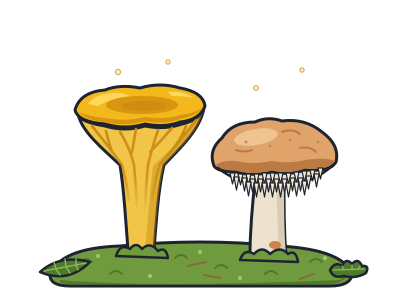
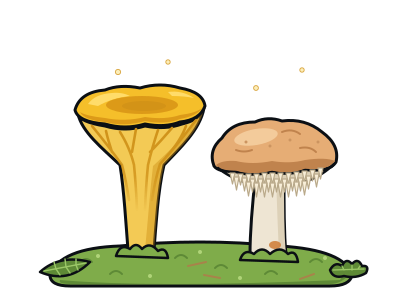
The golden chanterelle is shaped like a trumpet or funnel and is egg-yolk yellow. Its cap can grow about as wide as your hand. It has a faint smell and taste of apricots. Under the cap, forking folds run down the stem. They look a bit like gills, but they are not true gills.
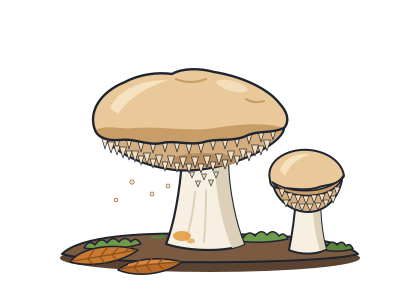
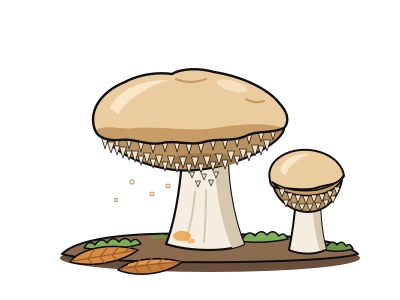
The hedgehog mushroom gets its name from the prickly spines under its pale orange or tan cap. It is not a close relative of the animal, though fungi as a whole are closer kin to animals than plants are. Its white flesh bruises orange. It grows in forests, working in partnership with the roots of living trees.
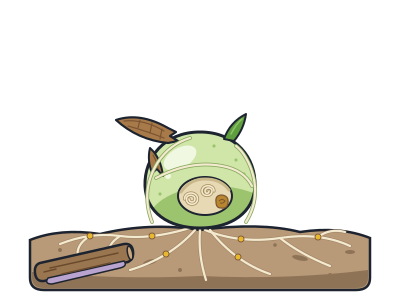
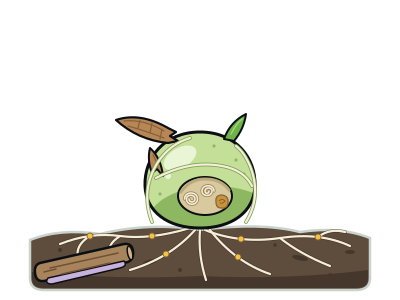
Orchid seeds are as fine as dust and carry almost no food store. In the wild, they cannot sprout unless a fungus partner feeds them. Some members of this group do exactly that job, along with a few other kinds of fungi.
A troublesome relative
Not every member of the group is helpful. One relative of the orchid helpers causes disease in crop plants.
Millions in a pod
A single orchid seed pod can hold up to about 4 million seeds. Each seed weighs only about 0.3 millionths of a gram.
Corals and crusts
The group's family members come in surprising shapes. As well as funnels and spiny caps, some look like clubs or corals, and others are flat crusts.
Inside chanterelles and kin
- Golden chanterelleGolden, apricot-scented mushrooms with soft ridges instead of true gills.
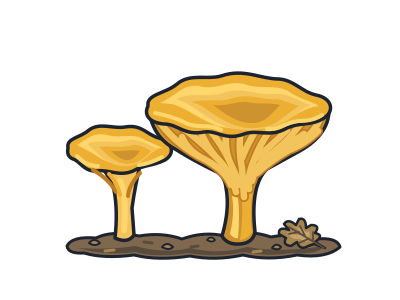
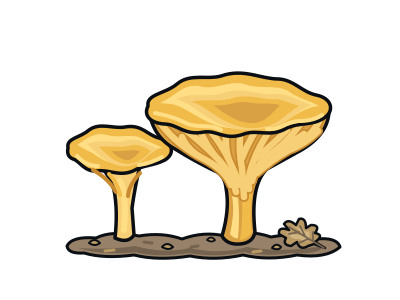
- Hedgehog mushroomA pale cap with soft spines underneath instead of gills, easy for beginners to recognise.
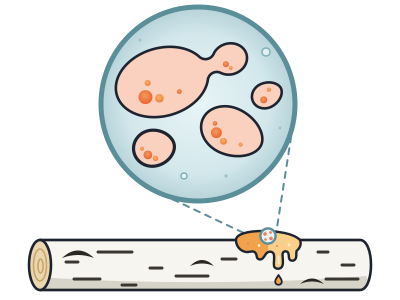
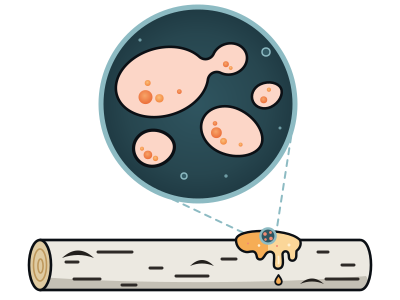
- Orchid partner fungusOrchid seeds are dust-small with no food store; they sprout only after a fungus like this feeds them.
Next to it on the tree
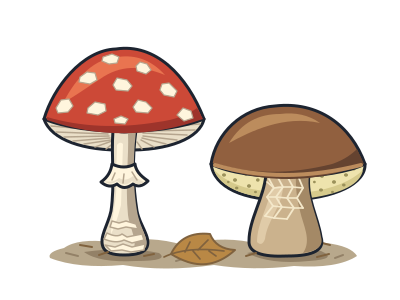
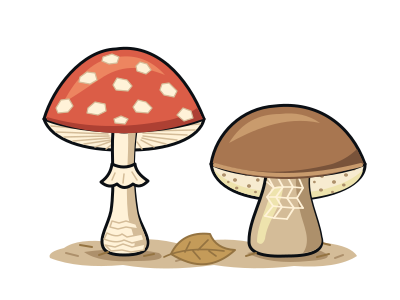
- Gilled mushrooms and boletesClassic cap-and-stalk mushrooms with gills or sponge-like pores underneath.
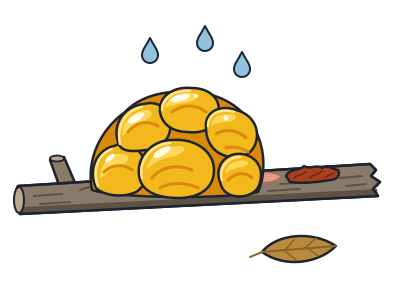
- Witch's butterA wobbly yellow jelly on dead branches that dries crisp and revives after rain.
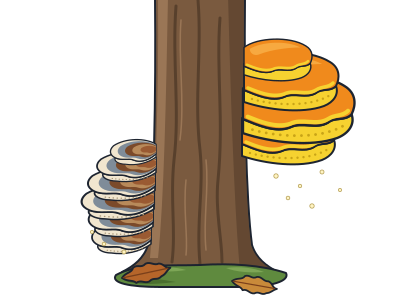
- Bracket fungiShelves and brackets on trees that recycle wood, with pores instead of gills underneath.
- Stinkhorns and earthstarsFungi that hatch from eggs: smelly stinkhorns that use flies, and earthstars that peel open into stars.
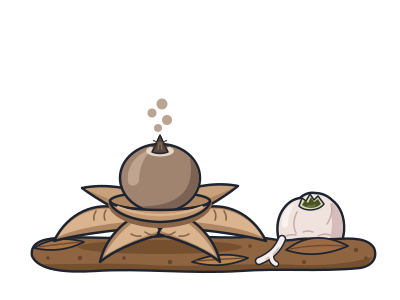
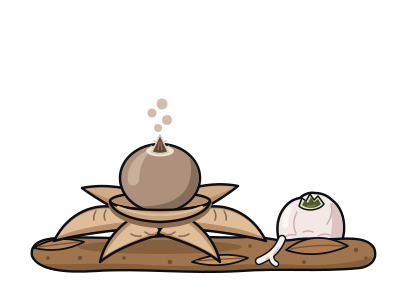
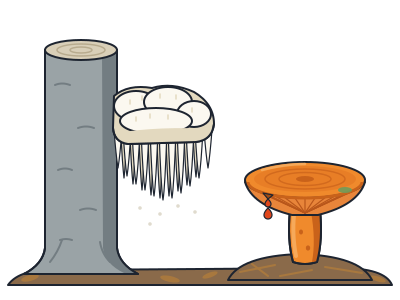
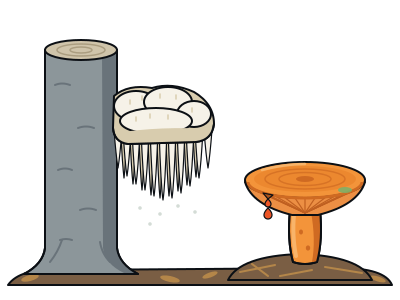
- Milkcaps, brittlegills and lion's maneA group of very different shapes: milky gilled caps, crumbly brittlegills and icicle-like tooth fungi.
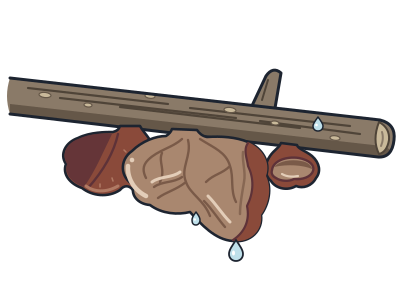
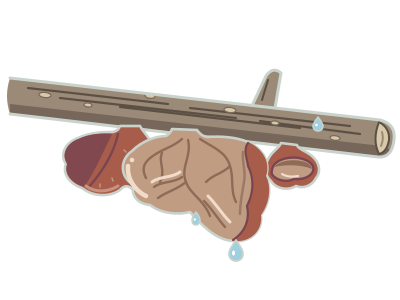
- Jelly earA rubbery brown ear on elder branches; its close relative, wood ear, is a staple of Chinese cooking.
- Astaxanthin yeastA pink yeast from birch sap; its pigment is one of the colours fed to farmed salmon to turn them pink.