A species
Hedgehog mushroom
Hydnum repandum
A woodland mushroom with soft spines under its cap instead of gills.
You and the hedgehog mushroom meet in the Fungi and animals branch, shown at about 1.3 billion years ago (on 10 September, in a calendar from life's shared ancestor to today).
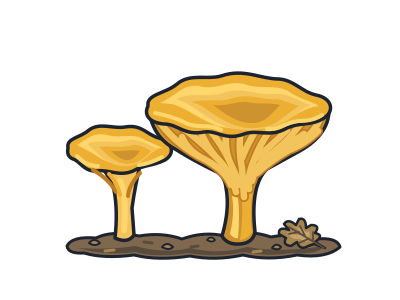
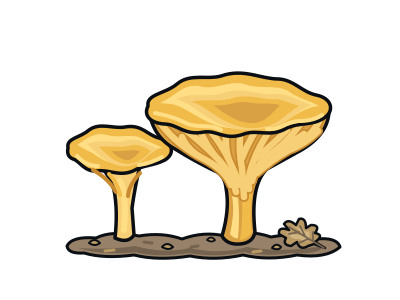
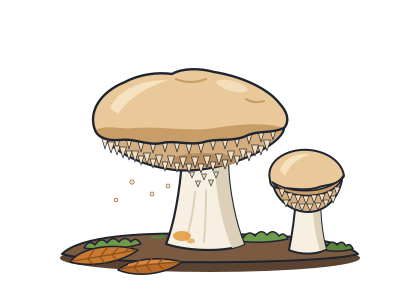
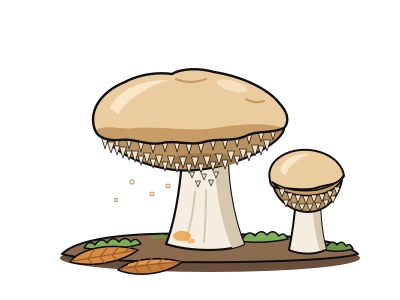
Turn this mushroom over and you won't find any gills. Instead, the underside of its pale cap is crowded with small, soft spines, each only a few millimetres long. They hang straight down like tiny icicles and look a bit like a hedgehog's spines, which is how the mushroom got its name. The spines rule out the poisonous gilled mushrooms that people might otherwise confuse with it, and it has no known poisonous lookalikes. That is why foragers rate it one of the easiest wild mushrooms for beginners to recognise.
The cap is cream to pale orange or tan, lumpy and wavy, and usually about the width of your palm. It sits on a short, thick stem, which is often a little off-centre.
You might guess that a spiny mushroom is closely related to other spiny fungi, but DNA tells a different story. It is more closely related to chanterelles, which carry their spores on blunt ridges instead. The same wider group also includes fungi that partner with orchids. So spines are not a sign of one family: different fungi grew them separately.
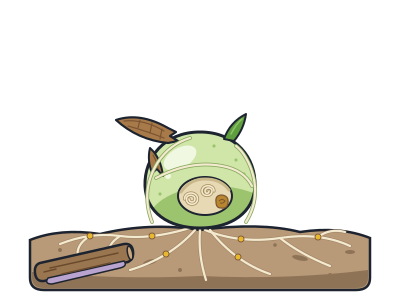
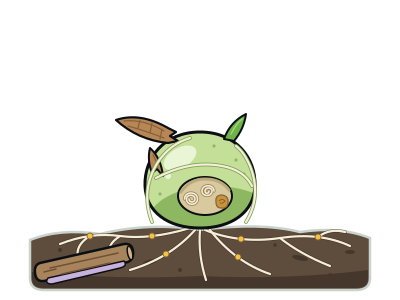
The hedgehog mushroom lives in partnership with the roots of trees such as beech, oak, hazel and spruce. In Scotland it is commonly found from about July to November.
A sheep's foot in France
In France it is sold in markets as 'pied-de-mouton', meaning 'sheep's foot'. Other nicknames include sweet tooth, pig's trotter and wood hedgehog.
Tough against bugs and frost
Insects and slugs rarely eat it, so it is seldom full of grubs. It also stays firm in cold late-autumn weather, when many other mushrooms have gone soggy.
Bruises orange
Its thick white flesh bruises yellow to orange-brown.