A species
Jelly ear
Auricularia auricula-judae
A rubbery brown ear on elder branches, and a cousin of a famous Chinese food
You and the jelly ear meet in the Fungi and animals branch, shown at about 1.3 billion years ago (on 10 September, in a calendar from life's shared ancestor to today).
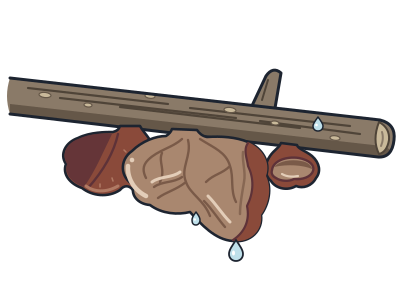
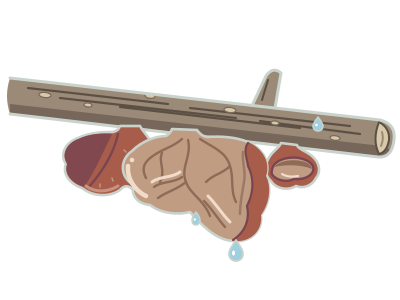
On old elder branches in damp woods, you may spot clusters of brown, rubbery 'ears' hanging from the bark. This is jelly ear, a fungus. A close relative in the same group, black wood ear, is a staple of Chinese cooking. For a long time people thought the two were the same species. Then in 2014 a study using DNA and microscopes showed that the wood ear farmed in East Asia is a separate species. It also found that jelly ear probably grows only in Europe.
Each ear is usually about 3 to 10 centimetres across, so the biggest are about the size of your palm. But it is only about 3 millimetres thick. The outside is reddish-brown and velvety, with very fine hairs. The inside is paler, smooth and shiny, often with wrinkles like the inside of a real ear. Its spores are released from that smooth inner side.
Jelly ear feeds mostly on dead wood and helps break it down, though it can sometimes live on wood that is still alive. Elder is its favourite, but it also grows on sycamore, beech and ash. You can find it all year round, and it can survive freezing weather.
It feels as wobbly as witch's butter, another jelly fungus, but the two belong to different branches of the mushroom family. Jelly ear is more closely related to gilled mushrooms and bracket fungi.
Dries out, then comes back
In dry, warm weather it shrivels into hard, dark knobs that are easy to miss. When it gets wet again, it swells back up.
A name from a legend
Its name comes from a medieval story that Judas hanged himself from an elder tree. 'Judas's ear' later became 'Jew's ear' in English, an old name that experts now avoid.
A giant crop
China grew about 4.75 billion kilograms of its relative, black wood ear, in 2013. That crop was worth about 4 billion US dollars.
Next to it on the tree
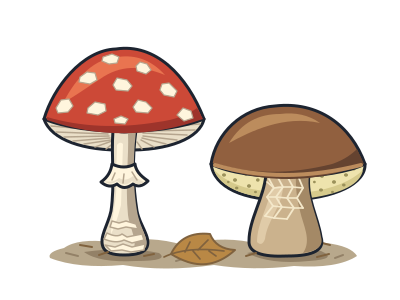
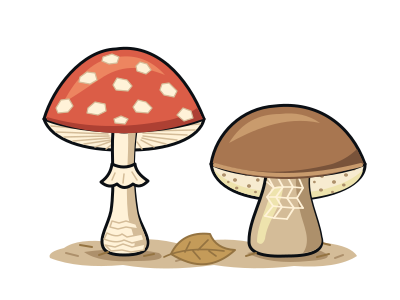
- Gilled mushrooms and boletesClassic cap-and-stalk mushrooms with gills or sponge-like pores underneath.
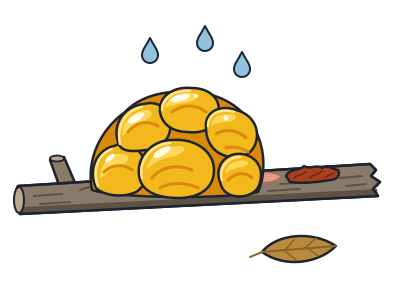
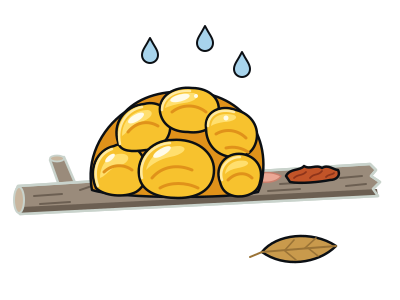
- Witch's butterA wobbly yellow jelly on dead branches that dries crisp and revives after rain.
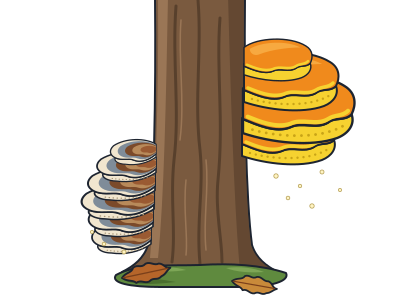
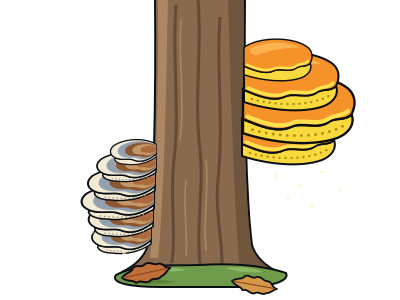
- Bracket fungiShelves and brackets on trees that recycle wood, with pores instead of gills underneath.
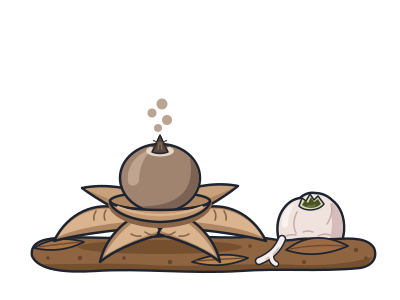
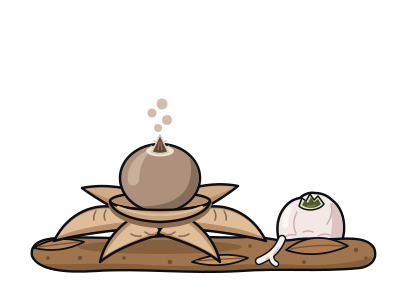
- Stinkhorns and earthstarsFungi that hatch from eggs: smelly stinkhorns that use flies, and earthstars that peel open into stars.
- Chanterelles and kinAn early branch of the mushroom fungi, with wrinkles or spines instead of gills, plus orchid helpers.
- Milkcaps, brittlegills and lion's maneA group of very different shapes: milky gilled caps, crumbly brittlegills and icicle-like tooth fungi.
- Astaxanthin yeastA pink yeast from birch sap; its pigment is one of the colours fed to farmed salmon to turn them pink.