A species
Lion's mane mushroom
Hericium erinaceus
A shaggy white pom-pom of icicle spines that is related to gilled mushrooms like milkcaps.
You and the lion's mane mushroom meet in the Fungi and animals branch, shown at about 1.3 billion years ago (on 10 September, in a calendar from life's shared ancestor to today).
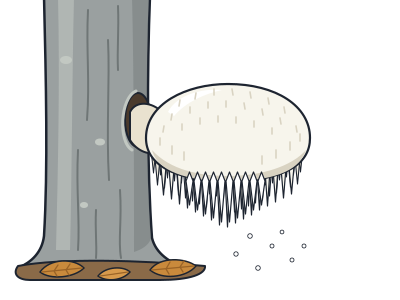
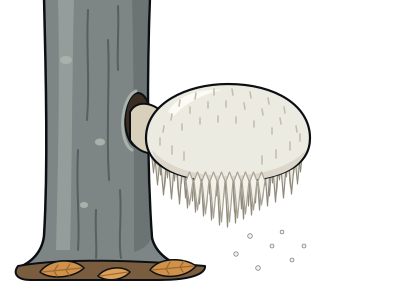
Picture a white pom-pom made of soft icicles, hanging from the side of an old tree. That is lion's mane. It has no cap, no stalk and no gills. Instead, it is one shaggy clump, somewhere between an orange and a football in size. Its spines dangle straight down like a beard. Cooks love it when it is young and fresh. Its mild, slightly sweet taste and tender, slightly chewy texture remind many people of crab or lobster.
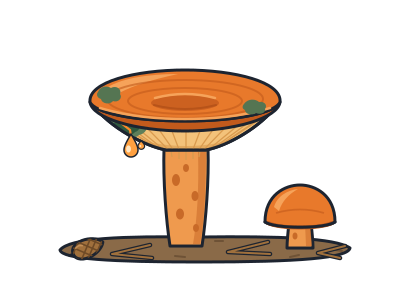
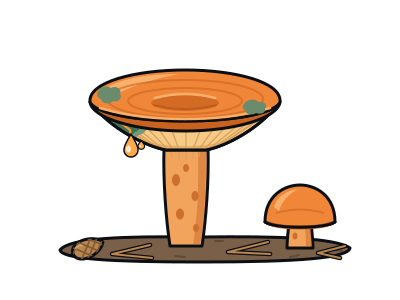
Here is the surprise. For a long time, scientists grouped it with other gill-less fungi just because they looked alike. DNA studies now place it in the same big group as milkcaps, such as the saffron milk cap, and brittlegills. Those are ordinary-looking mushrooms with caps and gills. So how a fungus looks can be a poor guide to its family.
Most of the fungus stays out of sight as a network of threads inside wood. It feeds mainly on dead wood, but it can also get into living trees through wounds and rot pockets of their wood. It is rare in parts of Europe. It depends on very old trees, which are being lost, and its spores sprout poorly, so it struggles to get started.
A hedgehog in Latin
Its group name, Hericium, means 'hedgehog' in Latin, because of all those spines.
Monkey heads on logs
In East Asia it is a delicacy and is grown widely on logs. In Chinese it is called the monkey-head mushroom, and in Japanese yamabushitake.
Always cook it
Lion's mane should always be cooked before eating. People trying it for the first time should eat only a little, in case they are allergic.